Otwórz menu


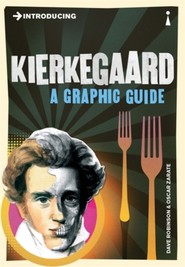
Father of existentialism or the Eeyore of philosophy?Known as the first modern theologian, SørenKierkegaard was a prolific writer of the Danish ''golden age''. A philosopher,poet and social critic, his key concepts of angst, despair, and theimportance of the individual, influenced many 20th-century philosophers andliterature throughout Europe.Dave Robinson and Oscar Zarate''s brilliant graphicguide explains what Kierkegaard means by ''anti-philosophy'', and tells anilluminati...
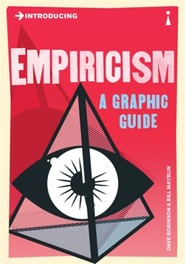
Our knowledge comes primarily from experience - what our senses tell us. But is experience really what it seems?The experimental breakthroughs in 17th-century science of Kepler, Galileo and Newton informed the great British empiricist tradition, which accepts a ''common-sense'' view of the world - and yet concludes that all we can ever know are ''ideas''.In Introducing Empiricism: A Graphic Guide, Dave Robinson - with the aid of Bill Mayblin''s brilliant illustrations - outli...
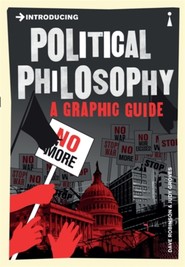
Essential illustrated guide to key ideas of political thought. Philosophers have always asked fundamental and disturbing questions about politics. Plato and Aristotle debated the merits of democracy. The origins of society, the state and government authority were issues addressed by Hobbes, Rousseau, Hegel, Marx and many other philosophers. Introducing Political Philosophy explains the central concepts of this intriguing branch of philosophy and presents the major political t...
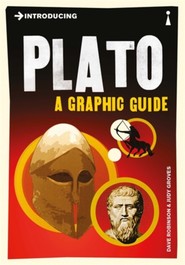
"Introducing Plato" begins by explaining how philosophers like Socrates and Pythagoras influenced Plato''s thought. It provides a clear account of Plato''s puzzling theory of knowledge, and explains how this theory then directed his provocative views on politics, ethics and individual liberty. It offers detailed critical commentaries on all of the key doctrines of Platonism, especially the very odd theory of Forms, and concludes by revealing how Plato''s philosophy stimulated...
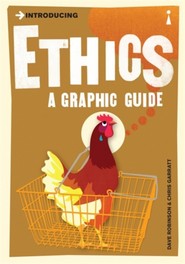
Addresses such questions as: What is the place of individual choice and consequence in a post-Holocaust world of continuing genocidal ethnic cleansing? Is "identity" now a last-ditch cultural defence of ethnic nationalisms and competing fundamentalisms? And how do we define "rights", self-interest and civic duties?
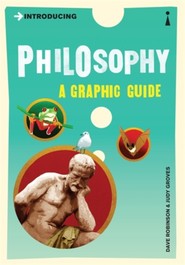
Philosophers have always enjoyed asking awkward and provocative questions, such as:What is the nature of reality?What are human beings really like?What is special about the human mind and consciousness?Are we free to choose who we are and what we do?Can we prove that God exists?Can we be certain about anything at all?What is truth?Does language provide us with a true picture of the world?How should we behave towards each other?Do computers think?Introducing Philosophy is a co...
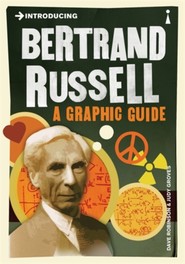
Bertrand Russell changed Western philosophy forever. He tackled many puzzles—how our minds work, how we experience the world, and what the true nature of meaning is. In Introducing Bertrand Russell we meet a passionate eccentric, active in world politics, who had outspoken views on sex, marriage, religion, and education.
Książka jest dokumentem piśmienniczym, obszernym zazwyczaj zapisem wszelkiej ludzkiej myśli. Występuje w postaci wielostronicowej publikacji o określonej liczbie stron i trwałym charakterze.
Postać dzisiejszej książki drukowanej ma formę kodeksu będącego zbiorem kartek połączonych grzbietem. Taki sposób utrwalania zapisu w momencie upowszechnienia pergaminu zastąpił wcześniejszą formę dokumentu piśmienniczego, jakim był zwój.
Według definicji Słownika języka polskiego PWN książka jest złożonym oraz oprawionym arkuszem papieru zadrukowanym tekstem o charakterze literackim, użytkowym bądź naukowym. Jednak współcześnie definicja ta powinna zostać poszerzona o książki elektroniczne będące cyfrowym odpowiednikiem tych drukowanych. Do książek elektronicznych zaliczane są zarówno ebooki, jak i audiobooki. Treść utrwaloną w formie elektronicznej można odczytać za pomocą odpowiedniego oprogramowania na laptopach, tabletach, smartfonach, a przede wszystkim na przeznaczonych do tego celu czytnikach.
E-książki odgrywają bardzo dużą rolę. Podjęty jakiś czas temu proces digitalizacji książek umożliwia dostęp do światowych zasobów wiedzy znacznie większej liczbie osób. Zbiory ksiąg to niepodważalne światowe dziedzictwo kultury, jednak ze względu na ograniczoną możliwość szybkiego dostępu do przechowywanych w księgozbiorach publikacji, a także brak możliwości jakiegokolwiek dostępu do dzieł o znacznej wartości historycznej proces digitalizacji daje szansę na udostępnianie światowych dzieł szerokiej masie odbiorców.
Okładka to wszystko, co zostało od zewnątrz trwale złączone ze znajdującym się w środku wkładem. Składa się z przedniej i tylnej okładziny (potocznie zwanej okładką), a także z grzbietu okładki. To właśnie okładka definiuje i określa ostateczny wygląd książki, gdyż determinuje między innymi sposób, w jaki łączą się ze sobą wszystkie kartki i jaka jest wewnętrzna budowa książki. Oprawy mogą być miękkie, twarde czy też zintegrowane – różnią się przede wszystkim wielkością, wagą, wytrzymałością oraz ceną. Przykładowo książki w twardej oprawie są większe, cięższe, bardziej wytrzymałe i droższe od tych w miękkiej.