Otwórz menu


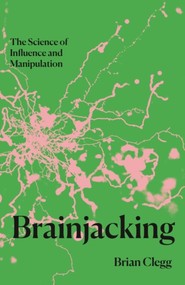
Brainjacking takes us on a journey through advertising and marketing's attempts to understand and influence our thoughts and desires, from the earliest billboards to the technologies of the future. To discover how science intersects with our desires and decisions, the book pulls together three strands that have a huge impact on our lives: advertising, how much privacy we can and should have in the new electronic world, and how to draw the line between information and influenc...
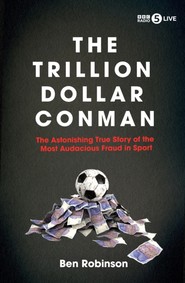
Based on the hit BBC 5Live podcast series, The Trillion Dollar Conman is a tale of audacious international fraud that is stranger than fiction. In 2009, Notts County FC were struggling to survive in League Two when they were taken over by a mysterious company supposedly backed by the Bahrain royal family. The club was promised millions of pounds worth of investment and marquee players, including Sol Campbell and Kasper Schmeichel, were signed by former England manager Sven-...
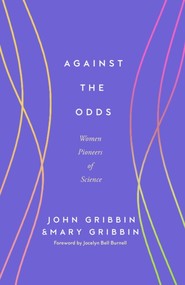
Even in the third decade of the twenty-first century, it is still harder for women to make a career in science than men. Two centuries ago, however, at the beginning of the nineteenth century, when science as we know it was just getting started, the situation was far worse. Then, the very notion of a female scientist would have been regarded as something of an oxymoron. From bestselling and award-winning science writers John and Mary Gribbin, Against the Odds highlights the...
'Part memoir, part hugely entertaining self-help manual for these tough times' Roger Alton, Daily Mail'A bona fide badass' The Sunday TimesFormer Secret Service Special Agent Evy Poumpouras shares the insights and skills from one of the oldest elite security forces in the world - to help you prepare for stressful situations, instantly read people, influence how you're perceived, and live a more fearless life. From gruelling training to clandestine interrogation rooms, to prot...
When should you adopt an aggressive business strategy? How do we make decisions when we don''t have all the information? What makes international environmental cooperation possible?Game theory is the study of how we make a decision when the outcome of our moves depends on the decisions of someone else. Economists Ivan and Tuvana Pastine explain why, in these situations, we sometimes cooperate, sometimes clash, and sometimes act in a way that seems completely random.Stylishly ...
Epigenetics is the most exciting field in biology today, developing our understanding of how and why we inherit certain traits, develop diseases and age, and evolve as a species. This non-fiction comic book introduces us to genetics, cell biology and the fascinating science of epigenetics, which is rapidly filling in the gaps in our knowledge, allowing us to make huge advances in medicine. We''ll look at what identical twins can teach us about the epigenetic effects of our en...
Sociology is interested in the ways people shape the society they live in, and the ways society shapes them. Simply, it is the study of what modern society is and how it functions. In the series'' inimitable style, Introducing Sociology traces the origins of sociology from industrialization, revolution and the Enlightenment through to globalization, neoliberalism and the fear of nationalism - introducing you to key thinkers, movements and concepts along the way. You will deve...
From Plato to Virginia Woolf, Structuralism to Practical Criticism, Introducing Literary Criticism charts the history and development of literary criticism into a rich and complex discipline. Tackling disputes over the value and meaning of literature, and exploring theoretical and practical approaches, this unique illustrated guide will help readers of all levels to get more out of their reading.
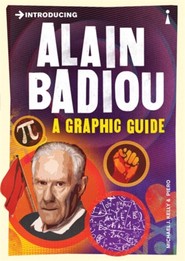
The works of French philosopher Alain Badiou range from novels, poems, ''romanopéras'' and popular political treatises to elaborate philosophical arguments engaging with mathematical theory.Badiou suggests that ''philosophy is always a biography of the philosopher'', and throughout all of his writing there is a staunch commitment to emancipatory politics and a radical yet faithful subjectivity. His famous, or infamous, philosophy of emancipation is firmly grounded in his fide...
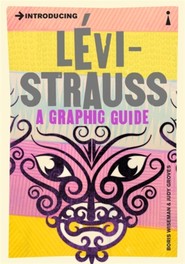
Introducing Lévi-Strauss is a guide to the work of the great French anthropologist Claude Lévi-Strauss (1908-2009). The book brilliantly traces the development and influence of Lévi-Strauss'' thought, from his early work on the function of the incest taboo to initiate an exchange of women between groups, to his identification of a timeless "wild" or "primitive" mode of thinking - a pensée sauvage - behind the processes of human culture. Accessibly written by Boris Wiseman and...
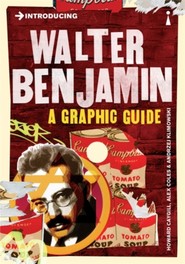
Walter Benjamin is often considered the key modern philosopher and critic of modern art.Tracing his influence on modern aesthetics and cultural history, Introducing Walter Benjamin highlights his commitment to political transformation of the arts as a means to bring about social change.Benjamin witnessed first-hand many of the cataclysmic events of modern European history. He took a critical stance on the dominant ideologies of Marxism, Zionism and Technocracy, and his attemp...
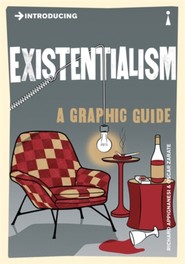
Richard Appignanesi goes on a personal quest of Existentialism in its original state. He begins with Camus'' question of suicide: ''Must life have a meaning to be lived?'' Is absurdity at the heart of Existentialism? Or is Sartre right: is Existentialism ''the least scandalous, most technically austere'' of all teachings? This brilliant Graphic Guide explores Existentialism in a unique comic book-style.
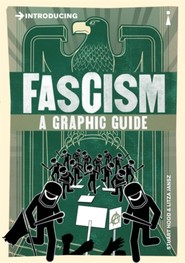
Did Fascism end with the Allied victory over the Axis powers in 1945, or has it been lying dormant and is now re-awakening as we move into the 21st century? Introducing Fascism trace the origins of Fascism in 19th-century traditions of ultra-conservatism, the ideas of Nietzsche, Wagner and other intellectuals which helped to make racist doctrines respectable and which led to the ultimate horrifying ''logic'' of the Holocaust. Introducing Fascism investigates the four types of...
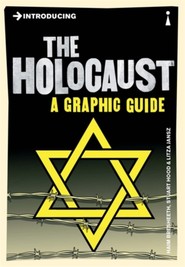
''Excellent ... an astounding amount of material.''Times Educational Supplement Popular culture often portrays the Holocaust as ahorrific drama played out between Nazi executioners and ghetto Jewish victims -in short, a single aberration of history. Introducingthe Holocaust is a powerful graphic guide that dissolves thisstereotype, explaining the causes and its relevance today. It places theHolocaust where it belongs - at the centre of modern European and worldhistory. Haim B...
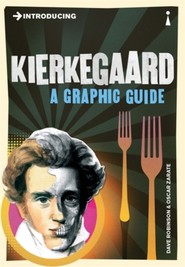
Father of existentialism or the Eeyore of philosophy?Known as the first modern theologian, SørenKierkegaard was a prolific writer of the Danish ''golden age''. A philosopher,poet and social critic, his key concepts of angst, despair, and theimportance of the individual, influenced many 20th-century philosophers andliterature throughout Europe.Dave Robinson and Oscar Zarate''s brilliant graphicguide explains what Kierkegaard means by ''anti-philosophy'', and tells anilluminati...
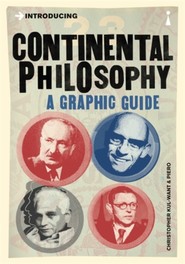
What makes philosophy on the continent of Europe so different and exciting? And why does it have such a reputation for being ''difficult''?Continental philosophy was initiated amid the revolutionary ferment of the 18th century, philosophers such as Kant and Hegel confronting the extremism of the time with theories that challenged the very formation of individual and social consciousness.Covering the great philosophers of the modern and postmodern eras - from Nietzsche, Heideg...
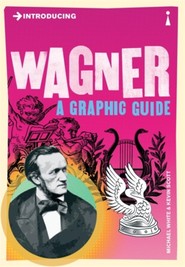
Wagner's operatic works rank with the supreme achievements of western culture. But acceptance of Wagner's musical genius is tempered by feelings of misgiving and many believe the composer's underlying ideas to be indefensible. A self-styled social revolutionary, Wagner thought the world could be redeemed through vegetarianism and Aryan philosophy.Introducing Wagner: A Graphic Guide separates the composer's art from the ideas and the arrogant destructive personal behaviour of ...
Our knowledge comes primarily from experience - what our senses tell us. But is experience really what it seems?The experimental breakthroughs in 17th-century science of Kepler, Galileo and Newton informed the great British empiricist tradition, which accepts a ''common-sense'' view of the world - and yet concludes that all we can ever know are ''ideas''.In Introducing Empiricism: A Graphic Guide, Dave Robinson - with the aid of Bill Mayblin''s brilliant illustrations - outli...
Infinity is a profoundly counter-intuitive and brain-twisting subject that has inspired some great thinkers - and provoked and shocked others. The ancient Greeks were so horrified by the implications of an endless number that they drowned the man who gave away the secret. And a German mathematician was driven mad by the repercussions of his discovery of transfinite numbers.Brian Clegg and Oliver Pugh's brilliant graphic tour of infinity features a cast of characters ranging f...
Christianity depends on the belief that the Jesus of history is identical with the Christ of faith, and that God in the person of Jesus intervened finally and decisively in human history. But is the historical Jesus the same as the Christian Saviour? And how did an obscure provincial religion based on the paradox of a crucified saviour conquer the Roman Empire and outlive it?INTRODUCING JESUS - A GRAPHIC GUIDE confronts the enigmas. It sets Jesus in the perspective of his tim...
Compact INTRODUCING guide on the debates surrounding psychoanalysis''s most contested figure. Freud is universally recognised as a pivotal figure in modern culture. Yet the man and his work continually attract scandal, outrage and scientific suspicion. Was he a psychological genius or a peddler of humbug? Despite his atheism, did he invent a new religious cult? Is he to blame for disguising the prevalence of sexual abuse? Is there an Oedipus Complex? Was he a drug addict? A w...
Compact INTRODUCING guide to the influential philosopher, sociologist and economist. INTRODUCING MARX - A GRAPHIC GUIDE explores the life of the most famous Socialist figure, from his early years to meeting Engels in1842. It provides a readable, understandable biography of Karl Marx as well as a fundamental account of his original philosophy, its roots in 19th century European ideology, his radical economic and social criticism of capitalism that inspired vast 20th century re...
Artificial Intelligence is no longer the stuff of science fiction.Half a century of research has resulted in machines capable of beating the best human chess players, and humanoid robots which are able to walk and interact with us. But how similar is this ''intelligence'' to our own? Can machines really think? Is the mind just a complicated computer program? Addressing major issues in the design of intelligent machines, such as consciousness and environment, and covering ever...
What is psychotherapy? How can we choose wisely from so much on offer?This book provides a valuable summary of the main therapies: the "talking cures" of psychoanalysis, behavioral and cognitive techniques, somatic solutions, humanist gestalt and existential approaches, and individual and group therapies.
What do scientists actually do? Is science "value-free"? How has science evolved through history? Where is science leading us? "Introducing Philosophy of Science" is a clear and incisively illustrated map of the big questions underpinning science. It is essential reading for students, the general public, and even scientists themselves.
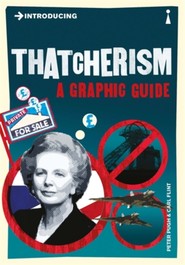
Margaret Thatcher's political career was one of the most remarkable of modern times. She rose to become the first woman to lead a major Western democracy, serving as British Prime Minister. Admired by Ronald Regan and the United States Congress, "Introducing Thatcherism" looks at the political philosophy behind this influential and controversial woman.
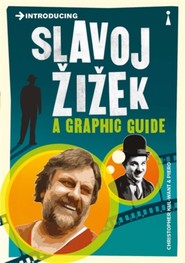
Charting his meteoric rise in popularity, Christopher Kul-Want and Piero explore Zizek''s timely analyses of today''s global crises concerning ecology, mounting poverty, war, civil unrest and revolution.Covering topics from philosophy and ethics, politics and ideology, religion and art, to literature, cinema, corporate marketing, quantum physics and virtual reality, Introducing Slavoj Zizek deftly explains Zizek''s virtuoso ability to transform apparently outworn ideologies -...
Illustrated guide to the crucial Italian philosopher and author of The Prince. ''Machiavellian'' is a popular byword for treachery and opportunism. Machiavelli''s classic book on statecraft, The Prince, published over 400 years ago, remains controversial to this day because of its electrifying frankness as a practical guide to power. Is it a how-to manual for dictators, a cynical philosophy of ''the end justifies the means'', or a more complex and subtle analysis of successfu...
The ideas of psychoanalysis have permeated Western culture. It is the dominant paradigm through which we understand our emotional lives, and Freud still finds himself an iconic figure. Yet despite the constant stream of anti-Freud literature, little is known about contemporary psychoanalysis. Introducing Psychoanalysis redresses the balance. It introduces psychoanalysis as a unified ''theory of the unconscious'' with a variety of different theoretical and therapeutic approach...
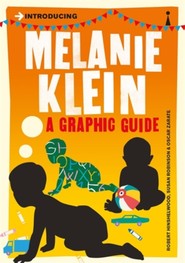
INTRODUCING guide to the pioneering child psychoanalyst. Born in Vienna in 1882, Melanie Klein became a pioneer in child psychoanalysis and developed several ground-breaking concepts about the nature and crucial importance of the early stages of infantile development. Although she was a devoted Freudian, many of her ideas were seen within the psychoanalytic movement as highly controversial, and this led to heated conflicts, particularly with Freud''s daughter, Anna. Introduci...
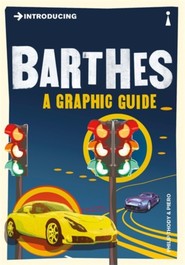
INTRODUCING guide to the cult author, semiologist and analyzer of advertising, Roland Barthes. Roland Barthes is best known as a semiologist, a student of the science of signs. This sees human beings primarily as communicating animals, and looks at the way they use language, clothes, gestures, hair styles, visual images, shapes and colour to convey to one another their tastes, their emotions, their ideal self-image and the values of their society.Introducing Barthes brilliant...
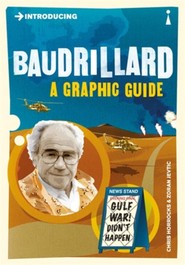
Illustrated guide to the controversial sociologist Jean Baudrillard, who died in 2007. Did the Gulf War take place? Is it possible to fake a bank robbery? Was sexual liberation a disaster? Jean Baudrillard has been hailed as one of France's most subtle and powerful theorists. But his provocative style and assaults on sociology, feminism and Marxism have exposed him to accusations of promoting a dangerous new orthodoxy - of being the 'pimp' of postmodernism.Introducing Baudril...
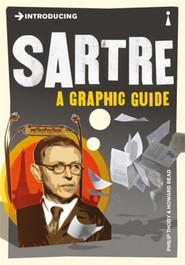
INTRODUCING guide to the father of existentialism and one of 20th century philosophy''s most famous characters. Jean-Paul Sartre was once described as being, next to Charles de Gaulle, the most famous Frenchman of the 20th century. Between the ending of the Second World War in 1945 and his death in 1980, Sartre was certainly the most famous French writer, as well as one of the best-known living philosophers. Introducing Sartre explains the basic ideas inspiring his world view...
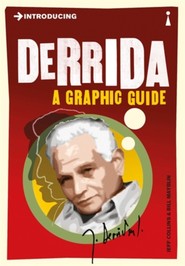
Brilliant illustrated guide to the best-known and most controversial continental philosopher of the latter 20th century. Jacques Derrida is the most famous philosopher of the late 20th century. Yet Derrida has undermined the rules of philosophy, rejected its methods, broken its procedures and contaminated it with literary styles of writing.Derrida's philosophy is a puzzling array of oblique, deviant and yet rigorous tactics for destabilizing texts, meanings and identities. 'D...
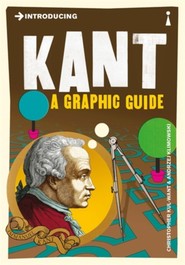
Immanuel Kant laid the foundations of modern Western thought. Every subsequent major philosopher owes a profound debt to Kant''s attempts to delimit human reason as an appropriate object of philosophical enquiry. And yet, Kant''s relentless systematic formalism made him a controversial figure in the history of the philosophy that he helped to shape.Introducing Kant focuses on the three critiques of Pure Reason, Practical Reason and Judgement. It describes Kant''s main formal ...
Essential illustrated guide to key ideas of political thought. Philosophers have always asked fundamental and disturbing questions about politics. Plato and Aristotle debated the merits of democracy. The origins of society, the state and government authority were issues addressed by Hobbes, Rousseau, Hegel, Marx and many other philosophers. Introducing Political Philosophy explains the central concepts of this intriguing branch of philosophy and presents the major political t...
Philosophy, art, literature, music, and politics were all transformed in the turbulent period between the French Revolution of 1789 and the Communist Manifesto of 1848.This was the age of the ''Romantic revolution'', when modern attitudes to political and artistic freedom were born. When we think of Romanticism, flamboyant figures such as Byron or Shelley instantly spring to mind, but what about Napoleon or Hegel, Turner or Blake, Wagner or Marx?How was it that Romanticism co...
"Introducing Plato" begins by explaining how philosophers like Socrates and Pythagoras influenced Plato''s thought. It provides a clear account of Plato''s puzzling theory of knowledge, and explains how this theory then directed his provocative views on politics, ethics and individual liberty. It offers detailed critical commentaries on all of the key doctrines of Platonism, especially the very odd theory of Forms, and concludes by revealing how Plato''s philosophy stimulated...
How did the mind evolve? How does the human mind differ from the minds of our ancestors, and from the minds of our nearest relatives, the apes? If our minds are built by selfish genes, why are we so cooperative? These questions are at the centre of a research programme called evolutionary psychology.
What is beauty, and what is truth? These are some of the questions which aesthetics tries to answer. In our everyday life, we talk about the ''aesthetics'' of an artwork or a piece of design. But aesthetics goes beyond the simple experience of art. It is also a branch of philosophy concerned with the whole nature of experience itself, explored through our perceptions, feelings and emotions.
"Introducing Semiotics" outlines the development of sign study from its classical precursors to contemporary post-structuralism. Through Paul Cobley''s incisive text and Litza Jansz''s brilliant illustrations, it identifies the key semioticians and their work and explains the simple concepts behind difficult terms. For anybody who wishes to know why signs are crucial to human existence and how we can begin to study systems of signification, this book is the place to start....
"Introducing The Enlightenment" is the essential guide to the giants of the Enlightenment - Voltaire, Diderot, Adam Smith, Samuel Johnson, Immanuel Kant, Benjamin Franklin, and Thomas Jefferson. The Enlightenment of the 18th century was a crucial time in human history - a vast moral, scientific and political movement, the work of intellectuals across Europe and the New World, who began to free themselves from despotism, bigotry and superstition and tried to change the world. ...
''An excellent book'' - Ted Honderich, Emeritus Professor of Philosophy of Mind and Logic at University College London (UCL) Introducing Consciousness provides a comprehensive guide to the current state of consciousness studies. It starts with the history of the philosophical relation between mind and matter, and proceeds to scientific attempts to explain consciousness in terms of neural mechanisms, cerebral computation and quantum mechanics. Along the way, readers will be in...
"Introducing Aristotle" guides the reader through an explosion of theories, from the establishment of systematic logic to the earliest rules of science. Aristotle's authority extended beyond his own lifetime to influence fundamentally Islamic philosophy and medieval scholasticism.
For fifteen centuries, he remained the paradigm of knowledge itself.
But can Aristotelian realism still be used to underpin our conception of the world today?
Jacques Lacan is now regarded as a major psychoanalytical theorist alongside Freud and Jung, although recognition has been delayed by fierce arguments over his ideas. Written by a leading Lacanian analyst, "Introducing Lacan" guides the reader through his innovations, including his work on paranoia, his addition of structural linguistics to Freudianism and his ideas on the infant ''mirror phase''. It also traces Lacan''s influence in postmodern critical thinking on art, liter...
Heidegger announced the end of philosophy and was vocal supporter of Nazism. Was he offering a deeply conservative mythology or a crucial deconstruction of philosophy as we have known it? Introducing Heidegger provides an accessible introduction to his notoriously abstruse thinking, mapping out its historical contexts and exploring its contemporary resonances.
Anthropology originated as the study of ''primitive'' cultures. But the notion of ''primitive'' exposes presumptions of ''civilized'' superiority and the right of the West to speak for ''less evolved'' others. With the fall of Empire, anthropology became suspect and was torn by dissension from within. Did anthropology serve as a ''handmaiden to colonialism''? Is it a ''science'' created by racism to prove racism? Can it aid communication between cultures, or does it reinforce...
Cultural Studies signals a major academic revolution for the 21st century. But what exactly is it, and how is it applied? It is a discipline that claims not to be a discipline; it is a radical critical approach for understanding racial, national, social and gender identities."Introducing Cultural Studies" provides an incisive tour through the minefield of this complex subject, charting its origins in Britain and its migration to the USA, Canada, France, Australia and South As...
What is time? The 5th-century philosopher St Augustine famously said that he knew what time was, so long as no one asked him.Is time a fourth dimension similar to space or does it flow in some sense? And if it flows, does it make sense to say how fast? Does the future exist? Is time travel possible? Why does time seem to pass in only one direction?These questions and others are among the deepest and most subtle that one can ask, but Introducing Time presents them - many for t...
Progress in genetics today would not be possible without Darwin''s revolution, but the mysterious man who laid the rational basis for undermining belief in God''s creation was remarkable timid. He spent most of his life in seclusion; a semi-invalid, riddled with doubts, fearing the controversy his theories might unleash.In this brilliantly lucid book - a classic originally published in 1982 - Jonathan Miller unravels Darwin''s life and his contribution to biology, and traces ...
Modernism is usually thought of as a shock wave of innovations hitting art, architecture, music, cinema and literature - the work of Picasso, Joyce, Schoenberg, movements like Futurism and Dada, the architecture of Le Corbusier, T.S. Eliot''s The Wasteland and the avant-garde theatre of Bertolt Brecht or Samuel Beckett. But what really defines modernism? Why did it begin and how long did it last? Is Modernism over now? Chris Rodriguez and Chris Garratt''s brilliant graphic gu...
Shakespeare''s absolute pre-eminence is simply unparalleled. His plays pack theatres and provide Hollywood with block-buster scripts; his works inspire mountains of scholarship and criticism every year. He has given us many of the very words we speak, and even some of the thoughts we think.Nick Groom and Piero explore how Shakespeare became so famous and influential, and why he is still widely considered the greatest writer ever. They investigate how the Bard has been worship...
From the medicine we take, the treatments we receive, the aptitude and psychometric tests given by employers, the cars we drive, the clothes we wear to even the beer we drink, statistics have given shape to the world we inhabit. For the media, statistics are routinely ''damning'', ''horrifying'', or, occasionally, ''encouraging''. Yet, for all their ubiquity, most of us really don''t know what to make of statistics. Exploring the history, mathematics, philosophy and practical...
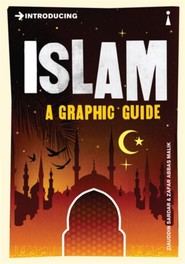
Islam is one of the world''s great monotheistic religions. Islamic culture, spanning 1,500 years, has produced some of the finest achievements of humanity. Yet the religion followed by a fifth of humankind is too often seen in the West in terms of fundamentalism, bigotry and violence- a perception that couldn''t be more wrong.Introducing Islam recounts the history of Islam from the birth of Prophet Muhammad in the 6th century to its status as a global culture and political fo...
Fractals are the geometry of the natural world. They''re about the broken, wrinkled, wiggly world- the uneven shapes of nature, unlike the idealised forms of Euclidean geometry. We see fractals everywhere; indeed, we are fractals ourselves.Fractal geometry is an extension of classical geometry which can make precise models of physical structures, from ferns to galaxies. It can describe the shape of a cloud as precisely as an architect can describe a house.Introducing Fractals...
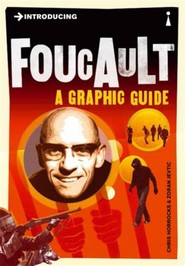
Michel Foucault''s work was described at his death as ''the most important event of thought in our century''. As a philosopher, historian and political activist, he certainly left behind an enduring and influential body of work, but is this acclaim justified? "Introducing Foucault" places his work in its turbulent philosophical and political context, and critically explores his mission to expose the links between knowledge and power in the human sciences, their discourses and...
As we find ourselves at the cusp of an economic downturn, there has been a clear reinvigoration of Keynesian economics as governments are attempting to stimulate the market through public funds. Forming his economic theories in the wake of the Great Depression, John Maynard Keynes argued that a healthy economy depended on the total spending of consumers, business investors and, most importantly, governments too. Keynes formulated that governments should take control of the ec...
Capitalism now dominates the globe, both in economics and ideology, shapes every aspect of our world and influences everything from laws, wars and government to interpersonal relationships. Introducing Capitalism tells the story of its remarkable and often ruthless rise, evolving through strife and struggle as much as innovation and enterprise. Dan Cryan and Sharron Shatil, with Piero''s brilliant graphics, cover the major economic, social and political developments that shap...
What might a ''theory of everything'' look like? Is science an ideology? Who were Adorno, Horkheimer or the Frankfurt School? The decades since the 1960s have seen an explosion in the production of critical theories. Deconstructionists, poststructuralists, postmodernists, second-wave feminists, new historicists, cultural materialists, postcolonialists, black critics and queer theorists, among a host of others, all vie for our attention. Stuart Sim and Borin Van Loon''s incisi...
A superlative, fascinating graphic account of Albert Einstein''s strange world and how his legacy has been built upon since.It is now more than a century since Einstein''s theories of Special and General Relativity began to revolutionise our view of the universe. Beginning near the speed of light and proceeding to explorations of space-time and curved spaces, Introducing Relativity plots a visually accessible course through the thought experiments that have given shape to con...
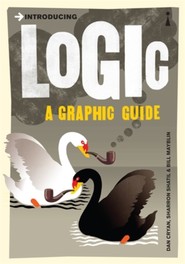
Logic is the backbone of Western civilization, holding together its systems of philosophy, science and law. Yet despite logic''s widely acknowledged importance, it remains an unbroken seal for many, due to its heavy use of jargon and mathematical symbolism.This book follows the historical development of logic, explains the symbols and methods involved and explores the philosophical issues surrounding the topic in an easy-to-follow and friendly manner. It will take you through...
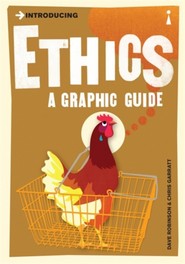
Addresses such questions as: What is the place of individual choice and consequence in a post-Holocaust world of continuing genocidal ethnic cleansing? Is "identity" now a last-ditch cultural defence of ethnic nationalisms and competing fundamentalisms? And how do we define "rights", self-interest and civic duties?
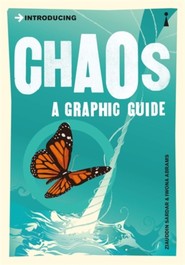
If a butterfly flaps its wings in Brazil, does it cause a tornado in Texas?Chaos theory attempts to answer such baffling questions. The discovery of randomness in apparently predictable physical systems has evolved into a science that declares the universe to be far more unpredictable than we have ever imagined.Introducing Chaos explains how chaos makes its presence felt in events from the fluctuation of animal populations to the ups and downs of the stock market. It also exa...
Why must we believe that God is dead? Can we accept that traditional morality is just a ''useful mistake''? Did the principle of ''the will to power'' lead to the Holocaust? What are the limitations of scientific knowledge? Is human evolution complete or only beginning? It is difficult to overestimate the importance of Friedrich Nietzsche for our present epoch. His extraordinary insights into human psychology, morality, religion and power seem quite clairvoyant today: existen...
Meditation, Karma, Zen, Tantric and Nirvana are some of the many Buddhist ideas Westerners hear of frequently, even if their meaning has been lost in translation. This vast and complex non-theistic religion is woven into the fabric of Asian civilisations. from India to the Himalayan regions, China, Vietnam, Korea, Japan and elsewhere. What is Buddhism really all about?Introducing Buddha describes the life and teachings of the Buddha, but it also shows that enlightenment is a ...
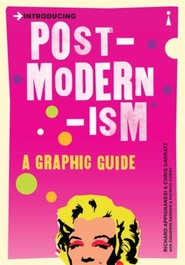
What connects Marliyn Monroe, Disneyworld, "The Satanic Verses" and cyber space? Answer: Postmodernism. But what exactly is postmodernism?This Graphic Guide explains clearly the maddeningly enigmatic concept that has been used to define the world''s cultural condition over the last three decades.Introducing Postmodernism tracks the idea back to its roots by taking a tour of some of the most extreme and exhilarating events, people and thought of the last 100 years: in art - co...
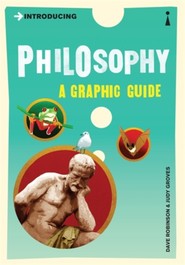
Philosophers have always enjoyed asking awkward and provocative questions, such as:What is the nature of reality?What are human beings really like?What is special about the human mind and consciousness?Are we free to choose who we are and what we do?Can we prove that God exists?Can we be certain about anything at all?What is truth?Does language provide us with a true picture of the world?How should we behave towards each other?Do computers think?Introducing Philosophy is a co...
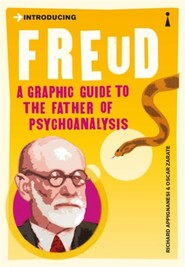
Freud revolutionized the way we think about ourselves. His psychoanalytic terms such as Id, Ego, libido, neurosis and Oedipus Complex have become a part of our everyday vocabulary.But do we know what they really mean?Introducing Freud successfully demystifies the facts of Freud''s discovery of psychoanalysis. Irreverent and witty but never trivial, the book tells the story of Freud''s life and ideas from his upbringing in 19th-century Vienna, his early medical career and his ...
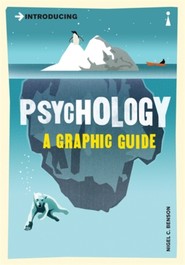
What is psychology? When did it begin? Where did it come from? How does psychology compare with related subjects such as psychiatry and psychotherapy? To what extent is it scientific?Introducing Psychology answers all these questions and more, explaining what the subject has been in the past and what it is now. The main "schools" of thought and the sections within psychology are described, including Introspection, Biopsychology, Psychoanalysis, Behaviourism, Comparative (Anim...
Do kategorii „Pozostałe” zostały przypisane wszystkie publikacje, które nie przynależą do żadnej z konkretnych kategorii takich jak: Dla dzieci, Dla młodzieży, Poradniki / Edukacja / Hobby, Powieści i lektury, Dom / Moda / Hobby, Dom / Wnętrze / Ogród, Kolorowanki, Moda i styl, Filozofia, Historia, Historia najnowsza, Historia nowożytna, II wojna światowa, Starożytność i średniowiecze, Internet, komputery, informatyka, Komiks i książka graficzna, Książki obcojęzyczne, Kuchnia / Diety / Fitness, Kultura / Sztuka / Design, Literatura, Fantastyka / Horror, Kryminał / Sensacja / Thriller, Literatura piękna, Poezja / Dramat, Powieść historyczna, Powieść obyczajowa, Romans / Erotyka, Literatura faktu, Biografia / Autobiografia / Wspomnienia, Książki podróżnicze / Przewodniki, Literatura popularnonaukowa, Reportaż, Marketing / Zarządzanie / Finanse, Nauka języków, Nauki ścisłe / Medycyna, Podręczniki / Encyklopedie, Poradniki, Prasa, Prawo, Psychologia / Społeczeństwo / Polityka, Religia, Sport /Rekreacja, Technika / Inżynieria / Rolnictwo oraz Zdrowie / Rodzina / Związki. Kategoria „Pozostałe” zawiera publikacje, których nie da się przypisać tylko do jednej z tych kategorii, gdyż ich granice są bardzo często niewyraźne. To książki znajdujące się zazwyczaj na styku wielu różnych gatunków, wymykające się jednoznacznej klasyfikacji i kategoryzacji.