Otwórz menu


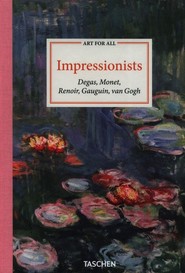
This inspiring collection covers the work, the lives, and the enduring impact of five key Impressionists, in one volume that’s a primer and a celebration of probably the most popular artistic genre of all time. Each featured artist broke boundaries in different ways, astounding late 19th-century society with their boldness of vision and technique. Edgar Degas explored movement and the human form with masterly style and innovative compositions, most famously of dancers, raceh...
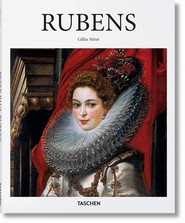
There are over 1,000 catalogued works by Sir Peter Paul Rubens (1577-1640), the 16th-century flag bearer for Baroque drama, movement, and sensuality. This essential introduction takes in the most important works from this astonishingly prolific oeuvre to explore Rubens's influences and innovations, and his remarkable visual, and art historical, impact. The richly illustrated survey takes in Rubens's portraits, landscapes, and historical paintings, as well as his famed and bou...
Whether it's Double Indemnity, Kiss Me Deadly, or The Big Sleep, roam a screen world of dark and brooding elegance with this essential handbook to Film Noir. From private eyes and perfect crimes to corrupt cops and doomed affairs, editors Paul Duncan and Jurgen Muller examine noir's key themes and their most representative movies from 1940 to 1960.Copiously illustrated with film stills as well as original posters, this book offers page after page of noir's masterful visual co...
Making sense of revolutionary new forms Abstraction shook Western art to its core. In the early part of the 20th century, it refuted the reign of clear, indisputable forms and confronted audiences instead with vivid visual poems devoid of conventional representational imagery and characterized by allegories of emotion and sensation. This radical artistic adventure established new artistic means, as much as narratives. Expression became characterized by shocking juxtaposition...
One of the leading lights of the Impressionist movement, Pierre-Auguste Renoir (1841–1919) remains a towering figure in art history with enduring public appeal. Sun-kissed, charming, and sensual, his work shows painting at its most lighthearted and luminous, while championing the plein air and color innovations of his time. Renoir’s oeuvre was prolific, with some several thousand works in his lifetime. Much influenced by forerunners such as Courbet, Degas, Manet, Delacroix, ...
Most art historians agree that the modern art adventure first developed in the 1860s in Paris. A circle of painters, whom we now know as Impressionists, began painting pictures with rapid, loose brushwork. They turned to everyday street life for subjects, instead of overblown heroic scenes, and they escaped the power of the Salon by organizing their own independent exhibitions. After this first assault on the artistic establishment, there was no holding back. In a constant d...
A unique language of symbols, literature, and light With meticulous theories and many thousands of paintings, drawings, and watercolors, Paul Klee (1879–1940) is considered one of the most cerebral and prolific leaders of 20th-century European art. Though typically small in scale, his works are remarkable for their sophisticated thought and meticulous nuances of line, color, and tonality. Klee’s stylistic formation was shaped by early affiliation with the German expressionis...
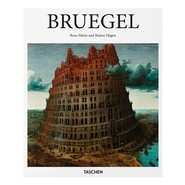
The great Flemish painter Pieter Bruegel the Elder (c. 1526/31-1569) was an astoundingly inventive painter and draftsman, who made his art historical mark with beautiful, evocative landscapes as well as religious subjects, both notable for their vernacular language and attention to everyday, contemporary life. Immersing himself in rural or small-town communities, Bruegel is particularly notable for his depiction of peasant experience and folk culture, earning the artist nick...
The Divine Proportion The mysterious formula that rules art, nature, and science The Divine Proportion reveals a number of simple patterns: It is seen in the seed patterns of fruits, the family tree of bees, the pyramids of Egypt, Gothic cathedrals, Renaissance paintings, the human body, shells ... the list is endless. Mathematicians use the Greek symbol Φ to represent the Divine Proportion and equate it to a number that is defined by the ratio (1 + √5) / 2 or 1.6180339.......
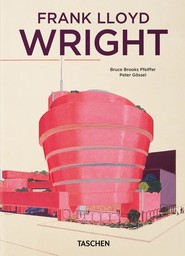
Wright on The star pieces of America’s greatest architect A building by Frank Lloyd Wright (1867–1959) is at once unmistakably individual and evocative of an entire era. Notable for their exceptional harmony with their environment, as well as for their use of steel and glass to revolutionize the interface of indoor and outdoor, Wright’s designs helped announce the age of modernity, as much as they secured his place in the annals of architectural genius. This meticulous com...
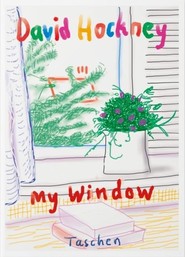
'For me, it's really the joy of looking out into the world and getting this positive energy... It's opening up our vision, and how we look'—David HockneyWhen David Hockney discovered the iPhone as an artistic medium, it opened up entirely new possibilities for his art. He made his first digital paintings in spring 2009, describing the morning landscape in broad lines and dazzling colors directly on a display that offered subtle hues as unmixed expressions of pure light.Then i...
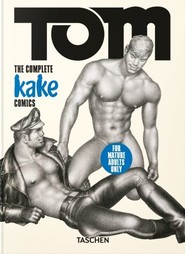
In 1965, Tom of Finland began flirting with the idea of an ongoing character for his panel stories, the ultimate Tom’s Man. He tried out a blond named Vicky—a common male name in Finland—followed by a Tarzan-inspired Jack. Then in 1968 Tom settled on Kake, a dark-haired, mustached leatherman who often wore a tight white T-shirt bearing the motto “Fucker.” Kake lived up to this moniker, a sort of post-Stonewall, hyper-masculine Johnny Appleseed traveling the world on his motor...
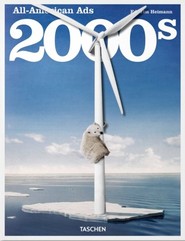
Post-9/11, America’s sense of invincibility was shaken. The dotcom bubble had burst, there was war with Iraq, and eco-angst was becoming mainstream, as evidenced by impressive sales of the Toyota Prius. For escapism, self-expression, and even romantic connection, America turned to tech.Geeks were the new superheroes, and the iPod and iPhone reigned supreme, both commercially and creatively. Social media began its unstoppable rise, with MySpace and Facebook pushing brands to g...
Famed for his motto “less is more,” Ludwig Mies van der Rohe (1886–1969) was one of the founding fathers of modern architecture and a hotly-debated tastemaker of twentieth-century aesthetics and urban experience.Mies van der Rohe’s philosophy was one of underlying truth in pure forms and proportions. With the help of contemporary technological and material developments, he sought a stripped-down purity to architecture, showcased by the likes of the Seagram Building and Farnsw...
Clothes define people. A person’s attire, whether it be a sari, kimono, or business suit, is an essential code to his or her culture, class, personality, even faith. Indeed, clothing has the power to define people and their generation.Recognizing this sartorial significance is the Kyoto Costume Institute, whose team of curators examine fashion through sociological, historical, and artistic perspectives. With one of the world’s most extensive clothing collections, the KCI has ...
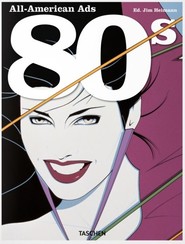
With the cold war ebbing, crime and inflation at record levels, and movie star-turned-President Ronald Reagan launching a Star Wars of his own, the 1980s did not seem likely to become one of the most outrageous, flamboyant, and prosperous decades of the 20th century. The "greed is good" mantra on Wall Street spawned the power-dressing, exercise-obsessed "Me Generation" of Yuppies. The art world enjoyed the influx of capital; computers and video games ruled in the office and a...
From the legendary Tank Girl to live-action animations with Gorillaz, a Chinese contemporary opera to an exhibition at the Saatchi Gallery, artist Jamie Hewlett is one of the most energetic figures of contemporary pop culture. With influences ranging from hip hop to zombie slasher movies, Hewlett emerged in the mid-1990s as co-creator of the zeitgeist-defining Tank Girl comic. With then-roommate Damon Albarn, he went on to create the groundbreaking cartoon band Gorillaz.The a...
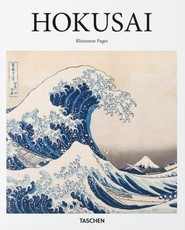
Meet the artist whose majestic breaking wave sent ripples across the world. Hokusai (1760–1849) is not only one of the giants of Japanese art and a legend of the Edo period, but also significantly influenced Western modernism, whose prolific gamut of prints, illustrations, paintings, and beyond forms one of the most comprehensive oeuvres of ukiyo-e art and a benchmark of japonisme. His influence spread through Impressionism, Art Nouveau, and beyond, enrapturing the likes of C...
Edward Hopper (1882–1967) is something of an American success story, if only his success had come swifter. At the age of 40, he was a failing artist who struggled to sell a single painting. As he approached 80, Time magazine featured him on its cover. Today, Hopper is considered a giant of modern expression, with an uncanny, unforgettable, and utterly distinct sense for mood and place.Much of Hopper's work excavates modern city experience. In canvas after canvas, he depicts d...
These restorative retreats have it all Looking for a vacation that leaves you relaxed, restored, and uplifted? In this gorgeous updated guide, Angelika Taschen gathers the most exquisite and inspirational yoga retreats around the world, from an exotic luxury hotel in Bhutan to a spiritual ashram in India, a beach resort in Mexico to a tucked-away treasure in Brazil`s tropical forests. Highlights include the Parmarth Niketan Ashram in Rishikesh—one of the holy cities of the Ga...
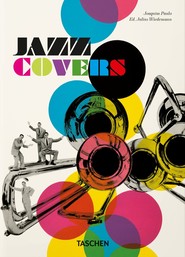
Vinyl ManiaThe greatest in jazz LP artPart design history, part trip down musical memory lane, this anthology of jazz album artwork is above all a treasure trove of creative and cultural inspiration. Spanning half a century, it assembles the most daring and dynamic jazz cover designs that helped make and shape not only a musical genre but also a particular way of experiencing life.From the 1940s through to the decline of LP production in the early 1990s, each chosen cover des...
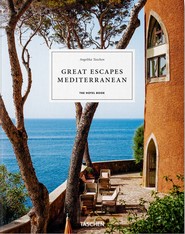
The Mediterranean is surrounded by three continents – Europe, Africa and Asia – and even though the cultures around this sea are highly diverse, they harmoniously share a pleasant climate, distinctive flora and fauna, and not least the intense blue of the water.Angelika Taschen set out in search of the most beautiful hotels on a great variety of coasts, islands and beaches, taking you on a journey to the luxurious Hotel du Cap-Eden-Roc and the ultra-chic Les Roches Rouges on ...
Volume two of the definitive exploration [br]of the [i]Star Wars[/i] galaxy From the moment Star Wars burst onto the screen in 1977, audiences have been in equal parts fascinated and appalled by the half-man/half-machine hybrid Darth Vader. In 1999, creator George Lucas began the story of how Anakin Skywalker grew up to train as a Jedi under Obi-Wan Kenobi, found love with the Queen of Naboo, Padmé Amidala, before turning to the dark side of his nature and becoming more machi...
Step into some of the most beautiful havens of Tuscany. Grand patrician homes and rural hermitages alike open their doors to reveal Medici pottery, sun-kissed drawing rooms, and colorful tiled floors. With detailed captions and crisp photography, this portfolio presents each home and its interior to paint a gorgeous picture of Tuscan living.
An icon of 1980s New York, Jean-Michel Basquiat (1960-1988) first made his name under the graffiti tag "SAMO," before establishing his studio practice and catapulting to fast fame at the age of 20. Although his career lasted barely a decade, he remains a cult figure of artistic social commentary, and a trailblazer in the mediation of graffiti and gallery art. Basquiat's work drew upon diverse sources and media to create an original and urgent artistic vocabulary, biting with ...
Poem of ColorsThe most remarkable abodes from Costa Careyes to the Yucatán PeninsulaRich colors and woven textiles form a unique design aesthetic, crafted by the union of local Aztec and Mayan cultures and Spanish influences. Bold pigments and vivid patterns come together in simple and rustic spaces, resulting in a way of living that is both invigorating and homely; an authentic Mexican style.The dynamic writer and photographer duo Barbara and René Stoeltie have struck gold a...
Though it lies just across the Mediterranean from Europe, barely a stone’s throw from Spain’s southernmost tip, Morocco couldn’t possibly be farther away.With its mountainous and desert landscapes, labyrinthine souks, delectable cuisine, exquisite rugs and textiles, vibrant mosaics, fragrant odors, mesmerizing music, and welcoming people, Morocco is a most alluring and tantalizingly exotic destination. Digging a little deeper into the myth of Morocco, Barbara and René Stoelti...
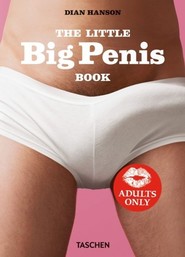
Compact in format but no less magnificently endowed, The Big Penis Book will delight even the most hardened aficionado of the male member. No half-cocked measures here, as we celebrate the rampant hardware of 150 models from the 1940s to the '90s, including photos by Bob Mizer of AMG, David Hurles of Old Reliable, and Rip Colt of Colt Studio.
The deceptively simple lemon takes center stage in the second volume of TASCHEN’s collaboration with The Gourmand, masters of the rich intersection of food and art. The star of Renaissance gardens, that shaped the Medici dynasty, have the power to ward off scurvy, had a hand in forming the mob, and whose juice has been used as an invisible ink since 600 CE to pen covert messages, these joyful yellow orbs are ripe with intrigue. The Gourmand charts the fruit’s astonishingly in...
Prepare to embark on a journey through space and time with The NASA Archives, a visual celebration of humankind's unstoppable urge to travel away from Earth to worlds beyond. Featuring hundreds of historic photographs and concept renderings, this collection guides us through NASA's 60-year history.
The Bauhaus impactThe most famous art school of modernityIn a fleeting fourteen year period, sandwiched between two world wars, Germany’s Bauhaus school of art and design changed the face of modernity. With utopian ideals for the future, the school developed a pioneering fusion of fine art, craftsmanship, and technology to be applied across painting, sculpture, design, architecture, film, photography, textiles, ceramics, theatre, and installation.As much an intense personal c...
Over 150 of the best photos from the original volume are now in this compact book. From Betty Grable to Bettie Page, the greatest legs of the 20th Century are here, shot by Irving Klaw, Bunny Yeager and Elmer Batters. Silk stockings, high heels, curvy calves, taut thighs, playful toes - and no troublesome text - could leg love get any sweeter?
Initiating readers in the fascinating and complex history of witchcraft, from the goddess mythologies of ancient cultures to the contemporary embrace of the craft by modern artists and activists, this expansive tome conjures up a breathtaking overview of an age-old tradition. Rooted in legend, folklore, and myth, the archetype of the witch has evolved from the tales of Odysseus and Circe, the Celtic seductress Cerridwen, and the myth of Hecate, fierce ruler of the moonlit nig...
From Astro Boy to Akira, the superstars of the manga scene Since the original TASCHEN edition of Manga Design, Japan’s comic phenomenon has produced yet more captivating characters and a whole host of hot new talents. This revised edition delivers the lowdown on the latest and the greatest makers and shapers of the manga scene. Through an A–Z directory, we discover the superstars—both human and fictional—of what is now a vast global industry, inspiring advertisers, filmmake...
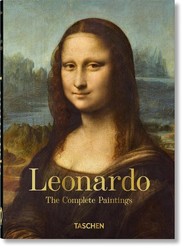
One of the most accomplished human beings who ever lived, Leonardo da Vinci (1452–1519) remains a quintessential Renaissance genius. The perfect companion to the Leonardo Graphic Work edition, this book is a compact catalogue raisonné of all of the artist’s masterful paintings. Drawn from our best-selling XXL edition, the book traces the artist’s life and work across 10 chapters, presenting all known paintings and drawing on his letters, contracts, diary entries, and writing...
An illustrated edition of James Baldwin’s The Fire Next Time, with photographs by Steve Schapiro First published in 1963, James Baldwin’s The Fire Next Time stabbed at the heart of America’s so-called “Negro problem.” As remarkable for its masterful prose as for its frank and personal account of the black experience in the United States, it is considered one of the most passionate and influential explorations of 1960s race relations, weaving thematic threads of love, faith, ...
Bettina Is Back 35 years of daring, defiant photography Since her first photographs in the late ’70s, Bettina Rheims has defied the predictable. From her series on Pigalle strippers (1980) to her cycle on the life of Jesus in I.N.R.I. (1998), from Chanel commercials to Gender Studies (2011), her work has shaken up traditional codes of representation and pushed restlessly at the breaking point between two great human preoccupations: beauty and imperfection. This Rheims retr...
The best of Harry Benson's era-defining Beatles portfolio captures them on the road, performing, relaxing, composing and acting in A Hard Day's Night. From their famous pillow fight in Paris to their first U.S. tour, Benson's luminous black-and-white photographs show intimate glimpses of George, John, Paul, and Ringo during peak Beatlemania.
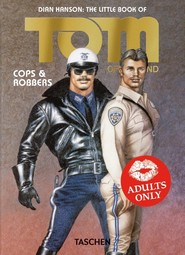
Tom’s take on policemen and criminals Tom’s taste for police officers and felons—and for sexual tension between the two—developed late in his career. “I’ve never been to prison,” he told a class at the California Institute of the Arts in 1985, “but I hear it’s a closed world where there are different roles and people behave different from when they walk free. It fascinates me. It is another subject I come back to again and again.” By which he meant fantasized about again and ...
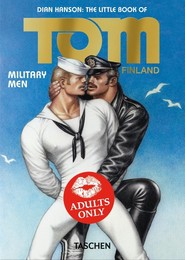
Tom’s iconic images of hypermasculine military men When we think Tom of Finland we first picture muscular, macho young men in military gear. Tom’s vision of masculine perfection was formed during his service as an officer during World War II. Though he served in the Finnish air force, it was the German troops, stationed in Finland to help the country repel invading Russian forces, which served as inspiration. After all, only the Germans had uniforms created by Hugo Boss, tigh...
A decade marked by adventures in futurism Published annually from 1906 until 1980, Decorative Art, The Studio Yearbook was dedicated to the latest currents in architecture, interiors, furniture, lighting, glassware, textiles, metalware, and ceramics. Since the publications went out of print, the now hard-to-find yearbooks have become highly prized by collectors and dealers. This volume spotlights the futuristic, experimental aesthetic of the 1970s. After the revolutions of t...
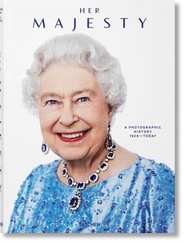
Meet the Queen The public and private life of the world’s most famous monarch Born in 1926, married in 1947, crowned as Queen in 1953, Her Majesty Queen Elizabeth II has carried out her duty for more than six decades. TASCHEN celebrates her remarkable royal story with a new edition of Her Majesty, a definitive photographic collection of her public and private life. Brimming with history, tradition, glamour, and culture, the book spans the Queen’s early years right through to...
The finest treasures of ancient Egypt The art of ancient Egypt that has been handed down to us bears no names of its creators, and yet we value the creations of these unknown masters no less than the works of later centuries, such as statues by Michelangelo or the paintings by Leonardo da Vinci. This book introduces some of the most important masterpieces, ranging from the Old Kingdom during the Third millennium BC to the Roman Period. The works encompass sculptures, reliefs...
William Morris (1834–1896) was one of the greatest creative figures of the 19th century. As a visionary designer, as well as a manufacturer, writer, artist, and socialist activist, he pioneered the Arts and Crafts movement of the Victorian era, and left an extraordinary influence on architecture, textile, and interior design. This richly illustrated book offers a suitably beautiful introduction to Morris’s colorful life and all aspects of his design work, including interiors...
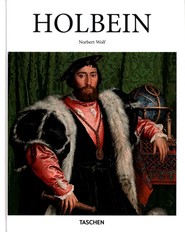
Religion, Renaissance, and Reformation—these three ideologies shaped the world of 16th-century portraitist Hans Holbein the Younger (1497/98–1543), a pivotal figure of the Northern Renaissance, whose skills took him to Switzerland, Belgium, Italy, and England, and garnered patrons and subjects as prestigious as Henry VIII, Thomas More, Anne of Cleves, and Reformation advocate Thomas Cromwell. This book brings together key Holbein paintings to explore his illustrious and inte...
Paul Gauguin’s Pacific visions radiate with color and sunshine Paul Gauguin (1848–1903) was not cut out for finance. Nor did he last particularly long in the French Navy, or as a tarpaulin salesman in Copenhagen who did not speak Danish. He began painting in his spare time in 1873 and in 1876 took part in the Paris Salon. Three years later, he was exhibiting alongside Pissarro, Degas, and Monet. A querulous, hard-drinking individual, Gauguin often called himself a savage. Hi...
To his contemporaries in late 16th-century Venice, El Greco (1541 -1614) was a contrary fellow, an innate artist blessed with extraordinary talent, but stubborn in the pursuit of his own path. Throughout his career, as he progressed from Crete to Venice, to Rome and ultimately Toledo, Spain, "The Greek" stood apart from his peers, merging different Western art traditions to create a unique pictorial language. El Greco's single-minded style rejected naturalism and rejected acc...
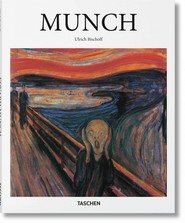
Psychodrama: The reverberating power of an Expressionist icon A hairless, ghostly figure on a bridge. The sky orange-red above him. His hands raised to his ears, his mouth wide in a haunting wail. In painting The Scream, Edvard Munch (1863 1944) created Mona Lisa for our times. The shriek of his iconic figure reverberates around the world, its echo resounding in the work of Andy Warhol, Jasper Johns, Martin Kippenberger, Marlene Dumas, and Tracey Emin.This introductory book s...
Most commonly associated with the birth of the Impressionist movement in mid-19th-century Paris, Edgar Degas (1834–1917) in fact defied easy categorization and instead developed a unique style, strongly influenced by Old Masters, the body in motion, and everyday urban life. The elder scion of a wealthy family, Degas cofounded a series of exhibitions of “Impressionist” art, but soon disassociated himself from the group in pursuit of a more realist approach. His subjects cente...
Though numbering just 35 known works, the oeuvre of Johannes Vermeer (1632-1675) is hailed as one of the most important and inspiring portfolios in art history. His paintings have prompted a New York Times best seller, a film starring Scarlett Johansson, and record visitor numbers at art institutions from Amsterdam to Washington. Vermeer's subjects focus on daily domestic activities, from letter writing to music playing to preparations in the kitchen. The scenes astound with...
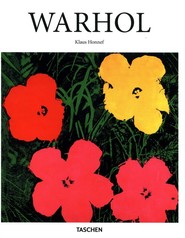
Andy Warhol (1928-1987) is hailed as the most important proponent of the Pop art movement. A critical and creative observer of American society, he explored key themes of consumerism, materialism, media, and celebrity. Drawing on contemporary advertisements, comic strips, consumer products, and Hollywood's most famous faces, Warhol proposed a radical reevaluation of what constituted artistic subject matter. Through Warhol, a Campbell's soup can and Coca Cola bottle became as...
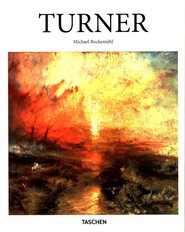
In the work of Joseph Mallord William Turner (1775–1851) lies an impact akin to a sudden acquisition of sight. His landscapes and seascapes scorch the eye with such ravishing light and color, with such elemental force, it is as if the sun itself were gleaming out of the frame. Appropriately known as “the painter of light,” Turner worked in print, watercolor, and oils to transform landscape from serene contemplative scenes to pictures pulsating with life. He anchored his work...
Largely self-taught as an artist, Francis Bacon (1909-1992) developed a unique ability to transform interior and unconscious impulses into figurative forms and intensely claustrophobic compositions. Emerging into notoriety in the period following World War II, Bacon took the human body as his nominal subject, but a subject ravaged, distorted, and dismembered so as to writhe with intense emotional content. With flailing limbs, hollow voids, and tumurous growths, his gripping,...
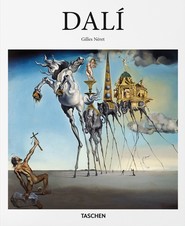
Painter, sculptor, writer, filmmaker, and all-round showman Salvador Dalí (1904–1989) was one of the 20th century’s greatest exhibitionists and eccentrics. One of the first artists to apply the insights of Freudian psychoanalysis to art, he is celebrated in particular for his surrealist practice, with such conceits as the soft watches or the lobster telephone, now hallmarks of the surrealist enterprise, and of modernism in general. Dalí frequently described his paintings as ...
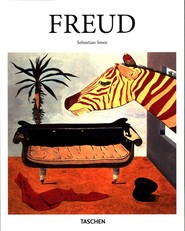
Lucian Freud (1922 2011) was interested in the telling of truth. Always operating outside the main currents of 20th-century art, the esteemed portrait painter observed his subjects with the regimen and precision of a laboratory scientist. He recorded not only the blotches, bruises, and swellings of the living body, but also, beneath the flaws and folds of flesh, the microscopic details of what lies within: the sensation, the emotion, the intelligence, the bloom, and the inevi...
A good logo can glamorize just about anything. Now available in our popular Klotz format, this sweeping compendium gathers diverse brand markers from around the world to explore the irrepressible power of graphic representation. Organized into chapters by theme, the catalogue explores how text, image, and ideas distill into a logo across events, fashion, media, music, and retailers. Featuring work from both star names and lesser-known mavericks, this is an excellent referenc...
Photographer, writer, publisher, and curator Alfred Stieglitz (1864-1946) was a visionary far ahead of his time. Around the turn of the 20th century, he founded the Photo-Secession, a progressive movement concerned with advancing the creative possibilities of photography, and by 1903 began publishing Camera Work, an avant-garde magazine devoted to voicing the ideas, both in images and words, of the Photo-Secession. Camera Work was the first photo journal whose focus was visua...
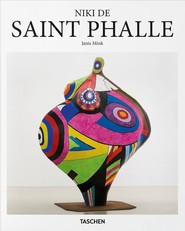
A key contributor to Nouveau Réalisme in early 1960s Paris, Niki de Saint Phalle (1930-2002) worked alongside artists such as Arman, Yves Klein, and Jean Tinguely, scavenging real objects in place of traditional art materials. She connected art to life by instrumentalizing household items, machine parts, and even toys for her early assemblages. Saint Phalle created her first shooting painting, or Tir, in 1961, and went on to conduct these performances in such varied locations...
Discover a world of decorative ideas with this compendium of history’s most elegant patterns and ornamental designs.The World of Ornament brings together the two greatest encyclopedic collections of ornament of the 19th century: Auguste Racinet’s L’Ornement polychrome Volumes I and II (1875–1888) and Auguste Dupont-Auberville’s L’Ornement des tissus (1877) to provide one lavish source book spanning jewelry, tile, stained glass, illuminated manuscript, textile, and ceramic orn...
Mario Testino is one of the world’s most successful fashion and portrait photographers, whose images are noted for their freshness and intimacy. Peruvian by birth, Testino has been fascinated by Rio de Janeiro since his earliest summer vacations. "When I was 14, on holiday, and going from my house to the beach and seeing everyone walk everywhere in their tiny bathing suits―the girls and boys were so sexy and carefree and wild―I just could not believe it."This easy sensuality,...
Favorites in Latin AmericaA journey to unique hotels and hideawaysLatin America is a cradle of ancient civilizations like those of the Incas, Maya and Aztecs, and later became the goal of European explorers and immigrants. It looks back on a long history, often full of contrasts and contradictions, but also has a very special multicultural atmosphere. This book presents breathtakingly beautiful landscapes and extraordinary hotels. Short texts and practical information complem...
“The Tower is also present to the entire world... a universal symbol of Paris... from the Midwest to Australia, there is no journey to France which isn’t made, somehow, in the Tower’s name.” — Roland Barthes When Gustave Eiffel completed his wrought iron tower on Paris’s Champ de Mars for the World’s Fair in 1889, he laid claim to the tallest structure in the world.Though the Chrysler Building would, 41 years later, scrape an even higher sky, the Eiffel Tower lost none of its...
Since the dawn of modernism, visual and music production have had a particularly intimate relationship. From Luigi Russolo’s 1913 Futurist manifesto L’Arte dei Rumori (The Art of Noise) to Marcel Duchamp’s 1925 double-sided discs Rotoreliefs, the 20th century saw ever more fertile exchange between sounds and shapes, marks and melodies, and different fields of composition and performance. In Francesco Spampinato’s unique anthology of artists’ record covers, we discover the rhy...
With his instantly recognizable decorative style, Czech artist and Art Nouveau master Alphonse Mucha (1860–1939) defined the look of the fin-de-siècle. In evocative shades of peach, gold, ochre, and olive, his seductive compositions of patterns, flowers, and beautiful women became paradigms of the Belle Époque years. Mucha’s work permeated illustration, posters, postcards, and the advertising designs of his day.His striking posters of star actress Sarah Bernhardt were particu...
Mario Testino is recognized as the ultimate fashion photographer of his generation but his pictures of Kate Moss transcend fashion. The result of two decades of extraordinary friendship, and phenomenal glamour, this iconic collaboration is an intimate insight into the lives and minds of two of the world’s definitive style leaders. This book follows the journey of this exceptional fashion partnership, from early days backstage at the shows to behind-the-scenes glimpses of the ...
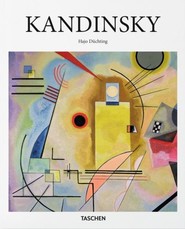
Over the course of his artistic career, Wassily Kandinsky (1866–1944) transformed not only his own style, but the course of art history. From early figurative and landscape painting, he went on to pioneer a spiritual, emotive, rhythmic use of color and line and is today credited with creating the first purely abstract work. As much a teacher and theorist as he was a practicing artist, Kandinsky’s interests in music, theater, poetry, philosophy, ethnology, myth, and the occult...
On a winter’s night in 1949 in New York City, young marketing student and budding photographer Walter Chandoha spotted a stray kitten in the snow, bundled it into his coat, and brought it home. Little did he know he had just met the muse that would determine the course of his life. Chandoha turned his lens on his new feline friend—which he named Loco—and was so inspired by the results that he started photographing kittens from a local shelter.These images marked the start of ...
Decades’ worth of images have been distilled down to 512 pages of photographs in this ultimate retrospective collection of Nobuyoshi Araki's work, selected by the artist himself. First published as a Limited Edition and now back in a new format to celebrate TASCHEN’s 40th anniversary, the curation delves deep into Araki’s best-known imagery: Tokyo street scenes; faces and foods; colorful, sensual flowers; female genitalia; and the Japanese art of kinbaku, or bondage. As girls...
W kategorii „Książki obcojęzyczne” umieszczone zostały wszystkie utwory napisane w języku innym niż polski. Znajdują się tutaj publikacje autorów pochodzących z różnych krajów i kultur, poruszające wiele różnych tematów, problemów czy zagadnień. Publikacje w kategorii „Książki obcojęzyczne” przeznaczone są dla czytelników, którzy przez lekturę książek w językach obcych chcą podszkolić swoją znajomość danego języka. Niektóre z publikacji zostały specjalnie przygotowane, aby pomóc w takiej nauce. Znaleźć tu można zarówno klasyki literatury światowej, jak i książki współczesnych pisarzy. Czytelnicy mogą przeczytać w oryginale m.in. książki amerykańskiego pisarza, autora fantasy i opowieści grozy oraz jednego z prekursorów fantastyki naukowej H.P. Lovecrafta (“The Call of Cthulhu”, “The Shadow Out of Time”), czołowego przedstawiciela nurtu powieści detektywistycznej i twórcy postaci Sherlocka Holmesa, Arthura Conana Doyle’a (“The Hound of the Baskervilles”, “A Study in Scarlet”), czy irlandzkiego poety, prozaika i dramatopisarza Oscara Wilde’a (“The Happy Prince and Other Tales”, “The Canterville Ghost”). W nauce języka pomogą wydania dwujęzyczne, tego typu pozycje oferuje m.in. wydawnictwo Wymowne. W ich ofercie znaleźć możemy takie tytuły jak “Treasure Island” Roberta Louisa Stevensona, “Heart of Darkness” Josepha Conrada czy “The Sphinx Without a Secret” Oscara Wilde’a. Alternatywny sposób nauki proponuje wydawnictwo Poltex. Przygotowane przez nich książki mają pomóc czytelnikowi w nauce dzięki czytaniu i jednoczesnym słuchaniu przez niego tekstu w języku angielskim oraz wykonywaniu specjalnych ćwiczeń po każdym rozdziale. Oferują oni takie tytuły jak “The Adventures of Sherlock Holmes” Arthura Conana Doyle’a, “Anne of Green Gables” Lucy Maud Montgomery, “The Secret Garden” Frances Hodgson Burnett, “Frankenstein” Mary Shelley, “Alice in Wonderland” Lewisa Carrolla czy “The Picture of Dorian Gray” Oscara Wilde’a. Najwięcej książek w tej kategorii napisanych zostało w języku angielskim, ale znajdują się tu również pozycje w języku rosyjskim, francuskim czy niemieckim.