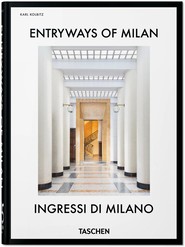

First impressions count, especially in Milano. In this unprecedented photographic journey, editor Karl Kolbitz opens the door to 144 of the city’s most sumptuous entrance halls, captivating in their diversity and splendor. These vibrant Milanese entryways, until now hidden away behind often restrained façades, are revealed as dazzling examples of Italian modernism, mediating public and private space with vivid configurations of color and form, from floors of juxtaposed s...
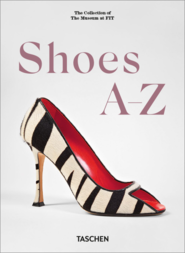
Step inside one of the world’s most enviable closets to celebrate the empowering, sensual, playful, and practical shoe. Hundreds of groundbreaking designs, ephemera, and sketches are featured in this volume, a follow-up to Fashion Designers A–Z, from the most coveted labels such as Christian Louboutin, Manolo Blahník, Gucci, Roger Vivier, and more.
At the dawn of the automobile age, Americans’ predilection for wanderlust prompted a new wave of inventive entrepreneurs to cater to this new mode of transportation. Starting in the 1920s, attention-grabbing buildings began to appear that would draw in passing drivers for snacks, provisions, souvenirs, or a quick meal. The architectural establishment of the day dismissed these roadside buildings as “monstrosities”. Yet, they flourished, especially along America’s Sunbelt, ...
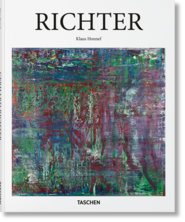
An encounter with Gerhard Richter, the German artist who widened horizons in the relationship between painting and reality. From early photographic paintings, along with his famous RAF cycle, to late abstract paintings, experiencing Richter’s work always offers us the unexpected and unseen. Where he once set out to liberate the medium from ideological ballast, today, faced with the overwhelming presence of digital images, he shows us the unsurpassed impact and intensity of pa...
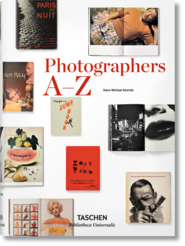
Arranged alphabetically, this biographical encyclopedia features every major photographer of the 20th century alongside her or his most significant monographs. From the earliest representatives of classical Modernism right up to the present day, Photographers A–Z celebrates those photographers who have distinguished themselves with important publications or exhibitions, and who have made a significant contribution to the culture of the photographic image. The entries include ...
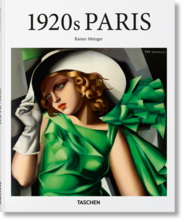
Paris is the City of Light in all its facets. In the 1920s La Ville des lumières gleams especially bright and becomes a magnet for creative people from around the world. This is the decade of Coco Chanel and Josephine Baker, Art Deco and Surrealism, café culture and cabaret.The most famous artists of the epoch, later called Classic Modernism, are in close contact and have lively exchanges with one another – including Marcel Duchamp, Francis Picabia, Pablo Picasso, Réne Clair,...
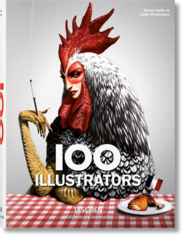
Drawn from TASCHEN’s Illustration Now! series, this go-to catalog brings together 100 of the most successful and important illustrators around the globe. With featured artists including Istvan Banyai, Gary Baseman, Seymour Chwast, Paul Davis, Brad Holland, Mirko Ilić, Anita Kunz, and Christoph Niemann, the international overview provides an invigorating record of the dynamism and diversity of the illustration scene. Each illustrator is featured with a self-portrait, samples f...
To explore the Tarot is to explore ourselves, to be reminded of the universality of our longing for meaning, for purpose and for a connection to the divine. This 600-year-old tradition reflects not only a history of seekers, but our journey of artistic expression and the ways we communicate our collective human story.For many in the West, Tarot exists in the shadow place of our cultural consciousness, a metaphysical tradition assigned to the dusty glass cabinets of the arcane...
In Animals, we discover a different side to the famed photographer who skillfully explores animals’ complex relationship with humans and the environment.Tenderness abounds, particularly in scenes of unkempt street dogs sleeping contentedly next to a human. But there’s also a kind of essential solitude, with animals belonging to no one and simply wandering through life with only their survival instincts to guide them. We witness camels caught in the crossfire during the first ...
The creator of the ubiquitous Knoll “Tulip” chairs and tables, Eero Saarinen (1910–1961) was one of the 20th century’s most prominent space shapers, merging dynamic forms with a modernist sensibility across architecture and design. Among Saarinen’s greatest accomplishments are Washington D.C.’s Dulles International Airport, the very sculptural and fluid TWA terminal at JFK Airport in New York, and the 630 ft. (192 m) high Gateway Arch of St. Louis, Missouri, each of them defi...
From the beginning of human history, individuals across cultures and belief systems have looked to the sky for meaning. The movement of celestial bodies and their relation to our human lives has been the central tenant of astrology for thousands of years. The practice has both inspired reverence and worship, and deepened our understanding of ourselves and the world around us.While modern-day horoscopes may be the most familiar form of astrological knowledge, their lineage rea...
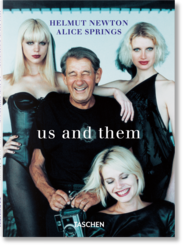
This is a photographic love story tracing the fifty-five years of collaboration, partnership and history of Helmut and June Newton. First published in 1998, their legendary joint project Us and Them was presented in book form and accompanying exhibitions. The book‘s first part – Us – features personal portraits of each other and self-portraits taken over several decades, revealing affection and intimacy behind each image and bringing forth nostalgia of the time. It is a phot...
As a boy, Tom’s first crush was a strapping young farmhand who worked the fields around his family home. Finland is a land of tough physical men, catching fish in the icy sea; cutting logs in the endless forests; threshing oats, rye, and barley on the farms. Tom, a more sensitive boy, admired these rough men and their distinctive clothing, designed for protection and utility.He later said, “When I was young, leather was worn by people who worked outside because it was warm. A...
“Through these travels and the photographs, I got to love the United States more than I could have in any other way.” — Jack Delano Amid the ravages of the Great Depression, the United States Farm Security Administration (FSA) was first founded in 1935 to address the country’s rural poverty. Its efforts focused on improving the lives of sharecroppers, tenants, and very poor landowning farmers, with resettlement and collectivization programs, as well as modernized farming meth...
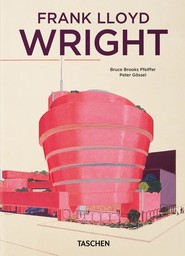
Wright on The star pieces of America’s greatest architect A building by Frank Lloyd Wright (1867–1959) is at once unmistakably individual and evocative of an entire era. Notable for their exceptional harmony with their environment, as well as for their use of steel and glass to revolutionize the interface of indoor and outdoor, Wright’s designs helped announce the age of modernity, as much as they secured his place in the annals of architectural genius. This meticulous com...
This book documents a revolution. With photos, plans, and descriptions, it explores new approaches in building and presents resourceful and green private homes. Rejecting “stardom” but celebrating diversity, talents such as Suzuko Yamada, Gurjit Matharoo, and the collective Frankie Pappas truly build our future.
Through the turbulent events of the last century-and-a-half, graphic design—with its vivid, neat synthesis of image and idea—has distilled the spirit of each age. It surrounds us every minute of the day, from minimalist packaging to colorful adverts, environmental graphics to sleek interfaces: graphic design is as much about reflecting society’s aspirations and values as it is about transmitting information. Now published as part of our popular Basic Art series, this vibrant ...
Encompassing the entire NFT ecosystem from algorithmic art to avatars and AI, the first major art historical survey of this field is now available in an updated, budget-friendly edition and includes 11 additional artists. With 10 academic essays and 111 artists in total, the book offers an extensive insight into digital art on the blockchain today.
The Hermetic Museum takes readers on a magical mystery tour spanning an arc from the medieval cosmogram and images of Christian mysticism, through the fascinating world of alchemy to the art of the Romantic era. The enigmatic hieroglyphs of cabalists, Rosicrucians, and freemasons are shown to be closely linked with the early scientific illustrations in the fields of medicine, chemistry, optics, and color theory. Even for those with no knowledge of the fascinating history of a...
As his personal circumstances move in constant flux, Ai Weiwei remains a cultural magnet. Renowned for his political activism and social media activity almost as much as for his social interventions, contemporary approach to the readymade, and knowledge of Chinese traditional crafts, Ai’s fame extends throughout and beyond the art world. Drawn from TASCHEN’s limited Collector’s Edition, this monograph explores each of Ai’s career phases up until his release from Chin...
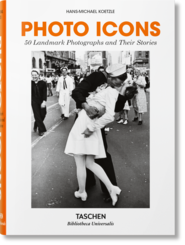
Photographs have a strange and powerful way of shaping the way we see the world. The most successful images enter our collective consciousness, defining eras, making history, or simply touching something so fundamentally human and universal that they have become resonant icons all over the globe. To explore this unique influence, Photo Icons puts some of the most important photographic landmarks under the microscope.From some of the earliest photography, such as Nicéphore Nié...
The arresting pictures of Frida Kahlo (1907–54) were in many ways expressions of trauma. Through a near-fatal road accident at the age of 18, failing health, a turbulent marriage, miscarriage and childlessness, she transformed the afflictions into revolutionary art. In literal or metaphorical self-portraiture, Kahlo looks out at the viewer with an audacious glare, rejecting her destiny as a passive victim and rather intertwining expressions of her experience into a hybrid rea...
The world appears to be divided into cat and dog lovers, but fortunately Walter Chandoha, the 20th century’s greatest pet photographer found himself happily in the middle. He loved these intriguing creatures equally for their unique beauty and individualism, and as subjects to photograph in a career spanning over 70 years. While working on his critically acclaimed TASCHEN book Cats, Chandoha handpicked his favorite dog photos for a potential follow-up title, putting into care...
Painter, sculptor, writer, and filmmaker, Salvador Dalí (1904–1989) was one of the century’s greatest exhibitionists and eccentrics—and was rewarded with fierce controversy wherever he went. He was one of the first to apply the insights of Sigmund Freud and psychoanalysis to the art of painting, approaching the subconscious with extraordinary sensitivity and imagination. This publication presents the artist’s painted oeuvre.After many years of research, Robert Descharnes and ...
Take a journey through the makers and shapers of celluloid history. From horror to romance, noir to slapstick, adventure to tragedy, Western to new wave, this selection gathers the greats of 20th-century cinema into one indispensable guide to movie gold. The collection is arranged chronologically and in an extra-handy format.Film entries include a synopsis, cast/crew listings, technical information, actor/director bios, trivia, and lists of awards, as well as film stills, pro...
More than any other piece of furniture, the chair has been subjected to the wildest dreams of the designer. The particular curve of a backrest, or the twist of a leg, the angle of a seat or the color of the entire artifact; each element reflects the stylistic consciousness of an era.From Gerrit Rietveld and Alvar Aalto to Verner Panton and Eva Zeisel, from Art Nouveau to International Style, from Pop Art to Postmodernism, the history of the chair is so complex that it require...
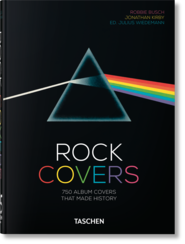
Album art is indelibly linked to our collective musical memories; when you think of your favorite albums, you picture the covers. Many photographers, illustrators, and art directors have become celebrities from their album artworks—the best examples of which will go down in history as permanent fixtures in popular culture. Paying tribute to this art form, Rock Covers brings you a compilation of more than 750 remarkable album covers, from legendary to rare record releases.Arti...
Celebrating the magick of the natural realm, Volume IV of The Library of Esoterica, delves into the symbolism, ceremony, and our ritual relationships with the botanical world. A visual journey through our interdependent evolution with nature, Plant Magick celebrates botanicals as creative muse – from ancient Greek sculptures to Renaissance paintings to visionary art inspired by psychoactive plants, cacti, and mushrooms. Our myths, beliefs, and shared stories are continuall...
While the female nude has long played a conspicuous role in western iconography, the male nude has not always enjoyed such attention, or acceptance. This ode to the male physique celebrates the evolving, at one time illicit, art form from anonymous 19th century erotica through to contemporary work from David Hockney and Duane Michaels. Through the classic, the playful, and the provocative, it explores the compositions, postures, and role-playing of this often under-explored g...
Utagawa Hiroshige (1797–1858) was one of the last great artists in the ukiyo-e tradition. Literally meaning “pictures of the floating world,” ukiyo-e was a particular genre of art that flourished between the 17th and 19th centuries and came to characterize the Western world’s visual idea of Japan. In many ways images of hedonism, ukiyo-e scenes often represented the bright lights and attractions of Edo (modern-day Tokyo): beautiful women, actors and wrestlers, city life, and ...
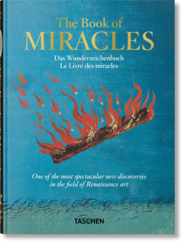
The Book of Miracles first surfaced several ago and is one of the most spectacular discoveries in the field of Renaissance art. The near-complete illustrated manuscript, created in Augsburg around 1550, is composed of 169 pages of large-format illustrations in gouache and watercolor, depicting wondrous and often eerie phenomena.The mesmerizing images deal with both biblical and folkloric tales, depicting stories from the Old Testament and Book of Revelation as well as events ...
Life in the WoodsCreative cabin architecture, from California to SapporoEver since Henry David Thoreau’s described his two years, two months, and two days of refuge existence at Walden Pond, Massachusetts, in Walden, or, Life in the Woods (1854), the idea of a cabin dwelling has seduced the modern psyche. In the past decade, as our material existence and environmental footprint has grown exponentially, architects around the globe have become particularly interested in the pos...
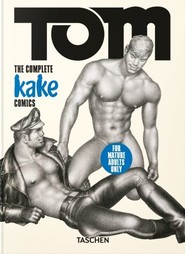
In 1965, Tom of Finland began flirting with the idea of an ongoing character for his panel stories, the ultimate Tom’s Man. He tried out a blond named Vicky—a common male name in Finland—followed by a Tarzan-inspired Jack. Then in 1968 Tom settled on Kake, a dark-haired, mustached leatherman who often wore a tight white T-shirt bearing the motto “Fucker.” Kake lived up to this moniker, a sort of post-Stonewall, hyper-masculine Johnny Appleseed traveling the world on his motor...
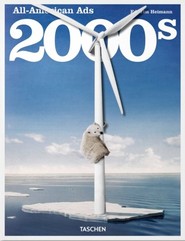
Post-9/11, America’s sense of invincibility was shaken. The dotcom bubble had burst, there was war with Iraq, and eco-angst was becoming mainstream, as evidenced by impressive sales of the Toyota Prius. For escapism, self-expression, and even romantic connection, America turned to tech.Geeks were the new superheroes, and the iPod and iPhone reigned supreme, both commercially and creatively. Social media began its unstoppable rise, with MySpace and Facebook pushing brands to g...
Clothes define people. A person’s attire, whether it be a sari, kimono, or business suit, is an essential code to his or her culture, class, personality, even faith. Indeed, clothing has the power to define people and their generation.Recognizing this sartorial significance is the Kyoto Costume Institute, whose team of curators examine fashion through sociological, historical, and artistic perspectives. With one of the world’s most extensive clothing collections, the KCI has ...
From the legendary Tank Girl to live-action animations with Gorillaz, a Chinese contemporary opera to an exhibition at the Saatchi Gallery, artist Jamie Hewlett is one of the most energetic figures of contemporary pop culture. With influences ranging from hip hop to zombie slasher movies, Hewlett emerged in the mid-1990s as co-creator of the zeitgeist-defining Tank Girl comic. With then-roommate Damon Albarn, he went on to create the groundbreaking cartoon band Gorillaz.The a...
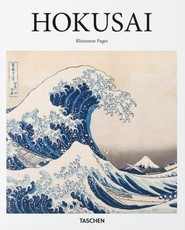
Meet the artist whose majestic breaking wave sent ripples across the world. Hokusai (1760–1849) is not only one of the giants of Japanese art and a legend of the Edo period, but also significantly influenced Western modernism, whose prolific gamut of prints, illustrations, paintings, and beyond forms one of the most comprehensive oeuvres of ukiyo-e art and a benchmark of japonisme. His influence spread through Impressionism, Art Nouveau, and beyond, enrapturing the likes of C...
These restorative retreats have it all Looking for a vacation that leaves you relaxed, restored, and uplifted? In this gorgeous updated guide, Angelika Taschen gathers the most exquisite and inspirational yoga retreats around the world, from an exotic luxury hotel in Bhutan to a spiritual ashram in India, a beach resort in Mexico to a tucked-away treasure in Brazil`s tropical forests. Highlights include the Parmarth Niketan Ashram in Rishikesh—one of the holy cities of the Ga...
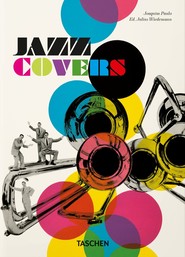
Vinyl ManiaThe greatest in jazz LP artPart design history, part trip down musical memory lane, this anthology of jazz album artwork is above all a treasure trove of creative and cultural inspiration. Spanning half a century, it assembles the most daring and dynamic jazz cover designs that helped make and shape not only a musical genre but also a particular way of experiencing life.From the 1940s through to the decline of LP production in the early 1990s, each chosen cover des...
Modern GraceLyrical forms from FinlandAlvar Aalto (1898–1976) made a unique modernist mark. Influenced by both the landscape and the political independence of his native Finland, he designed warm, curving, compassionate buildings, wholly set apart from the slick, mechanistic, geometric designs that characterized much contemporary European practice.Whether a church, a villa, a sauna, or a public library, Aalto’s organic structures tended to replace plaster and steel with brick...
Step into some of the most beautiful havens of Tuscany. Grand patrician homes and rural hermitages alike open their doors to reveal Medici pottery, sun-kissed drawing rooms, and colorful tiled floors. With detailed captions and crisp photography, this portfolio presents each home and its interior to paint a gorgeous picture of Tuscan living.
An icon of 1980s New York, Jean-Michel Basquiat (1960-1988) first made his name under the graffiti tag "SAMO," before establishing his studio practice and catapulting to fast fame at the age of 20. Although his career lasted barely a decade, he remains a cult figure of artistic social commentary, and a trailblazer in the mediation of graffiti and gallery art. Basquiat's work drew upon diverse sources and media to create an original and urgent artistic vocabulary, biting with ...
Compact in format but no less magnificently endowed, The Big Penis Book will delight even the most hardened aficionado of the male member. No half-cocked measures here, as we celebrate the rampant hardware of 150 models from the 1940s to the '90s, including photos by Bob Mizer of AMG, David Hurles of Old Reliable, and Rip Colt of Colt Studio.
The deceptively simple lemon takes center stage in the second volume of TASCHEN’s collaboration with The Gourmand, masters of the rich intersection of food and art. The star of Renaissance gardens, that shaped the Medici dynasty, have the power to ward off scurvy, had a hand in forming the mob, and whose juice has been used as an invisible ink since 600 CE to pen covert messages, these joyful yellow orbs are ripe with intrigue. The Gourmand charts the fruit’s astonishingly in...
Prepare to embark on a journey through space and time with The NASA Archives, a visual celebration of humankind's unstoppable urge to travel away from Earth to worlds beyond. Featuring hundreds of historic photographs and concept renderings, this collection guides us through NASA's 60-year history.
Up close and suspenseful with Alfred Hitchcock The name Alfred Hitchcock is synonymous with suspense—that is to say, masterful, spine-tingling, thrilling, shocking, excruciating, eye-boggling suspense. With triumphs such as Rebecca, Vertigo, Rear Window, and Psycho, Hitchcock (1899–1980) fashioned a new level of cinematic intrigue and fear through careful pacing, subtlety, and suggestiveness. This complete guide traces Hitchcock’s life and career from his earliest silent film...
Master of the sublime: The essential Impressionist. Along with Turner, no artist has sought more than Claude Monet (1840–1926) to capture light itself on canvas. Of all the Impressionists, it was the man Cézanne called “only an eye, but my God what an eye!” who stayed completely true to the principle of absolute fidelity to the visual sensation, painting directly from the object. It could be said that Monet reinvented the possibilities of color, and whether it was thro...
Take home one of the most cult artists in history with this handy edition, presenting all known works of Hieronymus Bosch. Through full spreads and carefully curated details, the book surveys the artists compositional scope as well as his most compelling, if disturbing, inventions, from horse-skulled harp players to devils on ice skates.
Behind the scenes of Nic Roeg’s 1976 sci-fi masterpiece starring David BowieFirst advertised as a “mind-stretching experience,” Nicolas Roeg’s 1976 The Man Who Fell to Earth stunned the cinema world. A tour-de-force of science fiction as art form, the movie brought not only hallucinatory visuals and a haunting exploration of contemporary alienation, but also glam-rock legend David Bowie in his lead role debut as paranoid alien Newton.Based on Walter Tevis’s 1963 sci-fi fable ...
Surrealism meets Symbolism in Salvador Dalí’s tarot deck Legend has it that when preparing props for the James Bond film Live and Let Die, producer Albert Broccoli commissioned Surrealist maestro Salvador Dalí to create a custom deck of tarot cards. Inspired by his wife Gala, who nurtured his interest in mysticism, Dalí eagerly got to work, and continued the project of his own accord when the contractual deal fell through. The work was published in a limited art edition in 19...
After Egon Schiele (1890–1918) freed himself from the shadow of his mentor and role model Gustav Klimt, he had just ten years to inscribe his signature style into the annals of modernity before the Spanish flu claimed his life. Being a child prodigy quite aware of his own genius and a passionate provocateur, this didn’t prove to be too big a challenge.His haggard, overstretched figures, extreme depiction of sexuality and self-portraits, in which he staged himself with emaciat...
Looking to the sky, the second volume in TASCHENs Library of Esoterica series delves into the vibrant visual history of Western astrology. From its birth as astronomys sister science, to our current Age of Aquarius, the story of this ancient practice is told through more than 400 images-from Egyptian temples to contemporary art-sequenced to...
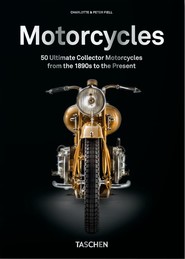
50 of the most legendary and coveted motorcycles of all timeDream Rides: The most spectacular bikes on the planet. From the 1894 Hildebrand & Wolfmüller to the 2020 Aston Martin AMB 001, this book lavishly explores 50 of the most desirable motorcycles to have ever sped thrillingly around a circuit or along an open road. From pioneering record-breakers, luxury tourers, and legendary roadracers to GP-winning machines, iconic superbikes, and exotic customs, this book celebrates ...
Japan's contemporary architecture has long been among the most inventive in the world, recognized for sustainability and infinite creativity. No fewer than eight Japanese architects have won the Pritzker Prize.Since Osaka World Expo '70 highlighted contemporary forms, Japan has been a key player in global architecture. Tadao Ando's geometry put Japanese building on the map, bridging East and West. After his concrete buildings, figures like Kengo Kuma, Shigeru Ban, and Kazuyo ...
The Boy King’s Journey through the UnderworldTutankhamun’s royal voyage into paradise, as told by ancient Egyptian treasuresBuried in the 14th century BC but unearthed by Howard Carter in 1922, the objects entombed with Tutankhamun are an invaluable window into a long-extinct belief system. Seen today, they create an intricate picture of how the ancient Egyptian people viewed the perilous journey to paradise, a utopian Egypt that could only be entered following the final judg...
Als der Schweizer Galerist Bruno Bischofberger 1983 Andy Warhol, den farbentsättigten Übervater of Pop, und Jean-Michel Basquiat, Shootingstar des Wild-Style!-New-Yorks, zusammenbrachte, war das eher als Marketingag gedacht, doch es funktionierte: Warhol und Basquiat taten sich zusammen, um einander zu lieben, zu achten, voneinander zu profitieren und gemeinsam Kunst zu machen. Die komplexe Beziehung zwischen dem etablierten Altmeister und dem jungen Wilden Basquiat, der sich...
An homage to fashion’s most beloved photographerPeter Lindbergh photographed Dior’s most exceptional muses, Marion Cotillard and Charlize Theron among them, and signed campaigns for Lady Dior and J'Adore with his inimitable style. Throughout his career, the photographer was one of the house’s closest collaborators. This final book was an original cocreation that was close to the artist’s heart—and to ours.Seventy years of Dior history projected against the effervescence of Ti...
Tortured talent: The genius and the angst of an Expressionist master Vincent van Gogh s story is one of the most ironic in art history. Today, he is celebrated the world over as one of the most important painters of all time, recognized with sell-out shows, feted museums, and record prices of tens of millions of dollars at auction.Yet as he was painting the canvases that would subsequently become these sell-out modern masterpieces, van Gogh was battling not only the disintere...
Eine Stilkunde der Bekleidung von der Antike bis 1888August Racinets ursprünglich zwischen 1876 und 1888 erschienenes Buch Le Costume historique war und ist die umfassendste Studie über Bekleidung, die es je gab. Das sechsbändige Werk behandelt weltweite Bekleidungsstile und Mode von der Antike bis zum Ende des 19. Jahrhunderts und ist in seiner Spannbreite und Detailgenauigkeit einzigartig.TASCHENs Nachdruck des kompletten Werks präsentiert Racinets wunde...
The history of the adidas shoe, from its earliest beginnings until today100 years ago the brothers Adolf ("Adi") and Rudolf Dassler made their first pair of sports shoes. Hundreds of groundbreaking designs, epic moments, and star-studded collabs later, this book presents the first visual review of the adidas shoe through more than 350 models including never-before-seen prototypes and one-of-a-kind originals.To further develop and tailor his products to athletes’ specific need...
Sharp angles, strange forms, lurid colors, and distorted perspectives are classic hallmarks of Expressionism, the twentieth century movement that prioritized emotion over objective reality. Though particularly present in Germany and Austria, the movement's approach flourished internationally and is today hailed as one of the most influential shifts in art history. With leading groups Die Brucke (The Bridge) and Der Blaue Reiter (The Blue Rider), and key players such as Wassil...
This devoted compendium to the female derriere packs a whole lot of big booty into one petite treat of a book. Featuring more than 150 images of the biggest and best rears from The Big Book of Butt, including 30 new mouth-watering images, its one irresistible ode to voluptuous curves from the 1950s to today.
Bibliophiles, rejoice! In this rapturous photographic journey, Massimo Listri travels to some of the oldest and finest libraries to celebrate their architectural and historical wonder. From medieval to 19th-century, from private to monastic, this is a cultural-historical pilgrimage to the heart of our halls of learning and the stories they tell.
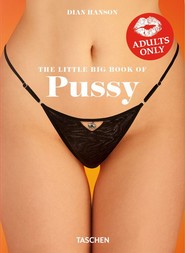
The origin of the world for pocket change! Gustave Courbet got it right in 1866 when he painted a voluptuous woman's furry cleft and titled it L'Origine du monde. We all come from the pussy and half of us spend our lives trying to climb back in-now you can carry 150 of the best right in your back pocket.
Born in Berlin in 1920, Helmut Newton trained as a teenager with legendary photographer Yva, following her lead into the enticing pastures of fashion, portraiture and nudes. Forced to flee the Nazis aged only 18, Newton never left Berlin behind. After his career exploded in Paris in the 1960s, he returned regularly to shoot for magazines like Constanze, Adam, Vogue, Conde Nast's Traveler, ZEITmagazin, Manner Vogue, Max and the Suddeutsche Zeitung Magazin as well as his own ma...
Over 150 of the best photos from the original volume are now in this compact book. From Betty Grable to Bettie Page, the greatest legs of the 20th Century are here, shot by Irving Klaw, Bunny Yeager and Elmer Batters. Silk stockings, high heels, curvy calves, taut thighs, playful toes - and no troublesome text - could leg love get any sweeter?
Brutalist BeautiesArchitectural remnants of the USSRElected the architectural book of the year by the International Artbook and Film Festival in Perpignan, France, Frédéric Chaubin’s Cosmic Communist Constructions Photographed explores 90 buildings in 14 former Soviet Republics. Each of these structures expresses what Chaubin considers the fourth age of Soviet architecture, an unknown burgeoning that took place from 1970 until 1990.Contrary to the 1920s and 1950s, no “school”...
Pin-up travels the long road from barracks wall to high artSince TASCHEN released The Great American Pin-up, international interest in this distinctly American art form has increased exponentially. Paintings by leading artists such as Alberto Vargas, George Petty, and Gil Elvgren that sold for $ 2,000 in 1996 are going for $ 200,000 and more today. Pin-up—drawings, paintings, and pastels of an idealized female face and figure intended for public display—was produced between 1...
Celebrate 90+ years of Mickey Mouse with one of the most expansive illustrated publications on the Disney universe: behind-the-scenes shots, rare animation art, and vintage comics trace Mickeys cartoons, his comic adventures, the world of Mickey merchandise and memorabilia, as well as the legendary Mickey Mouse Club.
They’re not your girls next door Fashion and fetish in a female fantasyland Ellen von Unwerth was a supermodel before the term was invented, so she knows a thing or two about photographing beautiful women. Now one of the world’s most original and successful fashion photographers, she pays homage to the world’s most delectable females in Fräulein. This celebration of our era’s sexiest female icons includes Claudia Schiffer, Kate Moss, Vanessa Paradis, Britney Spears, Eva Mende...
Nestled in the south of France, bordering the Mediterranean Sea, is a land renowned for its lavender fields, fine cuisine, golden sun, and dreamy landscapes.The region of Provence has inspired such masters as Alphonse Daudet and Vincent van Gogh. So enthralled was Paul Cezanne by the Mont Sainte-Victoire that he immortalized it in a series of paintings. We enter his Provence studio, which still looks the same as it did over a century ago, as well as the house where Frederic M...