Otwórz menu


Culled and assembled by Romeyn Beck Hough between 1888 and 1913 in what still remains a stunning and unparalleled achievement, American Woods—originally published in 14 volumes, with actual specimens mounted on card stock—is a work of breathtaking beauty that has set the standard for the study of trees and wood.The Woodbook reproduces, in painstaking facsimile, all of the specimen pages from the original volumes; for this purpose, TASCHEN obtained an extremely rare original s...
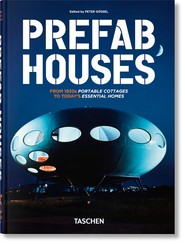
A prefab is a mass-produced house, constructed in a factory and assembled on–site in a few days or weeks. Once regarded as a cheap, easy solution for urgent housing problems, the prefab has evolved to become a synonym for ambitious design and sophisticated detailing solutions.The amazing history of prefabricated houses started in England in the 1830s with a building kit for emigrants moving to Australia. Even today, prefabricated houses provide a high percentage of living spa...
In Darren Almond’s Fullmoon photographs, the light of the moon is eerily enhanced, infusing the landscape with haunting ideas of nature and time. This expanded edition includes over 370 images—from Yosemite to the Japanese seashore, from Patagonia to Bermuda, and from the Alps to the English meadows—in a beautiful journey around the globe at night.
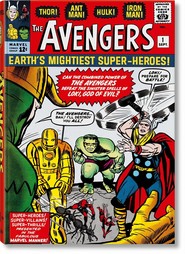
By early 1963 the foundations of the Marvel Universe had been laid. Following the introduction of the Fantastic Four in 1961 came the amazing (Spider-Man), the astonishing (Ant-Man), the strange (Doctor, that is), the incredible (Hulk), the invincible (Iron Man) and the mighty (Thor). Still, Marvel editor in chief Stan Lee realized something was missing.“I was writing these characters and I thought it would fun to put them together in a team,” he recalled. So Lee and artist J...
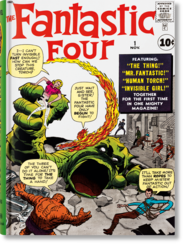
Hoping to break out of a sales slump at Marvel in the early 1960s, veteran comic creators Stan Lee and Jack Kirby hit on the idea of doing a super-team. Kirby, who thought super heroes were due for a revival after 15 years of being pushed aside by romance, horror, and war comics, saw it as smart business. Lee just once wanted to “do the type of story I myself would enjoy reading.” The Fantastic Four forever changed their careers, their lives, and the comic book industry.Some ...
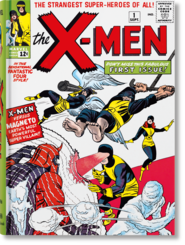
When Marvel publisher Martin Goodman asked Stan Lee to deliver another new team book for his line of comics, he had no idea he’d be getting something like The X-Men. In fact, nobody could have imagined the extraordinary phenomenon the X-Men would eventually grow into—not Goodman, not Lee, not even the forward-thinking futurist Jack Kirby. What they started out as was a charming, ragtag team of misfits, devised by Lee and Kirby to be mutants—youngsters born with “X-tra” powers...
When Stan Lee first pitched the idea of Spider-Man in 1962, his boss was full of objections: People hate spiders. Teenagers aren’t lead characters; they’re sidekicks. He should be glamorous and successful, not a friendless loser. But Stan persisted and Martin Goodman let him give the unlikely hero a tryout in Amazing Fantasy, which was already slated for cancellation. With Spider-Man on the cover, No. 15 shot to the top of Marvel’s best-seller list for the year, and the rest ...
Leonhart Fuchs (1501–1566) was a founding father of modern botany, honored to this day in the vivid flower, and corresponding color, Fuchsia. In 1543, Fuchs combined his masterful botanical knowledge with groundbreaking medical research in his New Herbal, a catalog of some 500 types of plants and their healing properties.While a dependable scientific reference, The New Herbal won fame above all with the detail and quality of its illustrations. Alongside essays describing the ...
Nothing succeeds like success, as the saying goes, but in the case of Donald Duck the opposite is true: the candor with which Donald reveals his weaknesses wins our hearts and stays with us forever.Revisit Donald's life's work from nine decades in this vibrantly illustrated publication on the Disney universe. Following Walt Disney's Mickey Mouse: The Ultimate History by TASCHEN, we witness the career of Mickey's only rival for the throne as Disney's most popular creation. Fro...
Experience the making of JR’s La Caverne du Pont Neuf through behind-the-scenes shots and preparatory material. This book presents La Caverne from inception to installation, including earlier works featuring caves and trompe l’oeil as well as an in-depth interview with Hans Ulrich Obrist about the visual references for this monumental installation.
Soon available in a limited edition.
Our Movies series enters the 21st century with this definitive lineup of the 100 most important films made during the 2000s, an age of evergreen franchises, historical epics, and comic-book superheroes, as well as fast-evolving CGI aesthetics, low-key global indies gaining unprecedented audiences, and hard-hitting documentaries (and mockumentaries) becoming mainstream feature hits.Through the gripping stories, insightful dramas, and thrilling, mindless escapism 100 Movies of ...
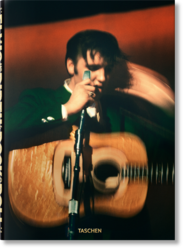
“Elvis who?” was photographer Alfred Wertheimer’s response when, in early 1956, RCA Victor asked him to photograph an up-and-coming crooner from Memphis. Little did Wertheimer know that this would be the job of his life: just 21 years old, Elvis Presley was—as we now know—about to become a legend.A fly on the wall in Presley's presence, Wertheimer took nearly 3,000 photographs of Elvis that year, creating a penetrating portrait of a man poised on the brink of superstardom. Ex...
In his distinguished career as a Hollywood photographer, Bob Willoughby captured Marilyn Monroe, Elizabeth Taylor and Jane Fonda, but remains unequivocal about his favorite subject: Audrey Kathleen Ruston, later Edda van Heemstra Hepburn-Ruston, best known as Audrey Hepburn. Willoughby was called in to shoot the new starlet one morning shortly after she arrived in Hollywood in 1953. It was a humdrum commission for the portraitist often credited with having perfected the photo...
Daniel Kramer’s classic Bob Dylan portfolio captures the artist’s transformative “big bang” year of 1964–65. Over the course of a year and a day, Kramer’s extraordinary access to Bob Dylan on tour, in concert, and backstage, allowed for one of the most mesmerizing photographic portfolios of any recording artist and a stunning document of Dylan breaking through to superstardom.Highlights include the Lincoln Center’s Philharmonic Hall concert with Joan Baez; the Bringing It All...
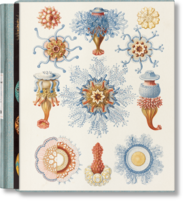
Ernst Haeckel (1834–1919) was a German-born biologist, naturalist, evolutionist, artist, philosopher, and doctor who spent his life researching flora and fauna from the highest mountaintops to the deepest ocean. A vociferous supporter and developer of Darwin’s theories of evolution, he denounced religious dogma, authored philosophical treatises, gained a doctorate in zoology, and coined scientific terms which have passed into common usage, including ecology, phylum, and stem ...
When the excavations at Pompeii were first placed on a scholarly archaeological footing in the 19th century, brothers Fausto and Felice Niccolini were close at hand and ready to respond. Making use of the newly introduced technique of color lithography, they documented the buildings, frescos, statues, as well as the most ordinary everyday objects, of the city buried in just 24 hours by the catastrophic eruption of Vesuvius and preserved for over 1,600 years under a mantle of ...
Movies from the decade of excess, enormity, and experimentalismFrom Aliens to Amadeus, get your fill of 1980s nostalgia with this movie bible of all things bold, bizarre, and boisterous. We've diligently compiled a list of the most influential films of the 1980s that's sure to please popcorn gobblers and highbrow chin-strokers alike. Adventurous, excessive, and experimental, ’80s cinema saw moviegoers get their kicks from pictures as wide-ranging as Blade Runner, Gandhi, and ...
When Flemish engraver and publisher Theodore de Bry issued the first volume of his America series in 1590, the New World was truly novel for most Europeans. Gleaned from the travel accounts of adventurers like Thomas Harriot, Sir Francis Drake, and Sir Walter Raleigh, De Bry’s magnificent engravings brought the new continent and its inhabitants to an enraptured audience across the Atlantic.From “Virginia” (today’s North Carolina) and Florida to Central America and down into P...
Raphael (1483–1520) is considered the most important artist of the Italian High Renaissance alongside Michelangelo and Leonardo. In his short lifetime he created around one hundred paintings and numerous frescoes, including nine fresco cycles, on an unsurpassed variety of themes – from sensual female beauties, antique myths and portraits of wealthy Romans and church dignitaries to history cycles and biblical scenes. He produced altarpieces, as well as designing tapestries for...
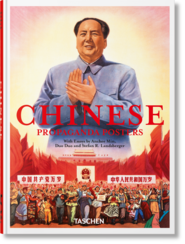
With his smooth, warm, ruddy face which radiated light in all directions, Chairman Mao Zedong was a fixture in Chinese propaganda posters produced between the birth of the People’s Republic in 1949 and the early 1980s.Chairman Mao, portrayed as a stoic superhero (aka the Great Teacher, the Great Leader, the Great Helmsman, the Supreme Commander), appeared in all kinds of situations (inspecting factories, smoking a cigarette with peasant workers, standing by the Yangzi River i...
Travel across continents and climates to experience architecture that’s rewriting the rules of sustainability. Like the other titles in our Homes for Our Time series, each of the 63 projects in Sustainable Living opens a window into a unique dwelling inspired by the pressures and possibilities of a warming planet with finite resources. The result is a sweeping story of architects, ranging from Norman Foster to the Snøhetta practice, building in bold new ways that honor the ec...
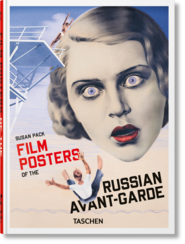
At the intersection of the visual, graphic, and cinematic arts, film posters are a unique and thrilling record of a particular cultural Zeitgeist. This book brings together 250 posters from the Soviet Union of the 1920s and early 1930s to explore the energy and invention of this period, before Soviet Realism became the official art doctrine.Drawn from the private collection of collector Susan Pack, the selection includes the work of 27 different artists. From bold figuration ...
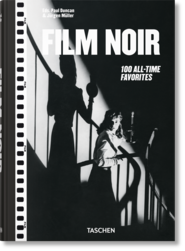
Enter a world populated by private eyes, gangsters, psychopaths, and femmes fatales, where deception, lust, and betrayal run rampant. This film-by-film photography book on film noir and neo-noir begins with the early genre influencers of German and French silent film, journeys through such seminal works such as Double Indemnity, The Postman Always Rings Twice, and Vertigo, and arrives at the present day via Chinatown, Pulp Fiction, Heat, and the recent cult favorite Drive.Ent...
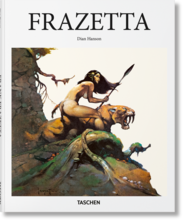
Frank Frazetta has reigned as the undisputed king of fantasy art for well over 50 years, the value of his paintings now climbing as high as his fans’ admiration. Each year his works break the previous year’s auction records, with the cover for Lancer books 1967 Conan bringing $13.5 million in September 2025.Born to a Sicilian immigrant family in Brooklyn, 1928, Frazetta was a minor league athlete, petty criminal and serial seducer with movie star looks and phenomenal talent. ...
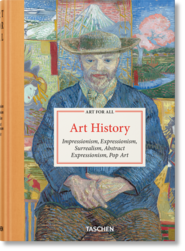
A comprehensive volume covering five seminal genres that shaped art, from the late 19th century and well into the 20th: Impressionism, Expressionism, Surrealism, Abstract Expressionism and Pop Art. Each approach was distinct in aesthetic and philosophy, but all had immediate impact and enduring influence. Many great names were indelibly associated with one, some explored several during their careers.Impressionism, led by Monet and Renoir, focused on light and color, capturing...
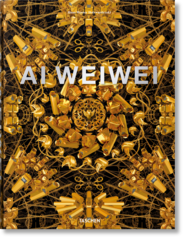
Ai Weiwei is famous for much more than his art. As a champion for the right to free expression and against arbitrary state power, his actions reach far beyond the art world. His work is infused with a deep social and political commitment: when he brings 1,001 Chinese citizens from all classes and regions to Documenta 12, when he strews over 100 million hand-made porcelain sunflower seeds across the Turbine Hall at the Tate Modern, when he creates a frieze of school bags comme...
“Bond, James Bond.” Since Sean Connery uttered those immortal words in 1962, the most dashing secret agent in the history of cinema has been charming and thrilling audiences worldwide. This impeccably British character created by author Ian Fleming has starred in 25 EON-produced films played by six different actors over seven decades.Paul Duncan, who has compiled this volume covering every James Bond film ever made, beginning with Dr. No (1962) and ending with No Time To Die ...
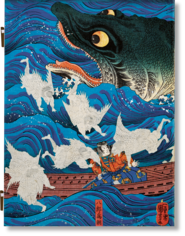
From Edouard Manet’s portrait of naturalist writer Émile Zola sitting among his Japanese art finds to Van Gogh’s meticulous copies of the Hiroshige prints he devotedly collected, 19th-century pioneers of European modernism made no secret of their love of Japanese art. In all its sensuality, freedom, and effervescence, the woodblock print is single-handedly credited with the wave of japonaiserie that first enthralled France and, later, all of Europe—but often remains misunders...
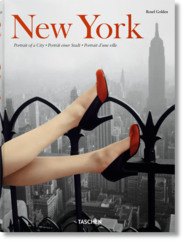
This book presents the epic story of New York on nearly 600 pages of emotional, atmospheric photographs, from the mid-19th century to the present day. Supplementing this treasure trove of images are over a hundred quotations and references from seminal books, movies, shows, and songs. The city’s fluctuating fortunes are all represented, from the wild nights of the Jazz Age to the hedonistic disco era, from to the grim days of the Depression to the devastation of 9/11 and its ...
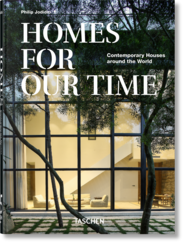
Across small cottages and lavish villas, beach houses and forest refuges, discover the world’s finest crop of new homes. This cutting-edge global digest features such talents as Shigeru Ban and Marcio Kogan alongside up-and-coming names like Aires Mateus, Xu Fu-Min, Vo Trong Nghia, Desai Chia, and Shunri Nishizawa. Here, there are homes in Australia and New Zealand, from China and Vietnam, in the United States and Mexico, and on to less expected places like Ecuador and Costa ...
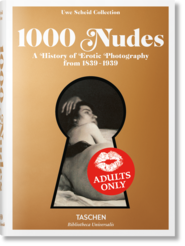
The history of nude photography is the history of people’s fascination with the topic. Indeed, the photographic depiction of the human body is the only subject that has enthralled photographers, theoreticians, and consumers over such a long period—more than 150 years. No other motif is as prevalent as this one during all the phases of development comprising the history of photography, no other is present, whatever the technique, and is a subject of discussion within the conte...
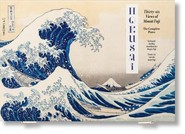
Mount Fuji has long been a centerpiece of Japanese cultural imagination, and nothing captures this with more virtuosity than the landmark woodblock print series Thirty-six Views of Mount Fuji by Katsushika Hokusai (1760–1849). The renowned printmaker documents 19th-century Japan with exceptional artistry and adoration, celebrating its countryside, cities, people, and serene natural beauty. Produced at the peak of Hokusai’s artistic ambition, the series is a quintessential wor...
Rocky Balboa is the Philadelphian icon who took on the world and won. The original “Italian Stallion,” the gutsy fighter who rose above the odds to boxing glory, and a rags-to-riches legend in the business of making movies. Ever since Sylvester Stallone unleashed his impassioned title character in 1976, the resilient fighter has earned his place in history as a symbol of tenacity and courage and a legend of cinematic success.The story of Rocky the movie is as exciting as t...
Simon “Woody” Wood, founder and editor-in-chief of Sneaker Freaker magazine, has spent the last two decades analyzing the global cult of footwear fanatics. That experience directly inspired World’s Greatest Sneaker Collectors, a stonking 752-page journey into the priceless stockpiles and obsessive minds of prominent aficionados.From Tokyo to New York, via London, Philadelphia, Melbourne, and Stjørdal, no crumbled midsole is left unturned as over 2,500 vintage classics, unique...
As sensitive to human suffering as to the simple pleasures of life, Robert Doisneau is one of the most celebrated exponents of the Photographie humaniste that swept through the 1950s. Cherished in particular for his soulful portraits of Paris, Doisneau demonstrated a unique ability to find – and perfectly frame – charismatic characters, entertaining episodes, and fleeting moments of humor and affection.A summation of a spectacular career, this extensive Doisneau collection in...
Have you ever thought of citrus fruits as celestial bodies, angelically suspended in the sky? Perhaps not, but J. C. Volkamer (1644–1720) did—commissioning an extravagant and breathtaking series of large-sized copperplates representing citrons, lemons, and bitter oranges in surreal scenes of majesty and wonder.Ordering plants by post mostly from Italy, Germany, North Africa, and even the Cape of Good Hope, the Nuremberg merchant Volkamer was a devotee of the fragrant and exot...
To travel through Italy is as close as one gets to being in paradise. For centuries, writers, artists, architects, and merchants have been drawn here, inspired by the beauty of Venice, Florence, Naples, and Rome. Countless books, paintings, poems, and sculptures are evidence of its undying appeal, and over the past 60 years, the country has become one of the world’s top travel and holiday destinations. The loveliness of Italy is, if not eternal, certainly enduring, and the ea...
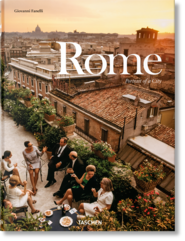
This hefty photographic portrait of Rome brings together hundreds of photographs from the 1840s through to today to explore the extraordinary history, beauty, and art of this incomparable cultural capital. From sepia and black and white to color, these outstanding images dating from the 1840s to the present day allow us — through the eyes of such photographers as Giacomo Caneva, Pompeo Molins, Giuseppe Primoli, Alfred Eisenstaedt, Carlo Bavagnoli, Henri Cartier-Bresson, Pasqu...
The Kama Sutra gives detailed instructions on how to spank it. Contemporary Italians touch it for luck before placing a bet. Americans are having it cosmetically enhanced at rates approaching breast enlargement surgery. The female butt, tush, culo, or derrière has always inspired awe, fantasy, and slavish devotion.Curiously, its primary purpose is functional rather than aesthetic: butts balance our bodies while running, according to biologists. But ask any pygophiliac—as f...
Virtually unparalleled in scope and spanning more than five decades, the photography of visionary Helmut Newton (1920–2004) reached millions through publication in magazines like Vogue and Elle. His oeuvre transcended genres, bringing elegance, style, and voyeurism to fashion, portrait, and glamour photography through a body of work that remains as inimitable as it is unrivaled. Having mastered the art of fashion photography early in his career, Newton’s shoots invariably wen...
This volume is a comprehensive visual history of surfing, marking a major cultural event as much as a publication. Following three and a half years of meticulous research, it brings together hundreds of images to chart the evolution of surfing as a sport, a lifestyle, and a philosophy.The book is arranged into five chronological chapters, tracing surfing culture from the first recorded European contact in 1778 by Captain James Cook to the global and multi-platform phenomenon ...
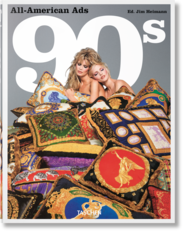
From the Los Angeles riots to the Columbine High School massacre, Americans witnessed events and purchased items that reflected the best and worst of the decade. Bill Clinton’s presidency was in jeopardy, the digital age had erupted, and Silicon Valley was affecting everyone on the planet. Meanwhile nudity and sex ruled the pages of magazines, selling everything from haute couture to fragrances and microwave ovens. Nirvana entertained Generation X while the “Greatest Gene...
In 1960, photographer William Claxton and noted musicologist Joachim E. Berendt traveled the United States hot on the trail of jazz. Through music halls and marching bands, side streets and subways, they sought to document this living, breathing, beating musical phenomenon that enraptured America across social, economic, and racial lines.The result of Claxton and Berendt’s collaboration was Jazzlife, much sought after by collectors and now revived in this fresh TASCHEN volume...
After the bust out success of The Big Book of Breasts TASCHEN presents the perfect companion, The Big Penis Book. When it comes to pleasure, size doesn’t matter; as we all know it’s quality, not quantity, that counts. But let’s admit it: a big penis is undeniably compelling. Big shoulders, big lapels, and big hair may come and go, but the big penis never goes out of fashion. With those possessing more than 8 inches (20 cm) making up less than 2% of the world’s populat...
Modernist aesthetics in architecture, art, and product design are familiar to many. In soaring glass structures or minimalist canvases, we recognize a time of vast technological advance which affirmed the power of human beings to reshape their environment and to break, radically, from the conventions or constraints of the past. Less well-known, but no less fascinating, is the distillation of modernism in graphic design.This unprecedented TASCHEN publication, authored by Jens ...
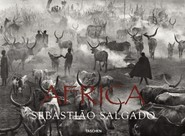
Sebastião Salgado is one the most respected photojournalists working today, his reputation forged by decades of dedication and powerful black-and-white images of dispossessed and distressed people, taken in places where most wouldn’t dare to go. Although he has photographed throughout South America and around the globe, his work most heavily concentrates on Africa, where he has shot more than 40 reportage works over a period of 30 years. From the Dinka tribes in Sudan and the...
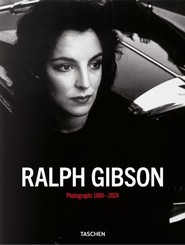
Travelling widely, Ralph Gibson works primarily in inspired series, associated image reveries in both monochrome and colour, whose titles—The Somnambulist, Déjà-Vu, Days at Sea, and Chiaroscuro—underline the particular poetic sensibility that informs his work. Starting out in 1960 with Dorothea Lange, he made his way to New York in 1967 and was soon considered in the same light as the likes of Larry Clark and Diane Arbus. The photographs and series can of course speak for the...
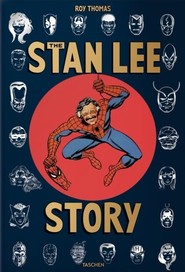
The mostly true tale of Stan Lee, the one and only Godfather of Comics. From his childhood in Depression-era New York, to transforming Marvel into the number one comics publisher in the world, to his 21st-century reinvention as Chief Creative Officer of global entertainment company POW! Entertainment, Stan ?the Man? Lee stands the test of time as the most legendary name in comicbook history. Stanley Lieber began working at Timely Comics in 1940 at the age of 17 and found hims...
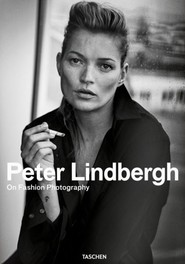
It was on a Malibu beach in 1988 that Peter Lindbergh shot the White Shirts series, images now known the world over. Simple yet seminal, the photographs introduced us to Linda Evangelista, Christy Turlington, Rachel Williams, Karen Alexander, Tatjana Patitz, and Estelle Lefébure. This marked the beginning of an era that redefined beauty, and Lindbergh would go on to alter the landscape of fashion photography for the decades that followed.This book gathers more than 300 images...
By early 1963 the foundations of the Marvel Universe had been laid. Following the introduction of the Fantastic Four in 1961 came the amazing (Spider-Man), the astonishing (Ant-Man), the strange (Doctor, that is), the incredible (Hulk), the invincible (Iron Man) and the mighty (Thor). Still, Marvel editor in chief Stan Lee realized something was missing. “I was writing these characters and I thought it would fun to put them together in a team,” he recalled. So Lee and artist ...
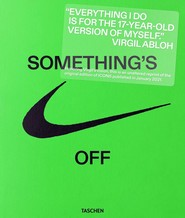
Bringing together all the greats-from Air Jordan 1 to Air Presto-Nike and Virgil Abloh reinvent sneaker culture with the collaborative project The Ten and redesign 10 sneaker icons. Experience engineering ingenuity and Ablohs investigative design process: each shoe is a piece of industrial design, a readymade sculpture, and a wearable all at once.
Land of the Rising Sun at the Turn of the CenturyThe Golden Age of Travel neatly overlaps with the reign of the Emperor Meiji, which began in 1868 with the overthrow of a feudal order that had kept Japan secluded from the outside world for more than 200 years. In the ensuing four-and-a-half decades, Japan became a less remote and more attractive destination for the international traveler and a popular subject for photographers, both Japanese and foreign.In 536 pages, this boo...
This electrifying vinyl edition creates a new and edgy definition for “album art.” Produced in collaboration with Colors magazine, it brings together more than 500 remarkable records from the collection of Alessandro Benedetti and Peter Bastine.This book forms a junction between photography, music, and design, celebrating vinyl for the integrity of sound recording and its artistic potential as a material form. With featured artists including Pink Floyd, The Beatles, Prince, M...
“Elvis who?” was photographer Alfred Wertheimer’s response when, in early 1956, RCA Victor asked him to photograph an up-and-coming crooner from Memphis. Little did Wertheimer know that this would be the job of his life: just 21 years old, Elvis Presley was—as we now know—about to become a legend. A fly on the wall in Presley's presence, Wertheimer took nearly 3,000 photographs of Elvis that year, creating a penetrating portrait of a man poised on the brink of superstardom. E...
At the age of six, Salvador Dalí (1904–1989) wanted to be a cook. At the age of seven, he wanted to be Napoleon. “Since then,” he later said, “my ambition has steadily grown, and my megalomania with it. Now I want only to be Salvador Dalí, I have no greater wish.” Throughout his life, Dalí was out to become Dalí: that is, one of the most significant artists and eccentrics of the 20th century. This weighty volume is the most complete study of Dalí’s painted works ever publishe...
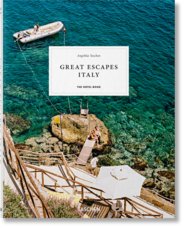
Through ancient wonders, world capitals, and tiny places with infectious personalities, Europe packs some serious travel punches. The world’s second-smallest continent makes up for size with its intricate cultures and abundant charms, boasting artistic masterpieces and architectural marvels as much as natural splendor. This revised and updated edition brings you a curated selection of the most unique hotels and atmospheric guesthouses across the European continent. Selected f...
With his graphic style, figural distortion, and defiance of conventional standards of beauty, Egon Schiele (1890–1918) was a pioneer of Austrian Expressionism and one of the most startling portrait painters of the 20th century. Mentored by Gustav Klimt, Schiele dabbled in a glittering Art Nouveau style before developing his own much more gritty and confrontational aesthetic of sharp lines, lurid shades, and mannered, elongated figures. His prolific portraits and self-portrait...
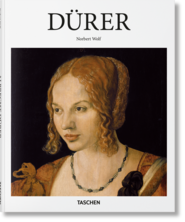
A polymath of the German Renaissance, Albrecht Dürer (1471–1528) was a prolific artist, theorist, and writer whose works explored everything from religion to art theory to philosophy. His vast body of work includes altarpieces, portraits, self-portraits, watercolors, and books, but is most celebrated for its astonishing collection of woodcut prints, which transformed printmaking from an artisan practice into a whole new art form. Dürer’s woodcuts astonish in scale as much as ...
A city built on two millennia of history, Paris is entering the third century of its love story with photography. It was on the banks of the Seine that Niépce and Daguerre officially gave birth to this new art that has flourished ever since, developing a distinctive language and becoming a vital tool of knowledge.Paris: Portrait of a City leads us through what Goethe described as a “universal city where every step upon a bridge or a square recalls a great past, where a fragme...
Some call it the American obsession, but men everywhere recognize the hypnotic allure of a large and shapely breast. In The Big Book of Breasts, Dian Hanson explores the origins of mammary madness through three decades of natural big-breasted nudes. Starting with the World War II Bosom-Mania that spawned Russ Meyer, Howard Hughes’s The Outlaw and Frederick’s of Hollywood, Dian guides you over, around, and in between the dangerous curves of infamous models including Michelle A...
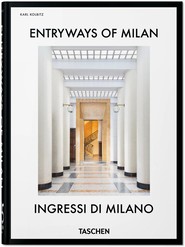
First impressions count, especially in Milano. In this unprecedented photographic journey, editor Karl Kolbitz opens the door to 144 of the city’s most sumptuous entrance halls, captivating in their diversity and splendor. These vibrant Milanese entryways, until now hidden away behind often restrained façades, are revealed as dazzling examples of Italian modernism, mediating public and private space with vivid configurations of color and form, from floors of juxtaposed s...
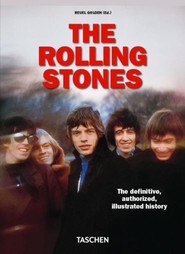
The kind of fame and success The Rolling Stones have achieved in their 60-plus year career is without parallel; their most famous riffs and catchiest lyrics are indelibly engraved in our collective memory. With their mesmerizing on- and off-stage presence, the Stones set the standard for how a rock band should sound, pose, pout, and behave. They were the first to instinctively understand that what you looked like was as important as the music, and that photography had a vital...
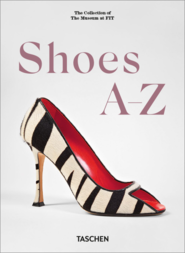
Step inside one of the world’s most enviable closets to celebrate the empowering, sensual, playful, and practical shoe. Hundreds of groundbreaking designs, ephemera, and sketches are featured in this volume, a follow-up to Fashion Designers A–Z, from the most coveted labels such as Christian Louboutin, Manolo Blahník, Gucci, Roger Vivier, and more.
Mushrooms—psychoactive, medicinal, or delicious—have fascinated us for millennia. They have facilitated spiritual quests in ancient and modern times, and their whimsical forms have inspired artists from Bosch to Kusama. Join The Gourmand’s culinary experts on an in-depth mycological journey, with original recipes and texts by top chefs and critics.
At the dawn of the automobile age, Americans’ predilection for wanderlust prompted a new wave of inventive entrepreneurs to cater to this new mode of transportation. Starting in the 1920s, attention-grabbing buildings began to appear that would draw in passing drivers for snacks, provisions, souvenirs, or a quick meal. The architectural establishment of the day dismissed these roadside buildings as “monstrosities”. Yet, they flourished, especially along America’s Sunbelt, ...
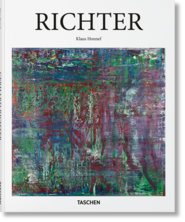
An encounter with Gerhard Richter, the German artist who widened horizons in the relationship between painting and reality. From early photographic paintings, along with his famous RAF cycle, to late abstract paintings, experiencing Richter’s work always offers us the unexpected and unseen. Where he once set out to liberate the medium from ideological ballast, today, faced with the overwhelming presence of digital images, he shows us the unsurpassed impact and intensity of pa...
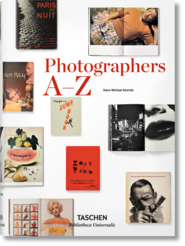
Arranged alphabetically, this biographical encyclopedia features every major photographer of the 20th century alongside her or his most significant monographs. From the earliest representatives of classical Modernism right up to the present day, Photographers A–Z celebrates those photographers who have distinguished themselves with important publications or exhibitions, and who have made a significant contribution to the culture of the photographic image. The entries include ...
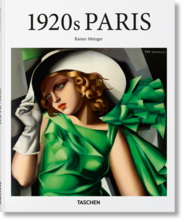
Paris is the City of Light in all its facets. In the 1920s La Ville des lumières gleams especially bright and becomes a magnet for creative people from around the world. This is the decade of Coco Chanel and Josephine Baker, Art Deco and Surrealism, café culture and cabaret.The most famous artists of the epoch, later called Classic Modernism, are in close contact and have lively exchanges with one another – including Marcel Duchamp, Francis Picabia, Pablo Picasso, Réne Clair,...
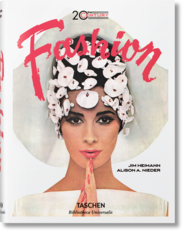
The 20th century saw fashion evolve from an exclusive Parisian salon business catering for the wealthy elite into a global industry employing millions, with new trends whisked into stores before the last model has even left the catwalk. Along the way, the signature silhouettes of each era evolved beyond recognition. For women, House of Worth crinolines gave way to Vionnet’s bias-cut gowns, Dior’s New Look to Quant’s Chelsea Look, Halston’s white suit to Frankie B.’s low-rise ...
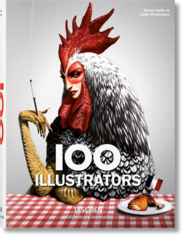
Drawn from TASCHEN’s Illustration Now! series, this go-to catalog brings together 100 of the most successful and important illustrators around the globe. With featured artists including Istvan Banyai, Gary Baseman, Seymour Chwast, Paul Davis, Brad Holland, Mirko Ilić, Anita Kunz, and Christoph Niemann, the international overview provides an invigorating record of the dynamism and diversity of the illustration scene. Each illustrator is featured with a self-portrait, samples f...
To explore the Tarot is to explore ourselves, to be reminded of the universality of our longing for meaning, for purpose and for a connection to the divine. This 600-year-old tradition reflects not only a history of seekers, but our journey of artistic expression and the ways we communicate our collective human story.For many in the West, Tarot exists in the shadow place of our cultural consciousness, a metaphysical tradition assigned to the dusty glass cabinets of the arcane...
Do kategorii „Pozostałe” zostały przypisane wszystkie publikacje, które nie przynależą do żadnej z konkretnych kategorii takich jak: Dla dzieci, Dla młodzieży, Poradniki / Edukacja / Hobby, Powieści i lektury, Dom / Moda / Hobby, Dom / Wnętrze / Ogród, Kolorowanki, Moda i styl, Filozofia, Historia, Historia najnowsza, Historia nowożytna, II wojna światowa, Starożytność i średniowiecze, Internet, komputery, informatyka, Komiks i książka graficzna, Książki obcojęzyczne, Kuchnia / Diety / Fitness, Kultura / Sztuka / Design, Literatura, Fantastyka / Horror, Kryminał / Sensacja / Thriller, Literatura piękna, Poezja / Dramat, Powieść historyczna, Powieść obyczajowa, Romans / Erotyka, Literatura faktu, Biografia / Autobiografia / Wspomnienia, Książki podróżnicze / Przewodniki, Literatura popularnonaukowa, Reportaż, Marketing / Zarządzanie / Finanse, Nauka języków, Nauki ścisłe / Medycyna, Podręczniki / Encyklopedie, Poradniki, Prasa, Prawo, Psychologia / Społeczeństwo / Polityka, Religia, Sport /Rekreacja, Technika / Inżynieria / Rolnictwo oraz Zdrowie / Rodzina / Związki. Kategoria „Pozostałe” zawiera publikacje, których nie da się przypisać tylko do jednej z tych kategorii, gdyż ich granice są bardzo często niewyraźne. To książki znajdujące się zazwyczaj na styku wielu różnych gatunków, wymykające się jednoznacznej klasyfikacji i kategoryzacji.