
‘The thing came abruptly and unannounced; a demon, rat-like, scurrying from pits remote and unimaginable, a hellish panting and stifled grunting, and then from that opening beneath the chimney a burst of multitudinous and leprous life - a loathsome night-spawned flood of organic corruption more devastatingly hideous than the blackest conjurations of mortal madness and morbidity.’ Only the expansive imagination of H.P. Lovecraft could conceive the delicious and spine-tingling ...
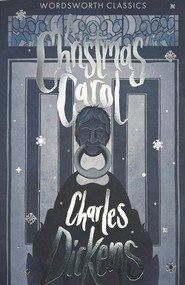
A Christmas Carol is the most famous, heart-warming and chilling festive story of them all. In these pages we meet Ebenezer Scrooge, whose name is synonymous with greed and parsimony: 'Every idiot who goes about with "Merry Christmas" on his lips, should be boiled with his own pudding, and buried with a stake of holly through his heart'. This attitude is soon challenged when the ghost of his old partner, Jacob Marley, returns from the grave to haunt him on Christmas Eve. Scro...
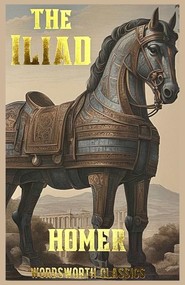
With an Introduction and Notes by Adam Roberts, Royal Holloway, University of London. The product of more than a decade's continuous work (1598-1611), Chapman's translation of Homer's great poem of war is a magnificent testimony to the power of The Iliad. In muscular, onward-rolling verse Chapman retells the story of Achilles, the great warrior, and his terrible wrath before the walls of besieged Troy, and the destruction it wreaks on both Greeks and Trojans. Chapman regarded...
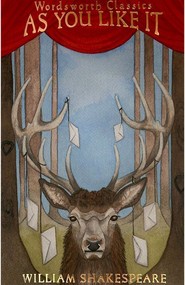
This Wordsworth Edition includes an exclusive Introduction and Notes by Cedric Watts, M.A., Ph.D., Emeritus Professor of English, University of Sussex. As You Like It is one of Shakespeare’s finest romantic comedies, variously lyrical, melancholy, satiric, comic and absurd. Its boldly implausible plot generates a profusion of love-lorn men, a resourceful heroine in disguise, sexual ambiguity, sceptical philosophising, and finally a multiplicity of marriages. The ironic medley...
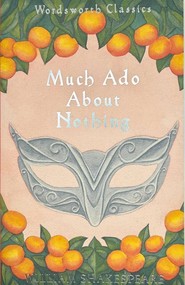
Edited, introduced and annotated by Cedric Watts, M.A., Ph.D., Emeritus Professor of English, University of Sussex. The Wordsworth Classics' Shakespeare Series presents a newly-edited sequence of William Shakespeare's works. The textual editing takes account of recent scholarship while giving the material a careful reappraisal. Much Ado About Nothing has long been celebrated as one of Shakespeare's most popular comedies. The central relationship, between Benedick and Beatrice...
With an Introduction and Notes by Joe Andrew, Professor of Russian Literature, Keele University. Anton Chekhov is widely regarded as one of the greatest writers of short stories. He constructs stories where action and drama are implied rather than described openly, and which leave much to the reader's imagination. This collection contains some of the most important of his earliest and shortest comic sketches, as well as examples of his great, mature works. Throughout, the doc...
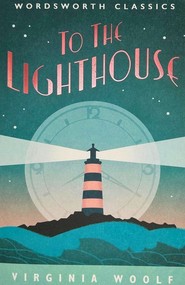
With an Introduction and Notes by Dr Nicola Bradbury, University of Reading. This simple and haunting story captures the transcience of life and its surrounding emotions. To the Lighthouse is the most autobiographical of Virginia Woolf's novels. It is based on her own early experiences, and while it touches on childhood and children's perceptions and desires, it is at its most trenchant when exploring adult relationships, marriage and the changing class-structure in the perio...
The magical Peter Pan comes to the night nursery of the Darling children, Wendy, John and Michael. He teaches them to fly, then takes them through the sky to Never-Never Land, where they find Red Indians, wolves, Mermaids and... Pirates. The leader of the pirates is the sinister Captain Hook. His hand was bitten off by a crocodile, who, as Captain Hook explains 'liked me arm so much that he has followed me ever since, licking his lips for the rest of me'. After lots of advent...
With an Introduction and Notes by Dr Emily Alder, Lecturer in Literature and Culture at Edinburgh Napier University 'Each time I dip a living creature into the bath of burning pain, I say: this time I will burn out all the animal, this time I will make a rational creature of my own!' declares Doctor Moreau to hapless narrator Edward Prendick. Moreau's highly controversial methods and ambitions conflict with the religious, moral and scientific norms of his day and Wells later ...
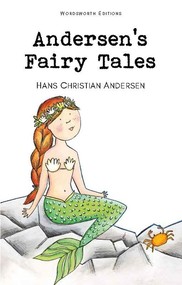
Hans Christian Andersen is the best-loved of all tellers of fairy tales. This collection of over forty of Andersen’s most popular stories includes The Mermaid, The Real Princess, The Red Shoes, The Little Match Girl, The Snow Queen, The Tinder Box, The Ugly Duckling and many more. It is delightfully illustrated in black-and white by those remarkable brothers, Charles, Thomas and William Heath Robinson...
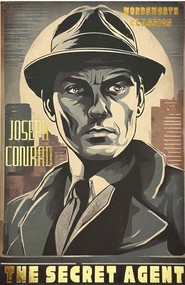
With an Introduction and Notes by Hugh Epstein, Secretary of the Joseph Conrad Society of Great Britain. 'Then the vision of an enormous town presented itself, of a monstrous town...a cruel devourer of the world's light. There was room enough there to place any story, depth enough for any passion, variety enough there for any setting, darkness enough to bury five millions of lives.' Conrad’s ‘monstrous town’ is London, and his story of espionage and counter-espionage, anarchi...
White Nights' is one of Dostoevsky’s earlier short stories but one of his most enduringly popular. It tells the story of four nights in the life of the lonely narrator, who meets and falls in love with the mysterious and beautiful Nastenka. Poor Folk was Dostoevsky’s first novel, written to try and alleviate his financial plight, and was a commercial success.It tells the story of Makar Devushkin, a clerk, and Varvara Dobroselova, a seamstress, by means of the letters they exc...
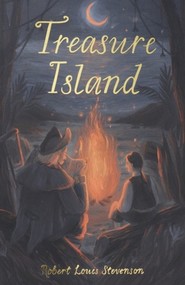
‘Fifteen men on the dead man's chest-Yo-ho-ho and a bottle of rum!’ Treasure Island is a tale of pirates and villains, maps, treasure and shipwreck, and is perhaps the best adventure story ever written. When young Jim Hawkins finds a packet in Captain Flint's sea chest, he could not know that the map inside it would lead him to unimaginable treasure. Shipping as cabin boy on the Hispaniola, he sails with Squire Trelawney, Captain Smollett, Dr Livesey, the sinister Long John S...
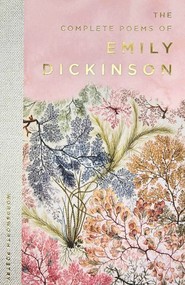
With an Introduction by Emma Hartnoll.Initially a vivacious, outgoing person, Emily Dickinson (1830-1886) progressively withdrew into a reclusive existence. An undiscovered genius during her lifetime, only seven out of her total of 1,775 poems were published prior to her death. She had an immense breadth of vision and a passionate intensity and awe for life, love, nature, time and eternity. Originally branded an eccentric, Emily Dickinson is now recognised as a major poet of ...
Fyodor Dostoyevsky was a Russian author whose works deal with human psychology in the often troubled political and social environment that was 19th-century Russia. Many literary critics agree that he is one of the greatest psychologists world literature has ever seen. Each box set contains seven books, together creating a comprehensive collection of Dostoevsky's best and much-loved works. Beautifully packaged in a rigid, matt-laminated slipcase, complete with strikingly attra...
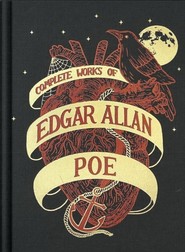
Edgar Poe was born the son of itinerant actors on January 19th, 1809 in Boston, Massachusets. Abandoned by his father and the later death of his mother, he was taken into the foster care of John Allan, a Virginia tobacco farmer. Now styled as Edgar Allan Poe, he distinguished himself at the University of Virginia but was equally adept at collecting debts from his assiduous gambling. His stepfather’s disapproval shattered their fragile relationship and Poe left home to seek hi...
The perfect gift for any Brontë Sisters lover.. Each boxset contains seven books, together creating a comprehensive collection of the Brontë Sisters' best and much-loved works. Beautifully packaged in a rigid, matt-laminated slipcase with metallic detailing, complete with strikingly attractive, bespoke artwork.
Includes: Agnes Grey, The Tenant of Wildfell Hall, Jane Eyre, The Professor, Shirley, Villette, and Wuthering Heights
This boxset contains seven of most popular novels ever written for children (and many adults).They are beautifully packaged in a rigid, matt-laminated slipcase, complete with strikingly attractive, bespoke artwork - the perfect gift for any book-lover.The set includes:9781853261183 - Alice's Adventures in Wonderland9781853261220 - The Wind in the Willows9781853261039 - Treasure Island9781853261091 - Black Beauty9781853261190 - The Jungle Book9781853261046 - The Secret Garden9...
The perfect gift for any Sherlock Holmes fan. Each boxset contains six books, together creating a comprehensive collection of the famous detective’s complete cases and adventures, and is beautifully packaged in a ridged, matt-laminated slipcase with metallic detailing, complete with strikingly attractive, bespoke artwork. Each book includes an exclusive introduction. Includes: The Adventures & Memoirs of Sherlock Holmes, The Best of Sherlock Holmes, The Casebook of Sherlock H...
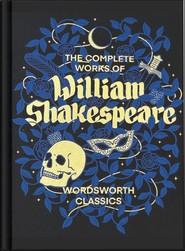
William Shakespeare (1564-1616) is acknowledged as the greatest dramatist of all time. He excels in plot, poetry and wit, and his talent encompasses the great tragedies of Hamlet, King Lear, Othello and Macbeth as well as the moving history plays and the comedies such as A Midsummer Night’s Dream, The Taming of the Shrew and As You Like It with their magical combination of humour, ribaldry and tenderness. This volume is a reprint of the Shakespeare Head Press edition, and it ...
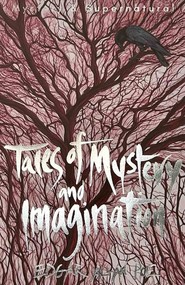
With an Introduction by John S. Whitley, University of Sussex. This collection of Poe's best stories contains all the terrifying and bewildering tales that characterise his work. As well as the Gothic horror of such famous stories as 'The Pit and the Pendulum', 'The Fall of the House of Usher', 'The Premature Burial' and 'The Tell-Tale Heart', all of Poe's Auguste Dupin stories are included. These are the first modern detective stories and include 'The Murders in the Rue Morg...
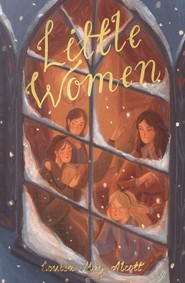
Little Women is one of the best-loved children's stories of all time, based on the author's own youthful experiences. It describes the family life of the four March sisters living in a small New England community, Meg, the eldest, is pretty and wishes to be a lady; Jo, at fifteen is ungainly and unconventional with an ambition to be an author; Beth is a delicate child of thirteen with a taste for music and Amy is a blonde beauty of twelve. The story of their domestic adventur...
With an Introduction by M.J. Elliott. ‘My eyes, perversely shaken open, gazed for an instant upon a sight which no human creature could even imagine without panic, fear and physical exhaustion…’ A wax museum in London boasts a new exhibit, which no man has seen and remained sane… A businessman is trapped in a train carriage with a madman who claims to have created a new and efficient method of capital punishment… A doctor plans a horrible revenge, using as his murder weapon a...
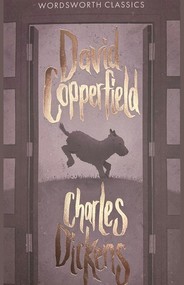
Introduction and Notes by Dr Adrienne Gavin, Canterbury Christ Church University College. Illustrations by Hablot K. Browne (Phiz). Dickens wrote of David Copperfield: 'Of all my books I like this the best'. Millions of readers in almost every language on earth have subsequently come to share the author's own enthusiasm for this greatly loved classic, possibly because of its autobiographical form. Following the life of David through many sufferings and great adversity, the re...
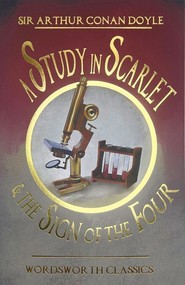
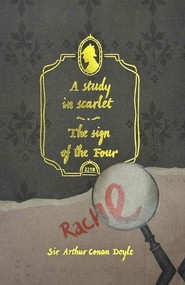
With an Introduction by David Stuart Davies. 'Doctor Watson, Mr Sherlock Holmes' - The most famous introduction in the history of crime fiction takes place in Sir Arthur Conan Doyle's A Study in Scarlet, bringing together Sherlock Holmes, the master of science detection, and John H. Watson, the great detective's faithful chronicler. This novel not only establishes the magic of the Holmes myth but also provides the reader with a dramatic adventure yarn which ranges from the fo...
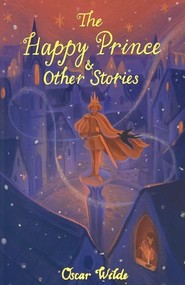
In these delightful tales, Oscar Wilde employs all his grace, artistry and wit. The Happy Prince tells of the statue of a once pleasure-loving Prince which, with the help of a selfless Swallow helps people in distress. As well as The Nightingale and the Rose, The Devoted Friend and The Remarkable Rocket, this collection contains The Selfish Giant, a remarkable story of the redemptive power of love.
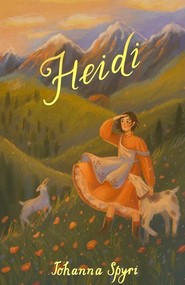
Heidi is the heart-warming tale of a small girl's power for good, and it has remained a firm favourite since it was published over 100 years ago. It has been filmed and televised several times. It tells of the orphan Heidi and her idyllic existence with her gruff grandfather in the mountains. When she is sent to live in a city, comic chaos ensues, and eventually it is arranged that Heidi should return to the mountains. Together she and her friend Peter, the goat-herd, achieve...
With an Introduction by David Stuart Davies. Father Brown, one of the most quirkily genial and lovable characters to emerge from English detective fiction, first made his appearance in The Innocence of Father Brown in 1911. That first collection of stories established G.K. Chesterton's kindly cleric in the front rank of eccentric sleuths. This complete collection contains all the favourite Father Brown stories, showing a quiet wit and compassion that has endeared him to many,...
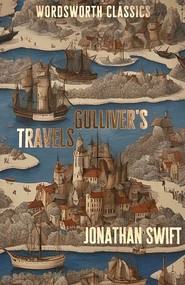
With an Introduction and Notes by Doreen Roberts, Rutherford College, University of Kent at Canterbury. Jonathan Swift's classic satirical narrative was first published in 1726, seven years after Defoe's Robinson Crusoe (one of its few rivals in fame and breadth of appeal). As a parody travel-memoir it reports on extraordinary lands and societies, whose names have entered the English language: notably the minute inhabitants of Lilliput, the giants of Brobdingnag, and the Yaho...
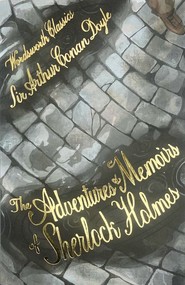
'My name is Sherlock Holmes. It is my business to know what other people don't know'. The Adventures of Sherlock Holmes first introduced Arthur Conan Doyle's brilliant detective to the readers of The Strand Magazine. The runaway success of this series prompted a second set of stories, The Memoirs. In these twenty three tales, collected here in one volume, you have some of the best detective yarns ever penned. In his consulting room at 221B Baker Street, the master sleuth rece...
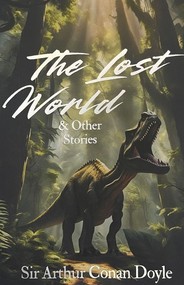
With a new Introduction by Cedric Watts, M.A., Ph.D., Research Professor of English, University of Sussex. These lively, varied and thought-provoking science-fiction stories (from the era of Jules Verne and H. G. Wells) are linked by their imposing central character, the pugnaciously adventurous and outrageous Professor Challenger. The Lost World (forebear of Jurassic Park) vividly depicts a perilous region in which the explorers confront creatures from the prehistoric era. T...
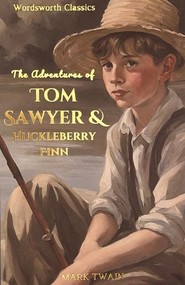
With an Introduction and Notes by Stuart Hutchinson, University of Kent at Canterbury. Tom Sawyer, a shrewd and adventurous boy, is as much at home in the respectable world of his Aunt Polly as in the self-reliant and parentless world of his friend Huck Finn. The two enjoy a series of adventures, accidentally witnessing a murder, establishing the innocence of the man wrongly accused, as well as being hunted by Injun Joe, the true murderer, eventually escaping and finding the ...
The Wonderful World of the Wizard of Oz, which the the Library of Congress named as ‘America's greatest and best-loved homegrown fairytale’, is one of the great works of children’s literature. The story concerns Dorothy, a young girl from Kansas, who, with her little dog Toto, is caught up in a terrifying tornado, which whisks her far away to the magical land of Oz. Here she encounters the Munchkins, strange small creatures, who tell her that in order for her to return home s...
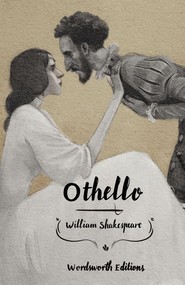
Othello has long been recognised as one of the most powerful of Shakespeare’s tragedies. This is an intense drama of love, deception, jealousy and destruction. Desdemona’s love for Othello, the Moor, transcends racial prejudice; but the envious Iago conspires to devastate their lives. In its vivid rendering of racism, sexism, contested identities, and the savagery lurking within civilisation, Othello is arguably the most topical and accessible tragedy from Shakespeare’s major...
'Doctor Watson, Mr Sherlock Holmes' - The most famous introduction in the history of crime fiction takes place in Sir Arthur Conan Doyle's A Study in Scarlet, bringing together Sherlock Holmes, the master of science detection, and John H. Watson, the great detective's faithful chronicler. This novel not only establishes the magic of the Holmes myth but also provides the reader with a dramatic adventure yarn which ranges from the foggy, gas-lit streets of London to the burning...
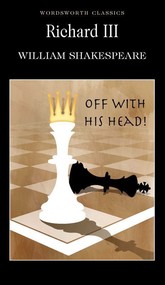
Edited, introduced and annotated by Cedric Watts, M.A., Ph.D., Emeritus Professor of English, University of Sussex. Richard III is one of the finest of Shakespeare’s historical dramas. Although it has a huge cast, Richard himself, gleefully wicked, charismatically Machiavellian, always dominates the play: a role to gratify such leading actors as David Garrick, Laurence Olivier, Anthony Sher, Ian McKellen and Al Pacino.Since, in real life, political Machiavellianism is never o...
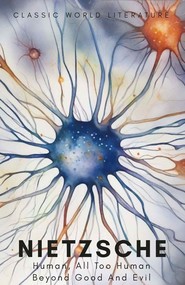
Human, All Too Human (1878) marks the point where Nietzsche abandons German romanticism for the French Enlightenment. At a moment of crisis in his life (no longer a friend of Richard Wagner, forced to leave academic life through ill health), he sets out his views in a scintillating and bewildering series of aphorisms which contain the seeds of his later philosophy (e.g. the will to power, the need to transcend conventional Christian morality). The result is one of the corners...
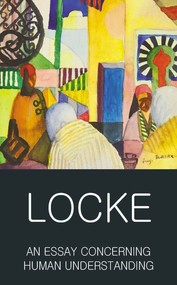
Notes and Introduction by Mark G. Spencer, Brock University, Ontario John Locke (1632-1704) was perhaps the most influential English writer of his time. His Essay concerning Human Understanding (1690) and Two Treatises of Government (1690) weighed heavily on the history of ideas in the eighteenth century, and Locke’s works are often ? rightly ? presented as foundations of the Age of Enlightenment. Both the Essay and the Second Treatise (by far the more influential of the Tw...
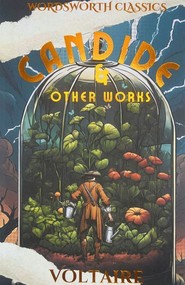
With an Introduction and Notes by James Fowler, Senior Lecturer in French, University of Kent Candide (1759) is a bright, colourful literary firework display of a novella. With sparkling wit and biting humour, Voltaire hits several targets with fierce and comic satire: organised religion, the overweening pride of aristocrats, merchants' greed, colonial ambition and the hopeless complacency of Leibnizian philosophy that believes 'all is for the best in the best of all possible...
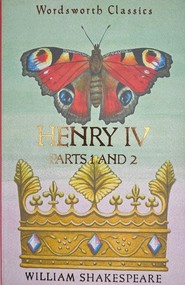
Edited, introduced and annotated by Cedric Watts, Emeritus Professor of English, University of Sussex. In Henry IV, Part 1, the King is in a doubly ironic position. His rebellion against Richard II was successful, but now he himself is beset by rebels, led by the charismatic Harry Hotspur. The King’s son, Prince Hal, seems to be more concerned with the pleasures of the tavern world and the company of the fat rogue, Falstaff, than with concerns of state. Eventually, however, H...
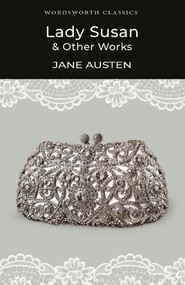
With an Introduction, explanatory notes, and annotated bibliography by Nicholas Seager. This collection brings together Jane Austen’s earliest experiments in the art of fiction and novels that she left incomplete at the time of her premature death in 1817. Her fragmentary juvenilia show Austen developing her own sense of narrative form whilst parodying popular kinds of fiction of her day. Lady Susan is a wickedly funny epistolary novel about a captivating but unscrupulous wid...
The Ragged Trousered Philanthropists is a classic representation of the impoverished and politically powerless underclass of British society in Edwardian England, ruthlessly exploited by the institutionalized corruption of their employers and the civic and religious authorities. Epic in scale, the novel charts the ruinous effects of the laissez-faire mercantilist ethics on the men, women, and children of the working classes, and through its emblematic characters, argues for a...
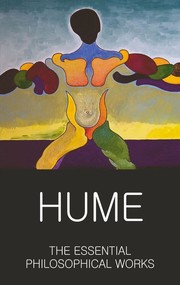
With an introduction by Charlotte R. Brown and William Edward Morris. David Hume (1711–1776) was the most important philosopher ever to write in English, as well as a master stylist. This volume contains his major philosophical works. A Treatise of Human Nature (1739–1740), published while Hume was still in his twenties, consists of three books on the understanding, the passions, and morals. It applies the experimental method of reasoning to human nature in a revolution that ...
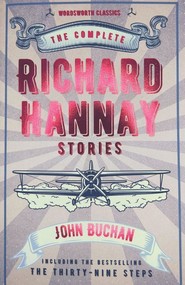
Major General Sir Richard Hannay is the fictional secret agent created by writer and diplomat John Buchan, who was himself an Intelligence officer during the First World War. The strong and silent type, combining the dour temperament of the Scot with the stiff upper lip of the Englishman, Hannay is pre-eminent among early spy-thriller heroes. Caught up in the first of these five gripping adventures just before the outbreak of war in 1914, he manages to thwart the enemy's evil...
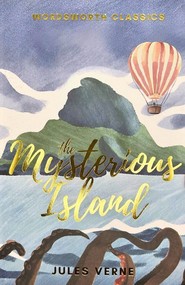
With an Introduction by Alex Dolby. Translation by W.H.G. Kingston.Jules Verne (1828-1905) is internationally famous as the author of a distinctive series of adventure stories describing new travel technologies which opened up the world and provided means to escape from it. The collective enthusiasm of generations of readers of his 'extraordinary voyages' was a key factor in the rise of modern science fiction. In The Mysterious Island a group of men escape imprisonment during...
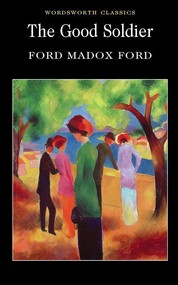
With an Introduction and Notes by Sara Haslam, Department of English, The Open University. The Good Soldier is a masterpiece of twentieth-century fiction, an inspiration for many later, distinguished writers, including Graham Greene. Set before the First World War, it tells the tale of two wealthy and sophisticated couples, one English, one American, as they travel, socialise, and take the waters in the spa towns of Europe. They are 'playing the game', in style. That game has...
When fifteen-year-old orphan John Trenchard is banished by his Aunt Jane, he goes to live at the local inn with the mysterious Elzevir Block, whose son has been killed by Customs Officers. Unofficially adopted by Block, John comes to learn the reasons for the noises in the graveyard at night, of 'Blackbeard' Mohune's lost treasure and Elzevir Block's secret. This dashing tale of eighteenth-century Dorset smugglers will be enjoyed by all who love stories of derring-do written ...
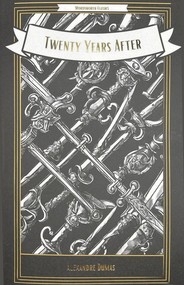
With an Introduction by A. M. de Medeiros, University of Kent at Canterbury. A year after the publication of The Three Musketeers,/em>, Alexandre Dumas produced a sequel worthy in every respect of the original. In Twenty Years After the much beloved D'Artaganan, Athos, Porthos and Aramis reunite to fight the forces of evil. In the original novel they defeated Milady, a formidable foe; now they need to face her vengeful son Mordaunt, as well as countering the machinations of t...
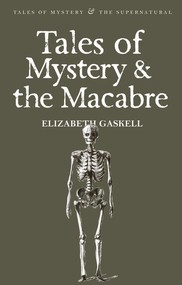
With an Introduction by David Stuart Davies. 'In the great mirror opposite I saw myself, and right behind, another wicked fearful self, so like me my soul seemed to quiver within me, as though not knowing to which similitude of body it belonged'. Elizabeth Gaskell is better known today for her pioneering social novels such as Mary Barton (1848) but she also wrote some fascinating tales of the supernatural and the macabre, which are collected here in this volume. The real char...
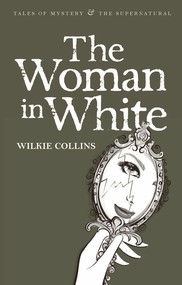
With an Introduction and Notes by Scott Brewster, University of Central Lancashire. Wilkie Collins is a master of mystery, and The Woman in White is his first excursion into the genre. When the hero, Walter Hartright, on a moonlit night in north London, encounters a solitary, terrified and beautiful woman dressed in white, he feels impelled to solve the mystery of her distress. The intricate plot is peopled with a finely characterised cast, from the peevish invalid Mr Fairlie...
Horrific, horrendous, unspeakable, The Whitechapel Murderer, Jack the Ripper, stalked the streets of East London in 1888, slaughtering prostitutes and bewildering the police who were hunting him. They never succeeded in apprehending him, and to this day the mystery of his identity remains an enigma. But he did leave clues to his identity, and numerous theories have been entertained throughout the one hundred and twenty years since he held London's East End in his grip of terr...
With an Introduction and Notes by Martin Scofield, University of Kent at Canterbury. Henry James was arguably the greatest practitioner of what has been called the psychological ghost story. His stories explore the region which lies between the supernatural or straightforwardly marvellous and the darker areas of the human psyche. This edition includes all ten of his ghost stories, and as such is the fullest collection currently available. The stories range widely in tone and ...
M.R. James is probably the finest ghost-story writer England has ever produced. These tales are not only classics of their genre, but are also superb examples of beautifully-paced understatement, convincing background and chilling terror. As well as the preface, there is a fascinating tail-piece by M.R. James, ‘Stories I Have Tried To Write’, which accompanies these thirty tales. Among them are ‘Casting the Runes’, ‘Oh, Whistle and I’ll come to you, My Lad’, ‘The Tractate Mid...
Editedand with an Introduction by David Stuart Davies. ‘Have you ever heard of the fascination of terror?’ This is a unique collection of strange stories from the cunning pen of Wilkie Collins, author of The Woman in White and The Moonstone. The star attraction is the novella The Haunted Hotel, a clever combination of detective and ghost story set in Venice, a city of grim waterways, dark shadows and death. The action takes place in an ancient palazzo coverted into a modern h...
With an Introduction and Notes by Professor Emeritus John Chapple, University of Hull. The sheer variety and accomplishment of Elizabeth Gaskell's shorter fiction is amazing. This new volume contains six of her finest stories that have been selected specifically to demonstrate this, and to trace the development of her art. As diverse in setting as in subject matter, these tales move from the gentle comedy of life in a small English country town in Dr Harrison's Confessions, t...
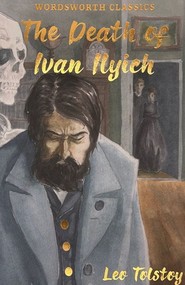
With an Introduction and Notes by Dr T.C.B.Cook. Count Leo Tolstoy (1828-1910) is best known for War and Peace and Anna Karenina, commonly regarded as amongst the greatest novels ever written. He also, however, wrote many masterly short stories, and this volume contains four of the longest and best in distinguished translations that have stood the test of time. In the early story Family Happiness, Tolstoy explores courtship and marriage from the point of view of a young wife....
Selected and Edited with an Introduction and Notes by David Blair, University of Kent at Canterbury. Late in the eighteenth century authors began to write ‘Gothic’ stories as a way of putting literature back in touch with the irrational, the supernatural and the bizarre, which had been neglected in the ‘Age of Reason’. This superb new collection brings together stories from the earliest decades of Gothic writing with later 19th and early 20th century tales from the period in ...
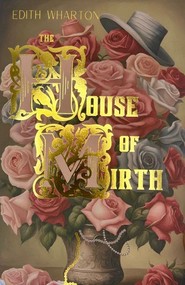
Introduction and Notes by Janet Beer, Manchester Metropolitan University. The House of Mirth tells the story of Lily Bart, aged 29, beautiful, impoverished and in need of a rich husband to safeguard her place in the social elite, and to support her expensive habits - her clothes, her charities and her gambling. Unwilling to marry without both love and money, Lily becomes vulnerable to the kind of gossip and slander which attach to a girl who has been on the marriage market fo...
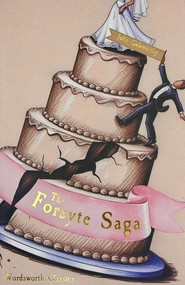
With a new Introduction by Professor Cedric Watts, M.A., Ph.D. The Forsyte Saga is Galsworthy’s enduringly popular masterpiece. Initially, the plot centres on Soames Forsyte, a successful solicitor living in London with his beautiful wife, Irene. A pillar of the late-Victorian upper middle class, wealthy and well-connected, he seems to lead an enviable life. But beneath the respectable exterior lie acute tensions and frustrations. The marriage of Soames and Irene culminates i...
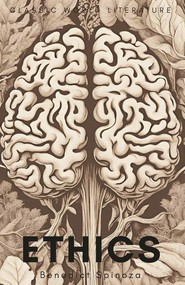
Translated by W.H.White and A.K.Stirling. With an Introduction by Don Garrett. Benedict de Spinoza lived a life of blameless simplicity as a lens-grinder in Holland. And yet in his lifetime he was expelled from the Jewish community in Amsterdam as a heretic, and after his death his works were first banned by the Christian authorities as atheistic, then hailed by humanists as the gospel of Pantheism. His Ethics Demonstrated in Geometrical Order shows us the reality behind this...
Translated by George Chapman, with Introductions by Jan Parker. Hector bidding farewell to his wife and baby son, Odysseus bound to the mast listening to the Sirens, Penelope at the loom, Achilles dragging Hector's body round the walls of Troy - scenes from Homer have been reportrayed in every generation. The questions about mortality and identity that Homer's heroes ask, the bonds of love, respect and fellowship that motivate them, have gripped audiences for three millennia....
Translated by Abdullah Yusuf Ali, The Holy Qur'an (also known as The Koran) is the sacred book of Islam. It is the word of God whose truth was revealed to the Prophet Muhammad through the angel Gabriel over a period of 23 years. As it was revealed, so it was committed to memory by his companions, though written copies were also made by literate believers during the lifetime of the Prophet. The first full compilation was by Abu Bakar, the first Caliph, and it was then recompil...
With an Introduction by Dr Pamela Knights, Department of English Studies, Durham University. With this intensely moving short novel, Edith Wharton set out ‘to draw life as it really was’ in the lonely villages and desolate farms of the harsh New England mountains. Through the eyes of a visitor from the city, trapped for a winter in snowbound Starkfield, readers glimpse the hidden histories of this austere and beautiful land. Piecing together the story of monosyllabic Ethan Fr...
With an Introduction and Notes by Dinny Thorold, University of Westminster Gaskell’s last novel, widely considered her masterpiece, follows the fortunes of two families in nineteenth century rural England. At its core are family relationships – father, daughter and step-mother, father and sons, father and step-daughter – all tested and strained by the romantic entanglements that ensue. Despite its underlying seriousness, the prevailing tone is one of comedy. Gaskell vividly p...
Editedand with an Introduction and Notes by Dr Keith Carabine. University of Kent at Canterbury. Uncle Tom's Cabin is the most popular, influential and controversial book written by an American. Stowe's rich, panoramic novel passionately dramatises why the whole of America is implicated in and responsible for the sin of slavery, and resoundingly concludes that only ‘repentance, justice and mercy’ will prevent the onset of ‘the wrath of Almighty God!’. The novel gave such a te...
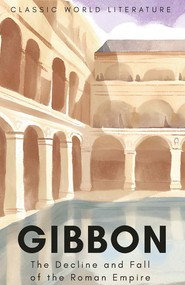
Gibbon's Decline and Fall of the Roman Empire, published between 1776 and 1788, is the undisputed masterpiece of English historical writing which can only perish with the language itself. Its length alone is a measure of its monumental quality: seventy-one chapters, of which twenty-eight appear in full in this edition. With style, learning and wit, Gibbon takes the reader through the history of Europe from the second century AD to the fall of Constantinople in 1453 - an enthr...
With an Introduction by Derek Matravers. In The Social Contract Rousseau (1712-1778) argues for the preservation of individual freedom in political society. An individual can only be free under the law, he says, by voluntarily embracing that law as his own. Hence, being free in society requires each of us to subjugate our desires to the interests of all, the general will. Some have seen in this the promise of a free and equal relationship between society and the individual, w...
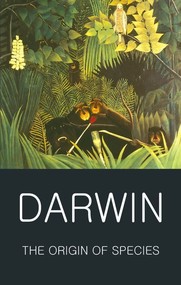
With an Introduction by Jeff Wallace. 'A grain in the balance will determine which individual shall live and which shall die...'. Darwin's theory of natural selection issued a profound challenge to orthodox thought and belief: no being or species has been specifically created; all are locked into a pitiless struggle for existence, with extinction looming for those not fitted for the task. Yet The Origin of Species (1859) is also a humane and inspirational vision of ecological...
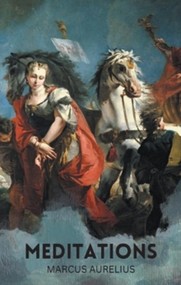
The "Meditations" of Roman Emperor Marcus Aurelius are a readable exposition of the system of metaphysics known as stoicism. Stoics maintained that by putting aside great passions, unjust thoughts and indulgence, man could acquire virtue and live at one with nature. The Meditations were composed in periods of inaction during the wars which Marcus hated but was compelled to fight.
The Prophet represents the acme of Kahlil Gibran's achievement. Writing in English, Gibran adopted the tone and cadence of King James I's Bible, fusing his personalised Christian philosophy with a spirit and oriental wisdom that derives from the richly mixed influences of his native Lebanon. His language has a breath-taking beauty. Before returning to his birthplace, Almustafa, the 'prophet', is asked for guidance by the people of Orphalese. His words, redolent with love and ...
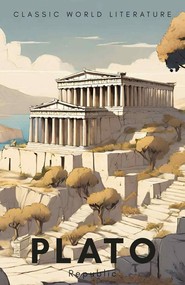
Translated by John Llewelyn Davies and David James Vaughan. With an Introduction by Stephen Watt. The ideas of Plato (c429-347BC) have influenced Western philosophers for over two thousand years. Such is his importance that the twentieth-century philosopher A.N. Whitehead described all subsequent developments within the subject as foot-notes to Plato's work. Beyond philosophy, he has exerted a major influence on the development of Western literature, politics and theology. Th...
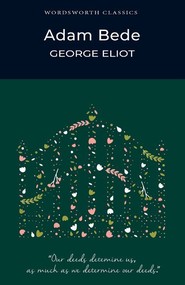
With an Introduction by Doreen Roberts, Rutherford College, University of Kent at Canterbury 'Examine your words well, and you will find that even when you have no motive to be false, it is a very hard thing to say the exact truth, even about your immediate feelings...' Adam Bede (1859), George Eliot's first full-length novel, marked the emergence of an artist to rank with Scott and Dickens. Set in the English Midlands of farmers and village craftsmen at the turn of the eight...
Do kategorii „Pozostałe” zostały przypisane wszystkie publikacje, które nie przynależą do żadnej z konkretnych kategorii takich jak: Dla dzieci, Dla młodzieży, Poradniki / Edukacja / Hobby, Powieści i lektury, Dom / Moda / Hobby, Dom / Wnętrze / Ogród, Kolorowanki, Moda i styl, Filozofia, Historia, Historia najnowsza, Historia nowożytna, II wojna światowa, Starożytność i średniowiecze, Internet, komputery, informatyka, Komiks i książka graficzna, Książki obcojęzyczne, Kuchnia / Diety / Fitness, Kultura / Sztuka / Design, Literatura, Fantastyka / Horror, Kryminał / Sensacja / Thriller, Literatura piękna, Poezja / Dramat, Powieść historyczna, Powieść obyczajowa, Romans / Erotyka, Literatura faktu, Biografia / Autobiografia / Wspomnienia, Książki podróżnicze / Przewodniki, Literatura popularnonaukowa, Reportaż, Marketing / Zarządzanie / Finanse, Nauka języków, Nauki ścisłe / Medycyna, Podręczniki / Encyklopedie, Poradniki, Prasa, Prawo, Psychologia / Społeczeństwo / Polityka, Religia, Sport /Rekreacja, Technika / Inżynieria / Rolnictwo oraz Zdrowie / Rodzina / Związki. Kategoria „Pozostałe” zawiera publikacje, których nie da się przypisać tylko do jednej z tych kategorii, gdyż ich granice są bardzo często niewyraźne. To książki znajdujące się zazwyczaj na styku wielu różnych gatunków, wymykające się jednoznacznej klasyfikacji i kategoryzacji.