A Tale of Two Cities (1859), Dickens’ greatest historical novel, traces the private lives of a group of people caught up in the cataclysm of the French Revolution and the Terror. Dickens based his historical detail on Carlyle’s great work – The French Revolution – and also on his own observations and investigations during numerous visits to Paris. ‘The best story I have written’ was Dickens’ own verdict on A Tale of Two Cities, and the reader is unlikely to disagree with thi...
Mary Lennox was horrid. Selfish and spoilt, she was sent to stay with her hunchback uncle in Yorkshire. She hated it. But when she finds the way into a secret garden and begins to tend it, a change comes over her and her life. She meets and befriends a local boy, the talented Dickon, and comes across her sickly cousin Colin who had been kept hidden from her. Between them, the three children work astonishing magic in themselves and those around them.
Adultery is not a typical Jane Austen theme, but when it disturbs the relatively peaceful household at Mansfield Park, it has quite unexpected results.
The diffident and much put-upon heroine Fanny Price has to struggle to cope with the results, re-examining her own feelings while enduring the cheerful amorality, old-fashioned indifference and priggish disapproval of those around her.
Shakespeare’s Macbeth is one of the greatest tragic dramas the world has known. Macbeth himself, a brave warrior, is fatally impelled by supernatural forces, by his proud wife, and by his own burgeoning ambition. As he embarks on his murderous course to gain and retain the crown of Scotland, we see the appalling emotional and psychological effects on both Lady Macbeth and himself. The cruel ironies of their destiny are conveyed in poetry of unsurpassed power. In the theatre, ...
Introduction and Notes by Henry Claridge, Senior Lecturer, School of English, University of Kent at Canterbury. This is a troubling story of crime, sin, guilt, punishment and expiation, set in the rigid moral climate of 17th-century New England. The young mother of an illegitimate child confronts her Puritan judges. However, it is not so much her harsh sentence, but the cruelties of slowly exposed guilt as her lover is revealed, that hold the reader enthralled all the way t...
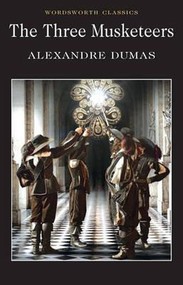
One of the most celebrated and popular historical romances ever written, The Three Musketeers tells the story of the early adventures of the young Gascon gentleman, D'Artagnan and his three friends from the regiment of the King's Musketeers - Athos, Porthos and Aramis. Under the watchful eye of their patron M. de Treville, the four defend the honour of the regiment against the guards of Cardinal Richelieu, and the honour of the queen against the machinations of the Cardinal ...
Introduction and Notes by David Blair. University of Kent at Canterbury. It is 1757. Across north-eastern America the armies of Britain and France struggle for ascendancy. Their conflict, however, overlays older struggles between nations of native Americans for possession of the same lands and between the native peoples and white colonisers. Through these layers of conflict Cooper threads a thrilling narrative, in which Cora and Alice Munro, daughters of a British commander ...
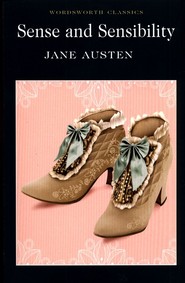
Young women who have no economic or political power must attend to the serious business of contriving material security'. Jane Austen's sardonic humour lays bare the stratagems, the hypocrisy and the poignancy inherent in the struggle of two very different sisters to achieve respectability. Sense and Sensibility is a delightful comedy of manners in which the sisters Elinor and Marianne represent these two qualities. Elinor's character is one of Augustan detachment, while Mar...
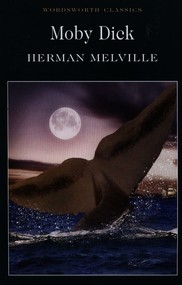
"Moby-Dick" is the story of Captain Ahab's quest to avenge the whale that 'reaped' his leg. The quest is an obsession and the novel is a diabolical study of how a man becomes a fanatic. But it is also a hymn to democracy. Bent as the crew is on Ahab's appalling crusade, it is equally the image of a co-operative community at work: all hands dependent on all hands, each individual responsible for the security of each. Among the crew is Ishmael, the novel's narrator, ordinary sa...
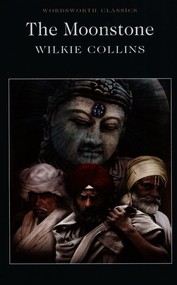
The Moonstone, a priceless Indian diamond which had been brought to England as spoils of war, is given to Rachel Verrinder on her eighteenth birthday. That very night, the stone is stolen. Suspicion then falls on a hunchbacked housemaid, on Rachel's cousin Franklin Blake, on a troupe of mysterious Indian jugglers, and on Rachel herself. The phlegmatic Sergeant Cuff is called in, and with the help of Betteredge, the Robinson Crusoe-reading loquacious steward, the mystery of t...
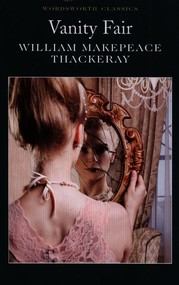
With an Introduction and Notes by Owen Knowles, University of Hull. Thackeray's upper-class Regency world is a noisy and jostling commercial fairground, predominantly driven by acquisitive greed and soulless materialism, in which the narrator himself plays a brilliantly versatile role as a serio-comic observer. Although subtitled A Novel without a Hero, Vanity Fair follows the fortunes of two contrasting but inter-linked lives: through the retiring Amelia Sedley and the bri...
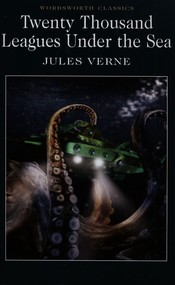
Professor Aronnax, his faithful servant, Conseil, and the Canadian harpooner, Ned Land, begin an extremely hazardous voyage to rid the seas of a little-known and terrifying sea monster. However, the "monster" turns out to be a giant submarine, commanded by the mysterious Captain Nemo, by whom they are soon held captive. So begins not only one of the great adventure classics by Jules Verne, the 'Father of Science Fiction', but also a truly fantastic voyage from the lost city ...
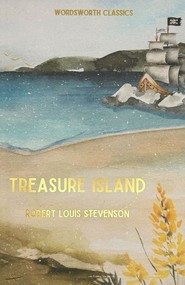
Treasure Island is the seminal pirates and buried treasure novel, which is so brilliantly concocted that it appeals to readers both young and old. The story is told in the first person by young Jim Hawkins, whose mother keeps the Admiral Benbow Inn. An old seadog, a resident at the inn, hires Jim to keep a watch out for other sailors whom he fears but, despite all precautions, the old man is served with the black spot which means death. Among the dead man's belongings Jim dis...
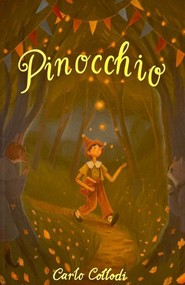
Translated by Mary Alice Murray. The story of the walking and talking puppet Pinocchio is one of the best-loved children’s tales of all time. Carved by old Gepetto, Pinocchio has an enormous nose which grows even longer whenever he tells a lie. Pinocchio is such a scamp that he gets into all sorts of mischief. He runs away to join a puppet show, he teams up with a rascally fox and wily cat, and plays truant from school which has dreadful consequences. Eventually the conscienc...
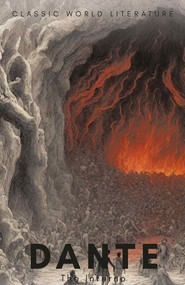
Translated by H.F. Cary With an Introduction by Claire Honess. Dante Alighieri (1265-1321) is one of the most important and innovative figures of the European Middle Ages. Writing his Comedy (the epithet 'Divine' was added by later admirers) in exile from his native Florence, he aimed to address a world gone astray both morally and politically. At the same time, he sought to push back the restrictive rules which traditionally governed writing in the Italian vernacular, to pro...
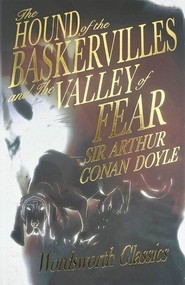
With an Introduction by David Stuart Davies. The Hound of the Baskervilles is the classic detective chiller. It features the world's greatest detective, Sherlock Holmes, in his most challenging case. The Baskerville family is haunted by a phantom beast "with blazing eyes and dripping jaws" which roams the mist-enshrouded moors around the isolated Baskerville Hall on Dartmoor. Now the hound seems to be stalking young Sir Henry, the new master of the Baskerville estate. Is this...
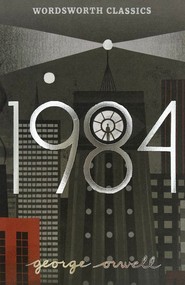
The Thought Police, Doublethink, Newspeak, Big Brother – 1984 itself: these terms and concepts have moved from the world of fiction into our everyday lives. They are central to our thinking about freedom and its suppression; yet they were newly created by George Orwell in 1949 as he conjured his dystopian vision of a world where totalitarian power is absolute. In this novel, continuously popular since its first publication, readers can explore the dark and extraordinary world...
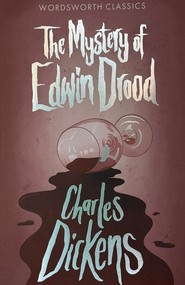
With an Introduction and Notes by Peter Preston, University of Nottingham. Illustrations by S.L. Fildes and Hablot K. Browne (Phiz). Dickens’s final novel, left unfinished at his death, is a tale of mystery whose fast-paced action takes place in an ancient cathedral city and in some of the darkest places in nineteenth-century London. Drugs, sexual obsession, colonial adventuring and puzzles about identity are among the novel’s themes. At the centre of the plot lie the bafflin...
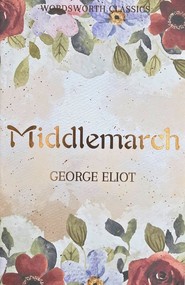
Introduction and Notes by Doreen Roberts, Rutherford College, University of Kent at Canterbury. Middlemarch is a complex tale of idealism, disillusion, profligacy, loyalty and frustrated love. This penetrating analysis of the life of an English provincial town during the time of social unrest prior to the Reform Bill of 1832 is told through the lives of Dorothea Brooke and Dr Tertius Lydgate and includes a host of other paradigm characters who illuminate the condition of Engl...
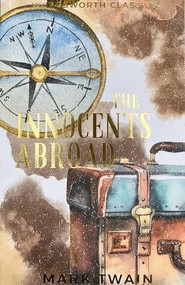
'Who could read the programme for the excursion without longing to make one of the party?' So Mark Twain acclaims his voyage from New York City to Europe and the Holy Land in June 1867. His adventures produced The Innocents Abroad, a book so funny and provocative it made him an international star for the rest of his life. He was making his first responses to the Old World - to Paris, Milan, Florence, Venice, Pompeii, Constantinople, Sebastopol, Balaklava, Damascus, Jerusalem,...
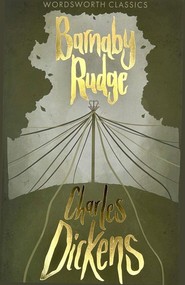
Illustrations by Hablot K. Browne (Phiz) and George Cattermole, with a new Introduction by Cedric Watts, Research Professor of English, University of Sussex. This vivid historical and political novel by Dickens is centred on the infamous 'No Popery' riots, instigated by Lord George Gordon, which terrorised London in 1780. Dickens' targets are prejudice, intolerance, religious bigotry and nationalistic fervour, together with the villains who exploit these for selfish ends. His...
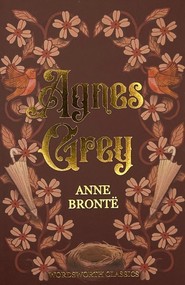
Agnes Grey is a trenchant exposé of the frequently isolated, intellectually stagnant and emotionally starved conditions under which many governesses worked in the mid-nineteenth century. This is a deeply personal novel written from the author’s own experience and as such Agnes Grey has a power and poignancy which mark it out as a landmark work of literature dealing with the social and moral evolution of English society during the last century.
W kategorii „Książki obcojęzyczne” umieszczone zostały wszystkie utwory napisane w języku innym niż polski. Znajdują się tutaj publikacje autorów pochodzących z różnych krajów i kultur, poruszające wiele różnych tematów, problemów czy zagadnień. Publikacje w kategorii „Książki obcojęzyczne” przeznaczone są dla czytelników, którzy przez lekturę książek w językach obcych chcą podszkolić swoją znajomość danego języka. Niektóre z publikacji zostały specjalnie przygotowane, aby pomóc w takiej nauce. Znaleźć tu można zarówno klasyki literatury światowej, jak i książki współczesnych pisarzy. Czytelnicy mogą przeczytać w oryginale m.in. książki amerykańskiego pisarza, autora fantasy i opowieści grozy oraz jednego z prekursorów fantastyki naukowej H.P. Lovecrafta (“The Call of Cthulhu”, “The Shadow Out of Time”), czołowego przedstawiciela nurtu powieści detektywistycznej i twórcy postaci Sherlocka Holmesa, Arthura Conana Doyle’a (“The Hound of the Baskervilles”, “A Study in Scarlet”), czy irlandzkiego poety, prozaika i dramatopisarza Oscara Wilde’a (“The Happy Prince and Other Tales”, “The Canterville Ghost”). W nauce języka pomogą wydania dwujęzyczne, tego typu pozycje oferuje m.in. wydawnictwo Wymowne. W ich ofercie znaleźć możemy takie tytuły jak “Treasure Island” Roberta Louisa Stevensona, “Heart of Darkness” Josepha Conrada czy “The Sphinx Without a Secret” Oscara Wilde’a. Alternatywny sposób nauki proponuje wydawnictwo Poltex. Przygotowane przez nich książki mają pomóc czytelnikowi w nauce dzięki czytaniu i jednoczesnym słuchaniu przez niego tekstu w języku angielskim oraz wykonywaniu specjalnych ćwiczeń po każdym rozdziale. Oferują oni takie tytuły jak “The Adventures of Sherlock Holmes” Arthura Conana Doyle’a, “Anne of Green Gables” Lucy Maud Montgomery, “The Secret Garden” Frances Hodgson Burnett, “Frankenstein” Mary Shelley, “Alice in Wonderland” Lewisa Carrolla czy “The Picture of Dorian Gray” Oscara Wilde’a. Najwięcej książek w tej kategorii napisanych zostało w języku angielskim, ale znajdują się tu również pozycje w języku rosyjskim, francuskim czy niemieckim.