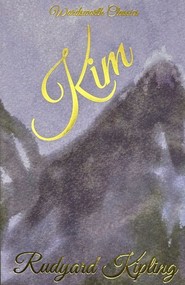
With a new Introduction by Cedric Watts, Research Professor of English, University of Sussex. Kim is Rudyard Kipling’s finest work. Now controversial, this novel is a memorably vivid evocation of the life and landscapes of India in the late nineteenth century. Kim himself is a resourceful lad who befriends a lama, an ageing priest; and both embark on a combined quest. Whereas Kim has an insatiable interest in the varied activities around him, the lama seeks redemption from th...
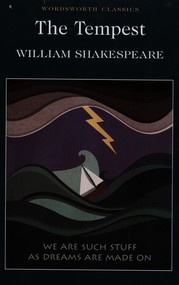
The Tempest is the most lyrical, profound and fascinating of Shakespeare's late comedies. Prospero, long exiled from Italy with his daughter Miranda, seeks to use his magical powers to defeat his former enemies. Eventually, having proved merciful, he divests himself of that magic, his 'art', and prepares to return to the mainland. The Tempest has often been regarded as Shakespeare's 'farewell to the stage' before his retirement.
With an Introduction, Notes and Bibliography by Dr Bruce Woodcock, Senior Lecturer in English, University of Hull. Shelley's short, prolific life produced some of the most memorable and well-known lyrics of the Romantic period. But he was also the most radical writer in the English literary tradition of his day, a fiery political visionary committed to social change and progress. The generous selection in this volume represents the wide range of his writing, both poetry and ...
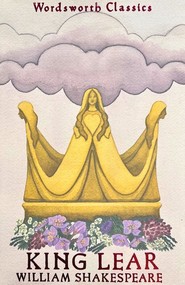
Edited, introduced and annotated by Cedric Watts, M.A., Ph.D., Emeritus Professor of English, University of Sussex. The Wordsworth Classics’ Shakespeare Series presents a newly-edited sequence of William Shakespeare’s works. The textual editing takes account of recent scholarship while giving the material a careful reappraisal. King Lear has been widely acclaimed as Shakespeare’s most powerful tragedy. Elemental and passionate, it encompasses the horrific and the heart-rendin...
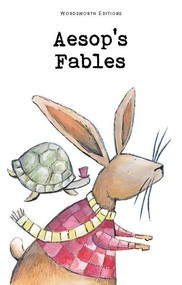
Aesop's celebrated collection of fables has always been popular with both adults and children. These simple tales embody truths so powerful, the titles of the individual fables - the fox and the grapes, the dog in the manger, the wolf in sheep's clothing and many others - have entered the languages and idioms of most European tongues. This edition is beautifully illustrated in black and white by the great Arthur Rackham, and has an introduction by G.K. Chesterton....
Robin Hood is the best-loved outlaw of all time.
In this edition, Henry Gilbert tells of the adventures of the Merry Men of Sherwood Forest - Robin himself, Little John, Friar Tuck, Will Scarlet, and Alan-a-Dale, as well as Maid Marian, good King Richard, and Robin's deadly enemies Guy of Gisborne and the evil Sheriff of Nottingham.
With an Introduction by Antonia Till. William Wordsworth (1771-1850) is the foremost of the English Romantic poets. He was much influenced by the events of the French Revolution in his youth, and he deliberately broke away from the artificial diction of the Augustan and neo-classical tradition of the eighteenth century. He sought to write in the language of ordinary men and women, of ordinary thoughts, sights and sounds, and his early poetry represents this fresh approach to ...
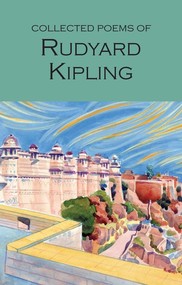
Introduction and Notes by R.T. Jones, Honorary Fellow of the University of York. This edition of the poetry of Rudyard Kipling (1865-1936) includes all the poems contained in the Definitive Edition of 1940. In his lifetime, Kipling was widely regarded as the unofficial Poet Laureate, and he was awarded the Nobel Prize for Literature in 1907. His poetry is striking for its many rhythms and popular forms of speech, and Kipling was equally at home with dramatic monologues and ex...
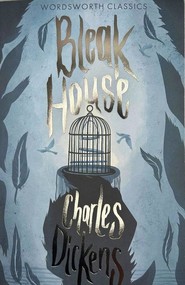
With an Introduction and Notes by Doreen Roberts, University of Kent at Canterbury. Illustrations by Hablot K. Browne (Phiz). Bleak House is one of Dickens' finest achievements, establishing his reputation as a serious and mature novelist, as well as a brilliant comic writer. It is at once a complex mystery story that fully engages the reader in the work of detection, and an unforgettable indictment of an indifferent society. Its representations of a great city's underworld, ...
With an Introduction and Notes by Dr Pamela Knights, Department of English Studies, Durham University. Lorna Doone, a Romance of Exmoor is an historical novel of high adventure set in the South West of England during the turbulent time of Monmouth's rebellion (1685). It is also a moving love story told through the life of the young farmer John Ridd, as he grows to manhood determined to right the wrongs in his land, and to win the heart and hand of the beautiful Lorna Doone. C...
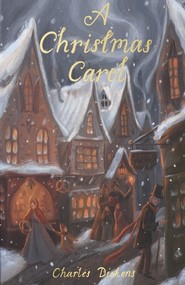
Ebenezer Scrooge is a miserly old skinflint. He hates everyone, especially children.
But at Christmas three ghosts come to visit him, scare him into mending his ways, and he finds, as he celebrates with Bob Cratchit, Tiny Tim and their family, that geniality brings its own reward.
This finest of all Christmas stories is beautifully illustrated with Arthur Rackham’s superb line drawings.
‘All decent people live beyond their incomes nowadays, and those who aren't respectable live beyond other people's’. Saki (H.H. Munro) stands alongside Anton Chekhov and O Henry as a master of the short story. His extraordinary stories are a mixture of humorous satire, irony and the macabre, in which the stupidities and hypocrisy of conventional society are viciously pilloried. This collection includes Sredni Vastor and The Unrest Cure. ‘We all know that Prime Ministers are w...
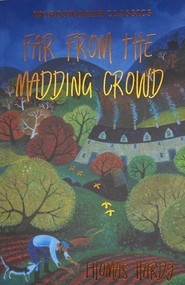
Introduction and Notes by Norman Vance, Professor of English, University of Sussex. Far from the Madding Crowd is perhaps the most pastoral of Hardy's Wessex novels. It tells the story of the young farmer Gabriel Oak and his love for and pursuit of the elusive Bathsheba Everdene, whose wayward nature leads her to both tragedy and true love. It tells of the dashing Sergeant Troy whose rakish philosophy of life was ‘…the past was yesterday; never, the day after’, and lastly, of...
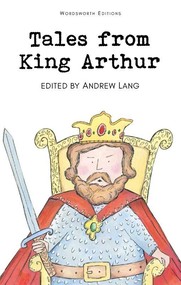
In this selection of tales by the master folklorist Andrew Lang, the reader is taken into the romantic world of the gallant Knights of the Round Table and their courageous and chivalrous deeds, fair maidens, castles steeped in history, the quest for the Holy Grail, and the tragic love of King Arthur and Sir Lancelot for Guinevere, and Tristan for Iseult. The Arthurian legends are the most potent of the thrilling and mist-enshrouded tales of adventure to be passed down from pr...
Cavalier and Roundhead battle it out in the turbulent setting of the English Civil war and provide the background for this classic tale of four orphans as they face adversity, survival in the forest, reconciliation and eventual forgiveness.This is the first enduring historical novel for children, which conjures up as much magic today as it did on first publication. The freedom from adult constraint allied with the necessary disciplines to survive in a hostile world make for a...
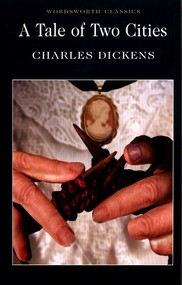
A Tale of Two Cities (1859), Dickens’ greatest historical novel, traces the private lives of a group of people caught up in the cataclysm of the French Revolution and the Terror. Dickens based his historical detail on Carlyle’s great work – The French Revolution – and also on his own observations and investigations during numerous visits to Paris. ‘The best story I have written’ was Dickens’ own verdict on A Tale of Two Cities, and the reader is unlikely to disagree with thi...
Lively and mischievous, idle and brave, Tom Brown is both the typical boy of his time and the perennial hero celebrated by authors as diverse as Henry Fielding (in Tom Jones) and Alec Waugh (in The Loom of Youth). The book describes Tom's time at Rugby School from his first football match, through his troubled adolescence when he is savagely bullied by the unspeakable Flashman, to his departure for a wider world as a confident young man. This classic tale of a boy's schoolday...
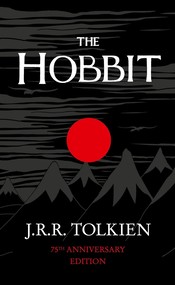
This popular paperback edition of the classic work of fantasy, with a striking new black cover based on JRR Tolkien’s own design and featuring brand new reproductions of all his drawings and maps.Bilbo Baggins is a hobbit who enjoys a comfortable, unambitious life, rarely travelling further than the pantry of his hobbit-hole in Bag End. But his contentment is disturbed when the wizard, Gandalf, and a company of thirteen dwarves arrive on his doorstep one day to whisk him away...
When Father goes away with two strangers one evening, the lives of Roberta, Peter and Phyllis are shattered. They and their mother have to move from their comfortable London home to go and live in a simple country cottage, where Mother writes books to make ends meet. However, they soon come to love the railway that runs near their cottage, and they make a habit of waving to the Old Gentleman who rides on it. They befriend the porter, Perks, and through him learn railway lore ...
Mary Lennox was horrid. Selfish and spoilt, she was sent to stay with her hunchback uncle in Yorkshire. She hated it. But when she finds the way into a secret garden and begins to tend it, a change comes over her and her life. She meets and befriends a local boy, the talented Dickon, and comes across her sickly cousin Colin who had been kept hidden from her. Between them, the three children work astonishing magic in themselves and those around them.
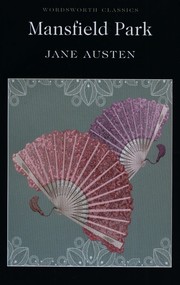
Adultery is not a typical Jane Austen theme, but when it disturbs the relatively peaceful household at Mansfield Park, it has quite unexpected results.
The diffident and much put-upon heroine Fanny Price has to struggle to cope with the results, re-examining her own feelings while enduring the cheerful amorality, old-fashioned indifference and priggish disapproval of those around her.
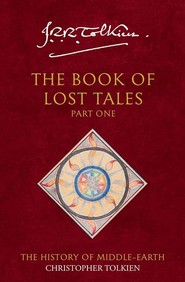
Before The Silmarillion, The Hobbit and The Lord of the Rings, the earliest myths and legends of Middle-earth and Valinor were laid down in The Book of Lost Tales, written by J.R.R. Tolkien between 1916 and 1920, and compiled by Christopher Tolkien for publication in 1983. The Book of Lost Tales stands at the beginning of the entire conception of Middle-earth and Valinor, for the Tales were the first form of the myths and legends that came to be called The Silmarillion.Embedd...
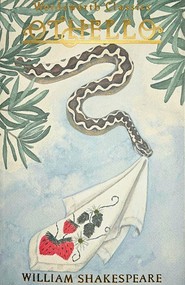
Edited, Introduced and Annotated by Cedric Watts, M.A., Ph.D., Emeritus Professor of English, University of Sussex. The Wordsworth Classics' Shakespeare Series, with Henry V and The Merchant of Venice as its inaugral volumes, presents a newly-edited sequence of William Shakespeare's works. The textual editing takes account of recent scholarship while giving the material a careful reappraisal. Othello has long been recognised as one of the most powerful of Shakespeare’s traged...
Książka jest dokumentem piśmienniczym, obszernym zazwyczaj zapisem wszelkiej ludzkiej myśli. Występuje w postaci wielostronicowej publikacji o określonej liczbie stron i trwałym charakterze.
Postać dzisiejszej książki drukowanej ma formę kodeksu będącego zbiorem kartek połączonych grzbietem. Taki sposób utrwalania zapisu w momencie upowszechnienia pergaminu zastąpił wcześniejszą formę dokumentu piśmienniczego, jakim był zwój.
Według definicji Słownika języka polskiego PWN książka jest złożonym oraz oprawionym arkuszem papieru zadrukowanym tekstem o charakterze literackim, użytkowym bądź naukowym. Jednak współcześnie definicja ta powinna zostać poszerzona o książki elektroniczne będące cyfrowym odpowiednikiem tych drukowanych. Do książek elektronicznych zaliczane są zarówno ebooki, jak i audiobooki. Treść utrwaloną w formie elektronicznej można odczytać za pomocą odpowiedniego oprogramowania na laptopach, tabletach, smartfonach, a przede wszystkim na przeznaczonych do tego celu czytnikach.
E-książki odgrywają bardzo dużą rolę. Podjęty jakiś czas temu proces digitalizacji książek umożliwia dostęp do światowych zasobów wiedzy znacznie większej liczbie osób. Zbiory ksiąg to niepodważalne światowe dziedzictwo kultury, jednak ze względu na ograniczoną możliwość szybkiego dostępu do przechowywanych w księgozbiorach publikacji, a także brak możliwości jakiegokolwiek dostępu do dzieł o znacznej wartości historycznej proces digitalizacji daje szansę na udostępnianie światowych dzieł szerokiej masie odbiorców.
Okładka to wszystko, co zostało od zewnątrz trwale złączone ze znajdującym się w środku wkładem. Składa się z przedniej i tylnej okładziny (potocznie zwanej okładką), a także z grzbietu okładki. To właśnie okładka definiuje i określa ostateczny wygląd książki, gdyż determinuje między innymi sposób, w jaki łączą się ze sobą wszystkie kartki i jaka jest wewnętrzna budowa książki. Oprawy mogą być miękkie, twarde czy też zintegrowane – różnią się przede wszystkim wielkością, wagą, wytrzymałością oraz ceną. Przykładowo książki w twardej oprawie są większe, cięższe, bardziej wytrzymałe i droższe od tych w miękkiej.