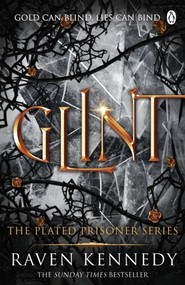
I've left the grips of one king to fall into the hands of another.Rip's name is whispered in taverns and street corners throughout the kingdoms.But as I get to know him, I realise he is not what he seems...He is Fae.Part of the powerful and magical people who abandoned this world hundreds of years ago.But here one stands before me. And when he turns his onyx eyes upon me, I fall captive.For an entirely different reason.As his army marches towards a battle with the king I once...
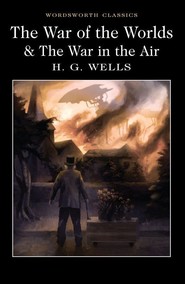
With an Introduction and Notes by Dr Andrew Frayn, Lecturer in Twentieth-Century Literature and Culture at Edinburgh Napier University. In these two compelling novels H.G. Wells imagines terrifying futures in which civilisation itself is threatened. The narrator of The War of the Worlds is quick to discover that what appeared to be a falling star was, in fact, a metallic cylinder landing from Mars. Six million people begin to flee London in panic as tentacled invaders eme...
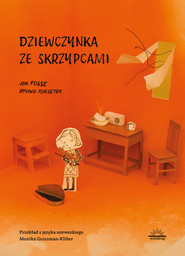
Wzruszająca, pełna magii opowieść o córce wyruszającej na ratunek ojcu, który samotny i zagubiony utknął na odległej wyspie.Dziewczynka ma dar widzenia więcej i głębiej, dostrzega swojego ojca daleko, hen za górami, siedzącego samotnie na skale pośrodku morza. Wyrusza w podróż, aby go odnaleźć i pocieszyć. Zabiera to, co jej najdroższe – skrzypce. Po drodze napotyka wiele wyzwań, a skrzypce okazują się nieodzownym towarzyszem podróży.Książka wydana w projekcie Witamina Czy.**...
„Odkrywcy” to drugi tom serii artbooków Matta Dixona, poświęcony jego charakterystycznym, urokliwym robotom. W kolejnej części cyklu znany brytyjski artysta zabiera nas w podróż do świata małych robotów. Czytelnicy wędrują wraz z nimi przez zakamarki cywilizacji, leśne ostępy, stare pomieszczenia, zbocza gór, świat techniki oraz świat przyrody. Każde z tych miejsc stwarza możliwość spotkania z nieznanym, a nieznane objawia coś najbardziej nam znanego – tajemnicę b...
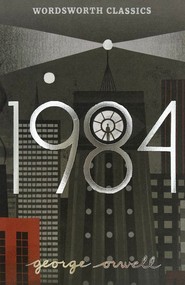
The Thought Police, Doublethink, Newspeak, Big Brother – 1984 itself: these terms and concepts have moved from the world of fiction into our everyday lives. They are central to our thinking about freedom and its suppression; yet they were newly created by George Orwell in 1949 as he conjured his dystopian vision of a world where totalitarian power is absolute. In this novel, continuously popular since its first publication, readers can explore the dark and extraordinary world...
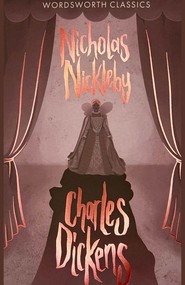
Introduction and Notes by Dr T.C.B. Cook Illustrations by Hablot K. Browne (Phiz). Following the success of Pickwick Papers and Oliver Twist, Nicholas Nickleby was hailed as a comic triumph and firmly established Dickens as a 'literary gentleman'. It has a full supporting cast of delectable characters that range from the iniquitous Wackford Squeers and his family, to the delightful Mrs Nickleby, taking in the eccentric Crummles and his travelling players, the Mantalinis, the ...
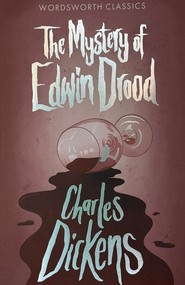
With an Introduction and Notes by Peter Preston, University of Nottingham. Illustrations by S.L. Fildes and Hablot K. Browne (Phiz). Dickens’s final novel, left unfinished at his death, is a tale of mystery whose fast-paced action takes place in an ancient cathedral city and in some of the darkest places in nineteenth-century London. Drugs, sexual obsession, colonial adventuring and puzzles about identity are among the novel’s themes. At the centre of the plot lie the bafflin...
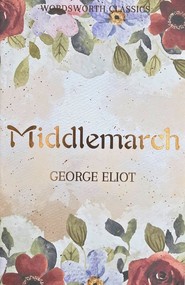
Introduction and Notes by Doreen Roberts, Rutherford College, University of Kent at Canterbury. Middlemarch is a complex tale of idealism, disillusion, profligacy, loyalty and frustrated love. This penetrating analysis of the life of an English provincial town during the time of social unrest prior to the Reform Bill of 1832 is told through the lives of Dorothea Brooke and Dr Tertius Lydgate and includes a host of other paradigm characters who illuminate the condition of Engl...
With an Introduction by Professor Stuart Sim. John Bunyan was variously a tinker, soldier, Baptist minister, prisoner and writer of outstanding narrative genius which reached its apotheosis in this, his greatest work. It is an allegory of the Christian life of true brilliance and is presented as a dream which describes the pilgrimage of the hero - Christian - from the City of Destruction via the Slough of Despond, the Hill of Difficulty, the Valley of the Shadow of Death and ...
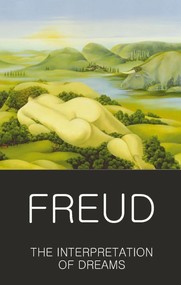
Translated by A.A. Brill With an Introduction by Stephen Wilson. Sigmund Freud's audacious masterpiece, The Interpretation of Dreams, has never ceased to stimulate controversy since its publication in 1900. Freud is acknowledged as the founder of psychoanalysis, the key to unlocking the human mind, a task which has become essential to man's survival in the twentieth century, as science and technology have rushed ahead of our ability to cope with their consequences. Freud saw ...
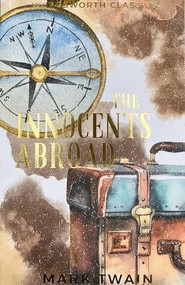
'Who could read the programme for the excursion without longing to make one of the party?' So Mark Twain acclaims his voyage from New York City to Europe and the Holy Land in June 1867. His adventures produced The Innocents Abroad, a book so funny and provocative it made him an international star for the rest of his life. He was making his first responses to the Old World - to Paris, Milan, Florence, Venice, Pompeii, Constantinople, Sebastopol, Balaklava, Damascus, Jerusalem,...
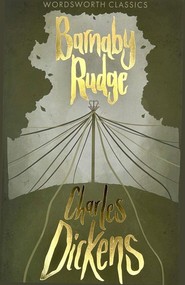
Illustrations by Hablot K. Browne (Phiz) and George Cattermole, with a new Introduction by Cedric Watts, Research Professor of English, University of Sussex. This vivid historical and political novel by Dickens is centred on the infamous 'No Popery' riots, instigated by Lord George Gordon, which terrorised London in 1780. Dickens' targets are prejudice, intolerance, religious bigotry and nationalistic fervour, together with the villains who exploit these for selfish ends. His...
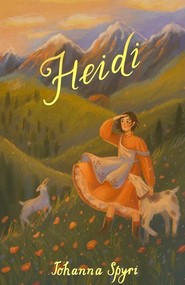
Heidi is the heart-warming tale of a small girl's power for good, and it has remained a firm favourite since it was published over 100 years ago. It has been filmed and televised several times. It tells of the orphan Heidi and her idyllic existence with her gruff grandfather in the mountains. When she is sent to live in a city, comic chaos ensues, and eventually it is arranged that Heidi should return to the mountains. Together she and her friend Peter, the goat-herd, achieve...
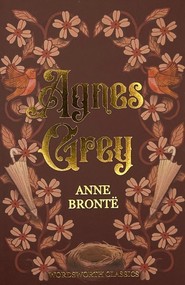
Agnes Grey is a trenchant exposé of the frequently isolated, intellectually stagnant and emotionally starved conditions under which many governesses worked in the mid-nineteenth century. This is a deeply personal novel written from the author’s own experience and as such Agnes Grey has a power and poignancy which mark it out as a landmark work of literature dealing with the social and moral evolution of English society during the last century.
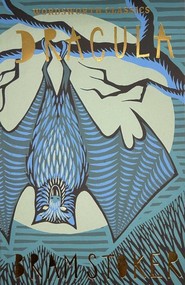
Introduction and Notes by Dr David Rogers, Kingston University. 'There he lay looking as if youth had been half-renewed, for the white hair and moustache were changed to dark iron-grey, the cheeks were fuller, and the white skin seemed ruby-red underneath; the mouth was redder than ever, for on the lips were gouts of fresh blood, which trickled from the corners of the mouth and ran over the chin and neck. Even the deep, burning eyes seemed set amongst the swollen flesh...
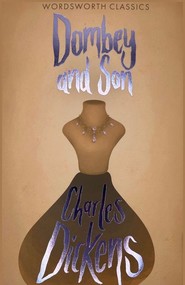
With an Introduction and Notes by Karl Ashley Smith, University of St Andrews. Illustrations by Hablot K. Browne (Phiz). Mr Dombey is a man obsessed with his firm. His son is groomed from birth to take his place within it, despite his visionary eccentricity and declining health. But Dombey also has a daughter, whose unfailing love for her father goes unreturned. 'Girls' said Mr Dombey, 'have nothing to do with Dombey and Son'. When Walter Gay, a young clerk in her father's ...
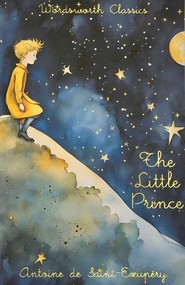
The Little Prince is a modern fable, and for readers far and wide both the title and the work have exerted a pull far in excess of the book's brevity. Written and published first by Antoine de St-Exupéry in 1943, only a year before his plane disappeared on a reconnaissance flight, it is one of the world's most widely translated books, enjoyed by adults and children alike. In the meeting of the narrator who has ditched his plane in the Sahara desert, and the little prince, who...
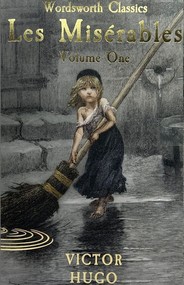
With an Introduction and Notes by Roger Clark, University of Kent at Canterbury. Translation by Charles E. Wilbour (1862). One of the great classics of western literature, Les Misérables is a magisterial work which is rich in both character portrayal and meticulous historical description. Characters such as the absurdly criminalised Valjean, the street urchin Gavroche, the rascal Thenardier, the implacable detective Javert, and the pitiful figure of the prostitute Fantine and...
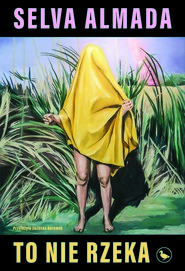
Gorące, duszne popołudnie. Enero i El Negro łowią ryby. Opiekują się Tilo – nastoletnim synem ich przyjaciela, który utonął kiedyś w tej samej rzece. Wędkują, rozmawiają i piją wino, próbując odegnać duchy przeszłości. Otacza ich przyroda rządząca się swoimi prawami, niepokojąca. Lokalni mieszkańcy obserwują ich z podejrzliwością. Po godzinach zmagań z płaszczką Enero nie wytrzymuje. Wyciąga rewolwer, celuje w wodę i pociąga za spust. Po przybyciu do obozowiska mężczyźni prze...
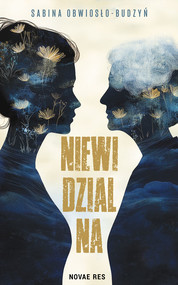
Choroby najbliższych są niełatwym doświadczeniem. Lekarze, szpitale, farmakoterapia – w XXI wieku gama środków mających pomóc w walce z cierpieniem jest szeroka i powszechnie dostępna. A jednak… nie wszystko da się wyleczyć.Niewidzialna to przejmująca opowieść o miłości, poświęceniu oraz trudnych wyborach, przed którymi staje córka mierząca się z nieuchronnym postępem choroby Alzheimera u swojej matki. Historia rozciąga się od bolesnej diagnozy aż po decyzję o umieszczeniu ro...
Oto druga wakacyjna książka dla fanów Lassego i Mai, a w niej nowe opowiadanie o dwójce detektywów oraz mnóstwo zadań i zagadek. Alfabet Morse'a, zadania na spostrzegawczość, gra planszowa, kilka przepisów na lody, quiz o Valleby czy pomysł na tor przeszkód – każdy znajdzie tu coś dla siebieKolejne tytuły serii Biuro Detektywistyczne Lassego i Mai od ponad dwudziestu lat nie schodzą w Szwecji z list bestsellerów, w Polsce również cieszą się ogromną popularnością. Akcja książe...
Przewodnik z nowej serii terramare to opowieść o Pradze: jej historii, mieszkańcach, kulturze. Od słynnego Mostu Karola, jedynego w swoim rodzaju zegaru astronomicznego Orloj, przez tętniący życiem plac Wacława i zapierającą dech w piersi katedrę św. Wita, po malowniczą panoramę miasta ze wzgórza Petřín.Bezcenne zabytki na wyciągnięcie ręki, skarby ukryte w wąskich zaułkach i małych galeriach sztuki, miejsca do odkrywania, niekończące się przyjemności dla podniebienia, odpocz...
Książka jest dokumentem piśmienniczym, obszernym zazwyczaj zapisem wszelkiej ludzkiej myśli. Występuje w postaci wielostronicowej publikacji o określonej liczbie stron i trwałym charakterze.
Postać dzisiejszej książki drukowanej ma formę kodeksu będącego zbiorem kartek połączonych grzbietem. Taki sposób utrwalania zapisu w momencie upowszechnienia pergaminu zastąpił wcześniejszą formę dokumentu piśmienniczego, jakim był zwój.
Według definicji Słownika języka polskiego PWN książka jest złożonym oraz oprawionym arkuszem papieru zadrukowanym tekstem o charakterze literackim, użytkowym bądź naukowym. Jednak współcześnie definicja ta powinna zostać poszerzona o książki elektroniczne będące cyfrowym odpowiednikiem tych drukowanych. Do książek elektronicznych zaliczane są zarówno ebooki, jak i audiobooki. Treść utrwaloną w formie elektronicznej można odczytać za pomocą odpowiedniego oprogramowania na laptopach, tabletach, smartfonach, a przede wszystkim na przeznaczonych do tego celu czytnikach.
E-książki odgrywają bardzo dużą rolę. Podjęty jakiś czas temu proces digitalizacji książek umożliwia dostęp do światowych zasobów wiedzy znacznie większej liczbie osób. Zbiory ksiąg to niepodważalne światowe dziedzictwo kultury, jednak ze względu na ograniczoną możliwość szybkiego dostępu do przechowywanych w księgozbiorach publikacji, a także brak możliwości jakiegokolwiek dostępu do dzieł o znacznej wartości historycznej proces digitalizacji daje szansę na udostępnianie światowych dzieł szerokiej masie odbiorców.
Okładka to wszystko, co zostało od zewnątrz trwale złączone ze znajdującym się w środku wkładem. Składa się z przedniej i tylnej okładziny (potocznie zwanej okładką), a także z grzbietu okładki. To właśnie okładka definiuje i określa ostateczny wygląd książki, gdyż determinuje między innymi sposób, w jaki łączą się ze sobą wszystkie kartki i jaka jest wewnętrzna budowa książki. Oprawy mogą być miękkie, twarde czy też zintegrowane – różnią się przede wszystkim wielkością, wagą, wytrzymałością oraz ceną. Przykładowo książki w twardej oprawie są większe, cięższe, bardziej wytrzymałe i droższe od tych w miękkiej.